Why Three in Five Drivers Risk a £100 Fine for Middle Lane Hogging
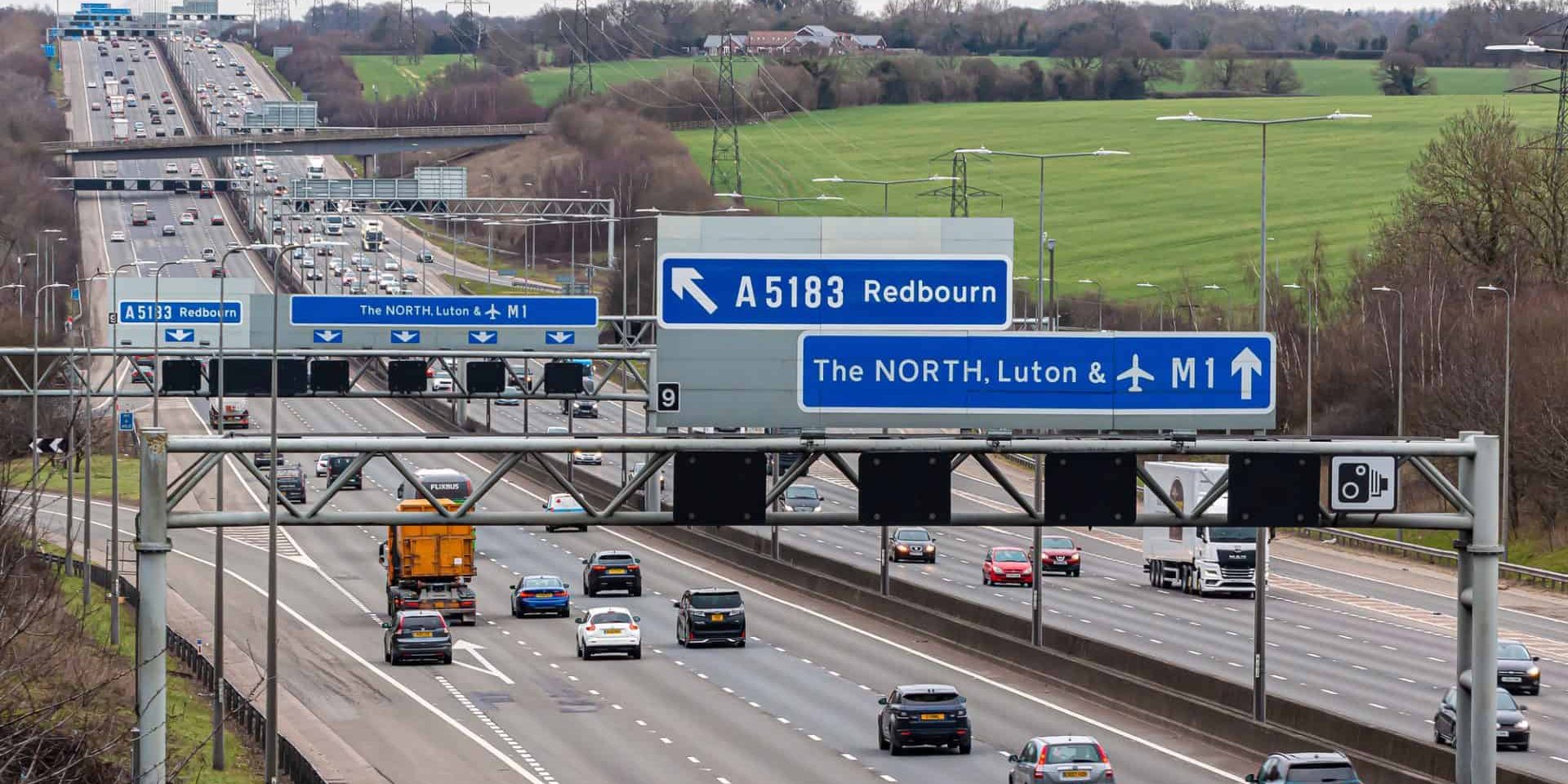
Most drivers think of the middle lane as a comfortable cruising lane, a place to settle in and avoid the hassle of pulling in and out past slower traffic. The Highway Code sees it very differently, and so does the law. New research suggests three in five UK drivers are breaking a motorway rule without realising it, and the penalty for sitting in the middle lane when you should be on the left is a 100 pound fine and three points on your licence. The catch is that almost nobody can name that penalty, and even fewer expect to be caught, which is exactly why the habit is so widespread.
What the Highway Code Actually Says
The rule in question is Rule 264 of the Highway Code, and it could hardly be clearer. It tells drivers to keep in the left lane unless they are overtaking, and when overtaking to return to the left lane as soon as it is safe to do so. There is no exemption for convenience, no allowance for staying in the middle because you intend to overtake someone eventually, and no special case for drivers who feel safer away from the inside lane. If the lane to your left is clear and you are not actively passing another vehicle, you are supposed to be in it.
This is the part many drivers get wrong. They treat a three-lane motorway as a slow lane for lorries, a normal lane for cars, and a fast lane for overtaking. In reality the left lane is the default lane for all traffic, and the middle and right lanes exist for overtaking. Sitting in the middle lane while the left is empty is not a grey area or a matter of personal preference. It is a breach of the code, and since 2013 it has been an offence that can be punished on the spot.
The Penalty Almost Nobody Can Name
Middle lane hogging falls under the offence of careless or inconsiderate driving. From July 2013 the government gave police the power to issue fixed penalty notices for a range of careless driving behaviours, including tailgating and lane hogging, without having to take every case to court. The standard penalty is a 100 pound fine and three penalty points. In more serious cases, or where a driver contests it, the matter can still go to court, where the fine can be considerably higher and the points greater.
Yet awareness is strikingly low. A survey of 2,000 UK adults carried out by dashcam maker Nextbase found that only around one in 18 drivers could correctly identify the penalty for middle lane driving. The same research found that roughly 17 per cent of drivers admitted they automatically move into the middle lane even when the road ahead is clear, a habit rather than a decision. Put together, the picture is of a country full of drivers committing an offence they do not know exists, carrying a penalty they cannot name.
Location plays a part too. The Nextbase research identified London drivers as the worst offenders by a wide margin, with almost three in ten admitting to middle lane hogging, close to double the national average. That may reflect the stop-start nature of driving in and around the capital, where drivers used to heavy multi-lane traffic carry the habit onto faster roads.
Why You Rarely Hear of Anyone Being Caught
If the offence is so common, why does almost nobody seem to get a ticket for it? The answer is enforcement. Despite the powers existing since 2013, the number of drivers actually penalised for middle lane hogging has been tiny. Freedom of information data suggested that only around 135 cases of middle lane hogging were recorded in the years after the fixed penalty was introduced, a fraction of the millions of drivers who do it regularly.
Part of the problem is that lane hogging is hard to prove and labour intensive to catch. As one observer put it, on the spot fines need an officer on the spot, and the number of dedicated roads policing officers has fallen over the past decade. There is also a recording issue. When forces were asked about lane hogging penalties, only a handful could separate middle lane offences from the broader category of careless driving in their data, which means even the official figures understate how rarely it is enforced.
That gap between rule and reality may not last. Police forces are increasingly using camera technology and dashcam footage submitted by the public to pursue careless driving, and the spread of artificial intelligence cameras and roadside systems is making it easier to flag poor lane discipline automatically. Drivers who assume lane hogging will never be enforced are betting on a status quo that technology is steadily eroding, much as it has with other offences we have covered, including the crackdown on ignoring a smart motorway red X.
Why It Is Dangerous, Not Just Annoying
The case against middle lane hogging is not really about following rules for their own sake. A driver parked in the middle lane reduces a three-lane motorway to two usable lanes, because traffic that would otherwise use the inside lane has to move out and around them. That compresses everyone into a smaller space, increases the amount of overtaking, and forces vehicles to cross more lanes than they should need to. Each extra lane change is an extra opportunity for a collision.
Lane hogging also encourages two further dangerous behaviours. It pushes frustrated drivers into undertaking, passing on the left, which is itself risky and against the code. And it can trigger tailgating, as drivers close up behind the hogger to pressure them into moving. Tailgating is the single biggest cause of motorway collisions involving injury, and it frequently starts with a driver sitting where they should not. Clearing the middle lane when it is not needed keeps the whole carriageway flowing and reduces the conflict points that cause crashes.
How to Break the Habit
Fixing lane discipline is mostly about retraining an instinct. These steps help.
- Default to the left. Treat the left lane as home. After every overtake, signal, check your mirrors and blind spot, and move back in once you are safely past.
- Use your mirrors more. If the lane to your left has been clear for several seconds, that is your cue to move over, not to stay put.
- Plan overtakes properly. Move out to pass, complete the manoeuvre, and return. Do not move out and then sit there because more traffic might appear later.
- Watch your following distance. If you find yourself closing on the car in front, that is a sign to drop back, not to hover in a faster lane.
- Be patient with hoggers. If someone else is hogging the middle lane, do not undertake or tailgate. Wait for a safe gap and pass on the right as normal.
None of this requires special skill, only attention. The drivers most likely to be caught out if enforcement tightens are precisely those who do it on autopilot, without ever deciding to. Getting back into the habit of returning to the left after every overtake costs nothing, keeps the motorway moving for everyone, and removes any risk of a 100 pound fine and three points landing on a previously clean licence.
Sources:
- https://www.examinerlive.co.uk/news/uk-world-news/three-five-drivers-breaking-major-34005677
- https://www.gbnews.com/lifestyle/cars/highway-code-rules-fines-motorways
- https://www.theaa.com/about-us/newsroom/motoring-news/middle-lane-hogging-on-the-increase
- https://geppsolicitors.co.uk/site/blog/motoring-law-news/new-fixed-penalties-for-careless-driving-offences/

Leave a Comment
More in News

Florida Orders Removal of License Plate Reader Cameras From State Roads
Annapolis Speed Cameras Go 24/7 Starting September 8, With Fines Up to $425

Why NHTSA Is Investigating Nearly 1 Million GM Trucks and SUVs for Engine Failure

How to Claim Your $2,000 Mercedes-Benz Diesel Settlement Before September 30
How California’s New Car-Buying Law Ends Hidden Dealer Fees Starting in October
Trending on Motoring Chronicle

Mercedes-Benz thrills with historic parade on the hill climb circuit at the Goodwood Festival of Speed 2024 [Photo Gallery]

Why $145 Million in Hyundai and Kia Theft Payouts Is Stuck at the Supreme Court

Why Tesla’s Robotaxi Now Runs With No Safety Monitor in Orlando and Tampa
Why a Minor Car Park Scrape Could Write Off Your Electric Car and Leave You Facing a £25,000 Loss