Why UK Fire Services Now Tackle a Lithium Battery Blaze Every Five Hours
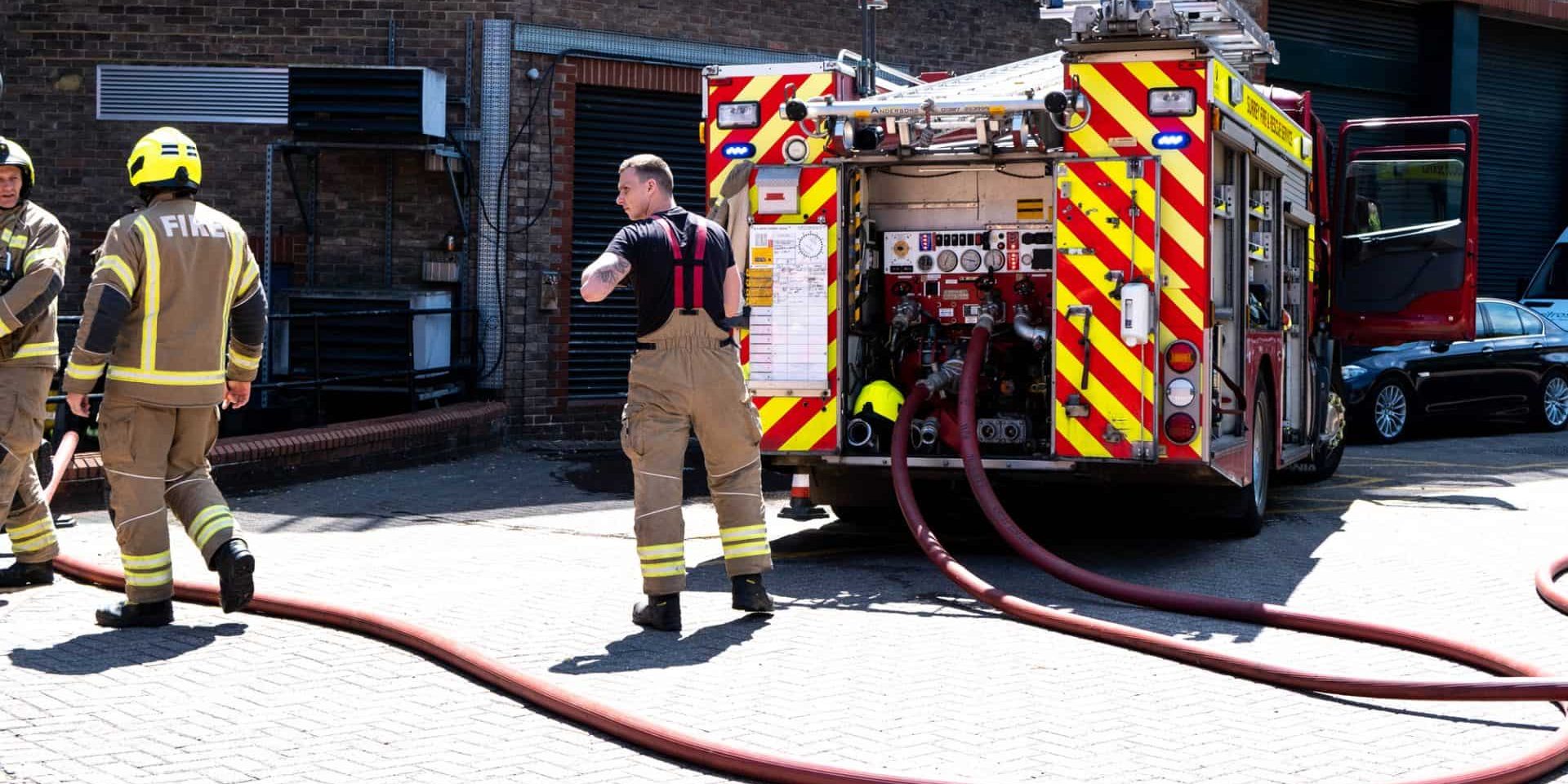
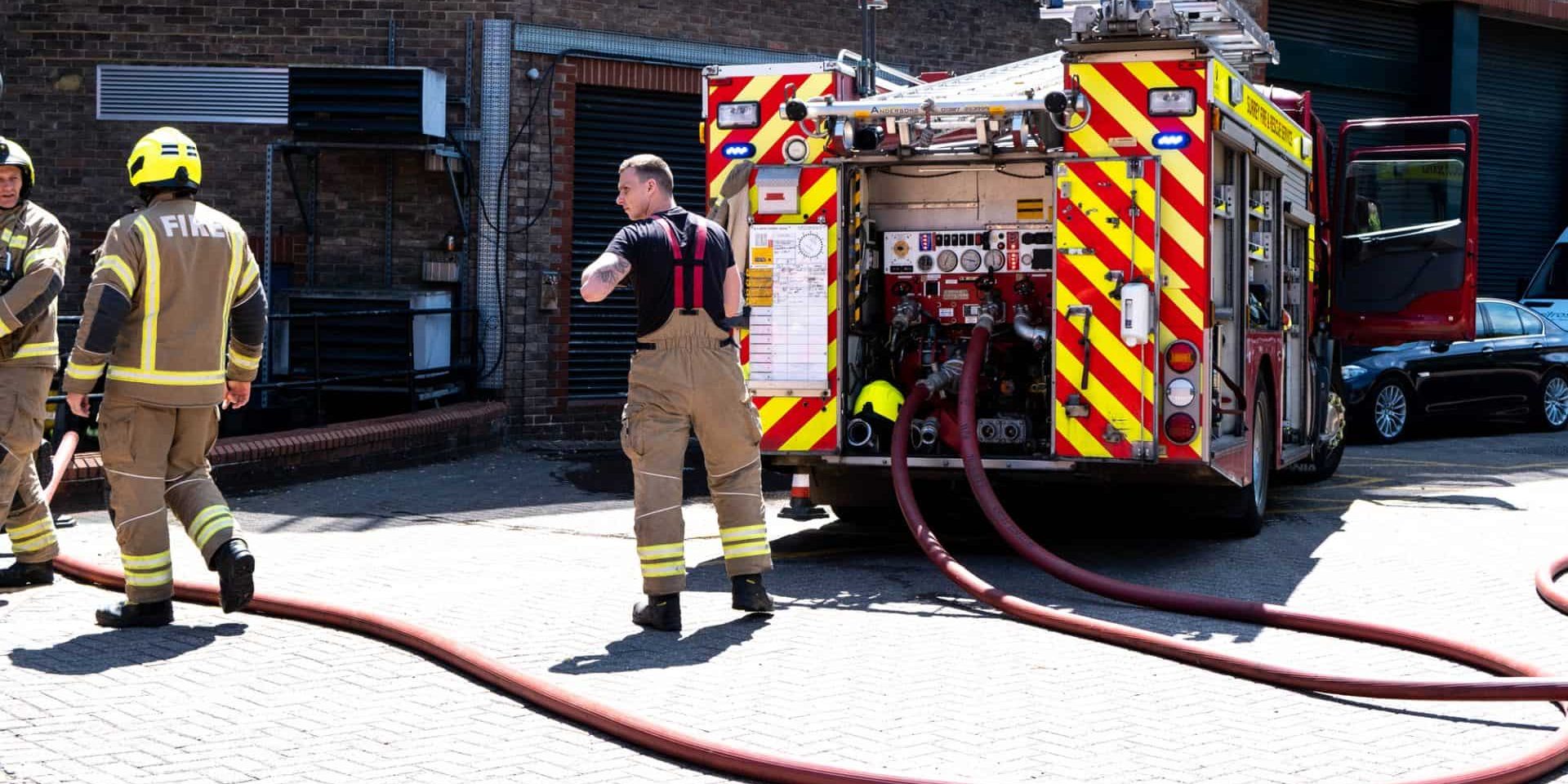
British fire services are now attending a lithium-ion battery blaze every five hours, with electric bikes alone driving more than half a thousand call outs last year and the rate of new incidents growing faster than any other category of fire risk in the country. The figures, released this week by QBE Insurance, paint a picture of a problem that has gone from rare to commonplace in just three years, and it is forcing fire chiefs, insurers and ministers to consider whether the next round of consumer product safety rules needs to include compulsory certification of e-bikes, e-scooters and the third party batteries sold to fit them. For drivers and their families the question is more immediate. The risk is not theoretical and it is mostly happening inside homes, garages and the boots of cars.
QBE’s research found that fire and rescue services across the UK attended nearly 4.8 lithium-ion battery fires every single day in 2025, up from around two a day in 2022. That is a 147 per cent increase in three years, and it is one of the steepest rises ever recorded for a domestic fire hazard outside of the chip pan era. The total includes incidents involving e-bikes, e-scooters, electric cars and a long tail of consumer electronics and tool batteries. E-bikes alone accounted for 520 fires in 2025, up from 149 in 2022. E-bike blazes now make up roughly 30 per cent of all lithium-ion battery fires nationally.
Where the fires are happening and why
The most striking finding from QBE’s research is where the fires occur. Almost half, 46 per cent, happened inside residential properties. A further 31 per cent happened outdoors, often in front gardens, back gardens or on driveways during charging, and 23 per cent were linked to commercial buildings. The dominant cause is not collision damage or manufacturing defect. It is what scientists call thermal runaway, a chemical chain reaction inside a lithium-ion cell that can take hold within seconds and is extremely difficult to extinguish once it starts.
Thermal runaway is triggered most commonly by overcharging, by physical damage to the cells from a drop or a crash, or by exposure to high temperatures such as a hot car boot in summer. Once a single cell fails, it releases flammable electrolyte vapour and heat that destabilises the cells around it, and the fire spreads through the battery pack faster than firefighters can usually intervene. Adrian Simmonds, Risk Manager at QBE Insurance, told GB News that thermal runaway “burns differently, takes much longer to tackle and can require up to 10 times more water to contain”. The London Fire Brigade has documented cases where a single e-bike battery in a stairwell has produced enough smoke and heat within 60 seconds to make the escape route impassable.
The factor driving the steepest rise is what regulators call converted or modified e-bikes, which is the trade term for a standard pedal bike that has had a battery and motor kit retrofitted to it. QBE found that retrofit kits were involved in more fires than factory built models, mainly because the cells used in cheaper retrofit kits are often unbranded imports without the certification marks that come with established manufacturers’ batteries. The same goes for replacement chargers. Using a generic charger from a different supplier is one of the easiest ways to push a battery into overcharge and trigger a fire.
London is the epicentre
The capital is bearing the brunt of the problem. The London Fire Brigade attended 230 e-bike fires in 2025, which is almost half of the national total of 520. Overall the brigade dealt with 522 lithium-ion battery fires last year, accounting for roughly one in three lithium-ion incidents across the country. Outside London, West Yorkshire Fire and Rescue Service logged 126 lithium-ion battery fires, and Lancashire 117. The geographic spread reflects the density of food delivery riders, the popularity of e-bikes for last mile commuting and the prevalence of converted bikes in cities where storage space is at a premium.
The only fire service in the QBE survey to record a year on year fall in lithium-ion incidents was Bedfordshire and Luton Fire and Rescue, which introduced specific public safety guidance on e-bike and e-scooter charging back in 2023. That suggests targeted public information campaigns do work, but it also points to how far the rest of the country still has to go. Most fire services still rely on generic battery safety messages rather than the kind of explicit guidance Bedfordshire produced.
Electric cars are not the main risk, despite the headlines
Electric car fires also rose, from 120 in 2022 to 279 in 2025, an increase of 133 per cent. That sounds alarming until the denominator is included. The number of electric cars on UK roads has grown from around 664,000 to almost two million in the same three years, so the rate of fires per registered vehicle has actually fallen slightly. By contrast e-bike numbers are estimated at around 1.5 million on UK roads, but with no central registration scheme the figure is approximate. Importantly, the bulk of e-bike fires involve home charging or storage, whereas EV fires are split between charging, collision and rare battery defects.
This matters because public perception of EV fire risk has been shaped by viral videos of catastrophic blazes, while the genuinely fast growing risk is sitting in flats, hallways and stairwells in the form of cheap converted e-bikes left charging overnight. The Royal Society for the Prevention of Accidents has called the difference between perceived risk and actual risk one of the most striking it has tracked in five years.
What the rules say and what is coming
E-bikes, e-scooters and their batteries fall under the General Product Safety Regulations 2005, which require products to be safe for their intended use. The Office for Product Safety and Standards has the power to remove unsafe products from the market and has issued recalls and seizure notices for several brands of imported lithium-ion battery in the past 18 months. From October 2024 new Product Safety and Metrology Regulations have also given local trading standards stronger powers to test and seize unsafe batteries sold through online marketplaces. Despite this, enforcement against individual sellers on platforms based outside the UK remains slow.
The Ministry of Housing, Communities and Local Government is consulting on whether to require third party certification for all lithium-ion batteries sold in the UK, similar to the UKCA mark for electrical products. The London Fire Brigade and the Fire Brigades Union have publicly backed mandatory UL 2849 certification for e-bikes and UL 2272 for e-scooters, which are the US safety standards used in New York after a wave of fatal e-bike fires in the city. New York moved to mandate UL certification in 2023, and e-bike fire deaths there have since fallen.
For electric scooters specifically, private use on public roads remains illegal in the UK outside of rental trial schemes. The Department for Transport has been promising a permanent legal framework for private e-scooters for several years, but has not yet introduced one. In the absence of a framework, there is no compulsory certification standard for private e-scooters bought from online marketplaces, which is part of the reason e-scooter fires rose 70 per cent between 2022 and 2025.
What you can actually do to reduce the risk
QBE’s safety advice is straightforward. First, only use certified vehicles and certified batteries. If the battery did not come from an established manufacturer with proper paperwork and a CE or UKCA mark, treat it as suspect. Second, always use the original charger that came with the bike or scooter, and never substitute a generic charger from another brand. Third, never leave a battery charging overnight or while you are out of the house. Most thermal runaway events happen during or shortly after charging.
Charge devices in well ventilated spaces, ideally away from exit routes, hallways and stairs. Never charge near soft furnishings, curtains or stored clothes. If a battery is damaged, dropped or shows any sign of swelling, do not charge it and contact the manufacturer for a replacement. Used batteries should be disposed of at council household waste centres in the dedicated battery container, not in general or recycling waste, because compacted lithium-ion cells in bin lorries cause fires regularly.
For drivers there is one additional consideration. Storing an e-bike or e-scooter in a hot car boot during summer is exactly the kind of high temperature scenario that triggers thermal runaway. If you are carrying a battery in your car, do not leave the vehicle in direct sun for long periods, and remove the battery as soon as you reach your destination. Anyone who lives in a block of flats should also check their building’s fire risk assessment. Many freeholders and management companies have introduced restrictions on charging e-bikes in communal hallways and stairwells, and ignoring those rules can invalidate your contents insurance.
The QBE data is a snapshot rather than a complete national picture, because not all fire services use the same recording categories. The headline figure is nonetheless clear. A risk that did not exist in any meaningful way a decade ago now sits in nearly half a million British homes and is growing at over 30 per cent a year. Insurers, fire services and government are catching up, but until the rules tighten the responsibility for staying safe sits squarely with the people who own and charge the devices.
Sources:

Leave a Comment
More in News
How New CMA Fines Could Save Drivers £9 a Tank as 760 Petrol Stations Refuse to Show Prices
Why The King’s Speech Left UK Drivers Sharing Roads With Britain’s Illegal E-Scooters
What the UK’s First Laughing Gas Breathalyser Means for Drivers This Summer

Why Electric Vans Get a 60% Cheaper MOT and a Three Year Reprieve From 1 June

Why Britain’s Biggest Parking Operator Has Just Shut 29 City Centre Car Parks
Trending on Motoring Chronicle
![New McLaren W1 Unveiled [Photo Gallery]](https://spcdn.shortpixel.ai/spio/ret_img,q_cdnize,to_webp,s_webp/motoringchronicle.com/wp-content/uploads/2024/10/New_McLaren_W1__the_real_supercar-12-1.jpg)
New McLaren W1 Unveiled [Photo Gallery]

Plate Expectations: Innocent Drivers Are Paying Britain’s Cloning Fines

The New Mercedes-AMG GLC 53 4MATIC+: High-Revving Six-Cylinder Delivering Greater Driving Dynamics and Emotion

Councils Reject 91% Of Pothole Claims. Here Is How To Claim And What Evidence You Need