The OMODA 7 Plug In Hybrid Does 56 Miles On Electric, 700 Miles On A Full Tank And Costs £32,000


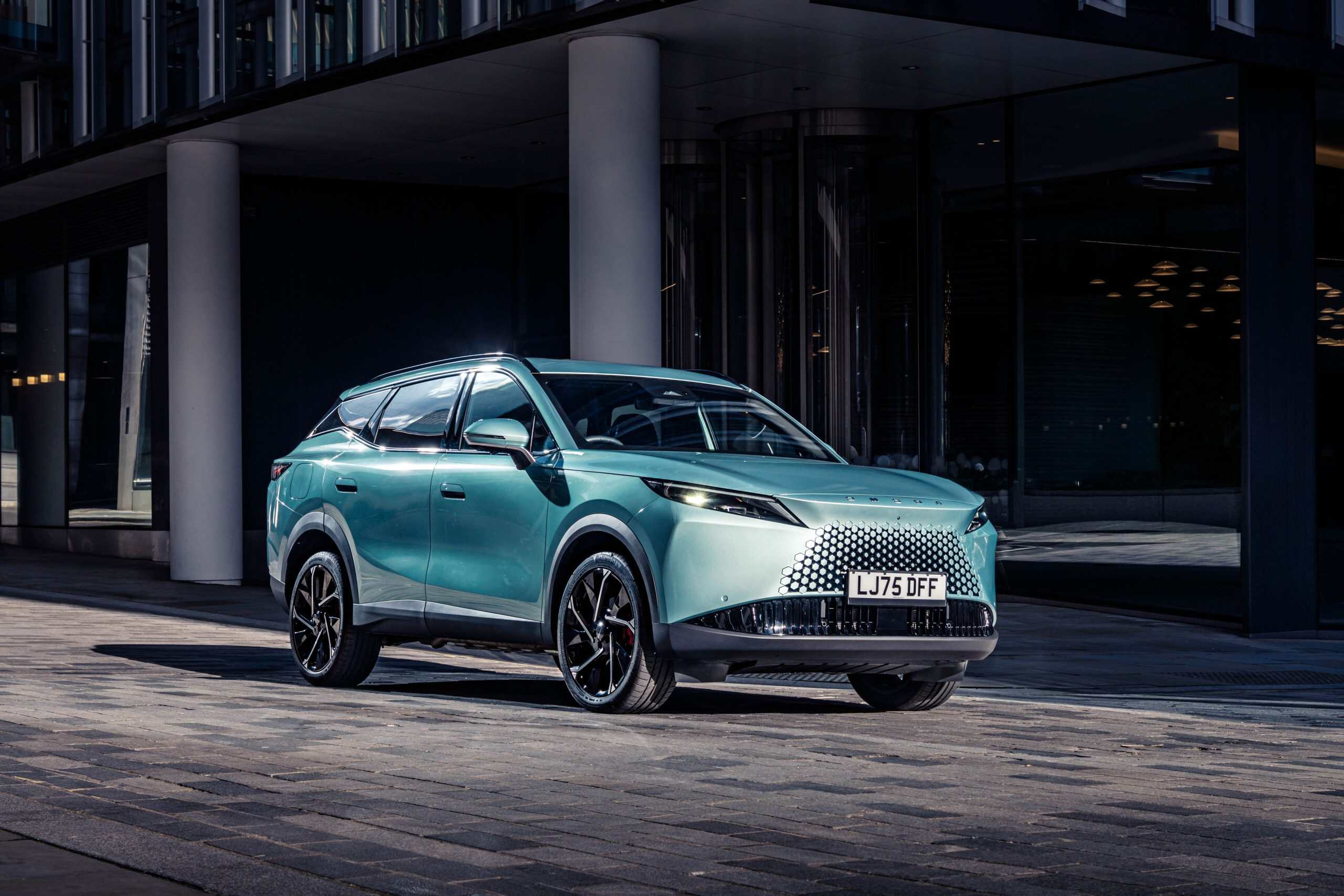
The OMODA 7 SHS-P has started arriving with customers across the UK this week, and the numbers on paper are the kind that make you check them twice. It is a mid-size plug-in hybrid SUV with 56 miles of electric-only range, a combined WLTP range of over 700 miles, CO2 emissions of 23 g/km, 40 kW DC fast charging, Vehicle-to-Load capability, a seven-year warranty and a starting price of £32,000. For context, the Hyundai Tucson plug-in hybrid starts from over £38,000 and the Volkswagen Tiguan eHybrid from around £40,000. Neither comes as generously equipped at the base level.
If you are not familiar with OMODA, it is one of three brands operated in the UK by Chery International, the Chinese car group that now sells nearly one in fifteen new cars on British roads. OMODA launched in the UK in August 2024, and the 7 is its third model after the compact OMODA 5 in petrol, electric and hybrid forms. It sits in the middle of the range, between the 5 and the larger OMODA 9, and is the model the brand expects to do serious volume.
How The Hybrid System Works
The OMODA 7 SHS-P uses what Chery calls its Super Hybrid System. It pairs a 1.5-litre turbocharged petrol engine with an electric motor and an 18.3 kWh battery pack for a combined output of 204 PS and 365 Nm of torque. That is enough for 0 to 62 mph in 8.4 seconds and a top speed of 112 mph. This is not a performance car. It is a family SUV designed to cover ground efficiently and comfortably, and the numbers reflect that.
The electric-only range is 56 miles on the WLTP cycle. For most commutes, school runs and daily driving, that is enough to complete the day without the petrol engine starting at all. Plug in every night and you could go weeks without visiting a fuel station.
When both the engine and battery work together, the combined WLTP range exceeds 700 miles. The official combined fuel economy is 403 mpg, which is a standard PHEV testing artefact that assumes you charge regularly. In practice, your fuel consumption will depend entirely on how often you plug in and how far you drive between charges. If you charge every night and your daily mileage stays under 50 miles, you will use very little petrol. If you never charge it, you will get the fuel economy of a 1.5-litre turbo and the extra weight of a battery you are not using.
The message with any plug-in hybrid is the same: the technology only delivers its full benefit if you actually plug it in.
Charging
The 18.3 kWh battery supports 40 kW DC fast charging, which takes the battery from 30% to 80% in around 20 minutes. On a 7.4 kW home wallbox, a full charge takes approximately two and a half hours. That is fast enough to top up completely during an evening or overnight, and short enough that a lunch stop at a rapid charger can add meaningful range on a longer trip.
The car also supports V2L, or Vehicle-to-Load, allowing you to power external devices directly from the battery through a dedicated connector. At this price point, V2L is not common. It is the kind of feature usually found on higher-spec versions of more expensive cars.
What You Get For £32,000
The OMODA 7 SHS-P is available in two trim levels: Knight at £32,000 and Noble at £35,000. A petrol-only version with a 1.6-litre TGDI engine starts from £29,915, with deliveries of that model expected towards the end of the second quarter.
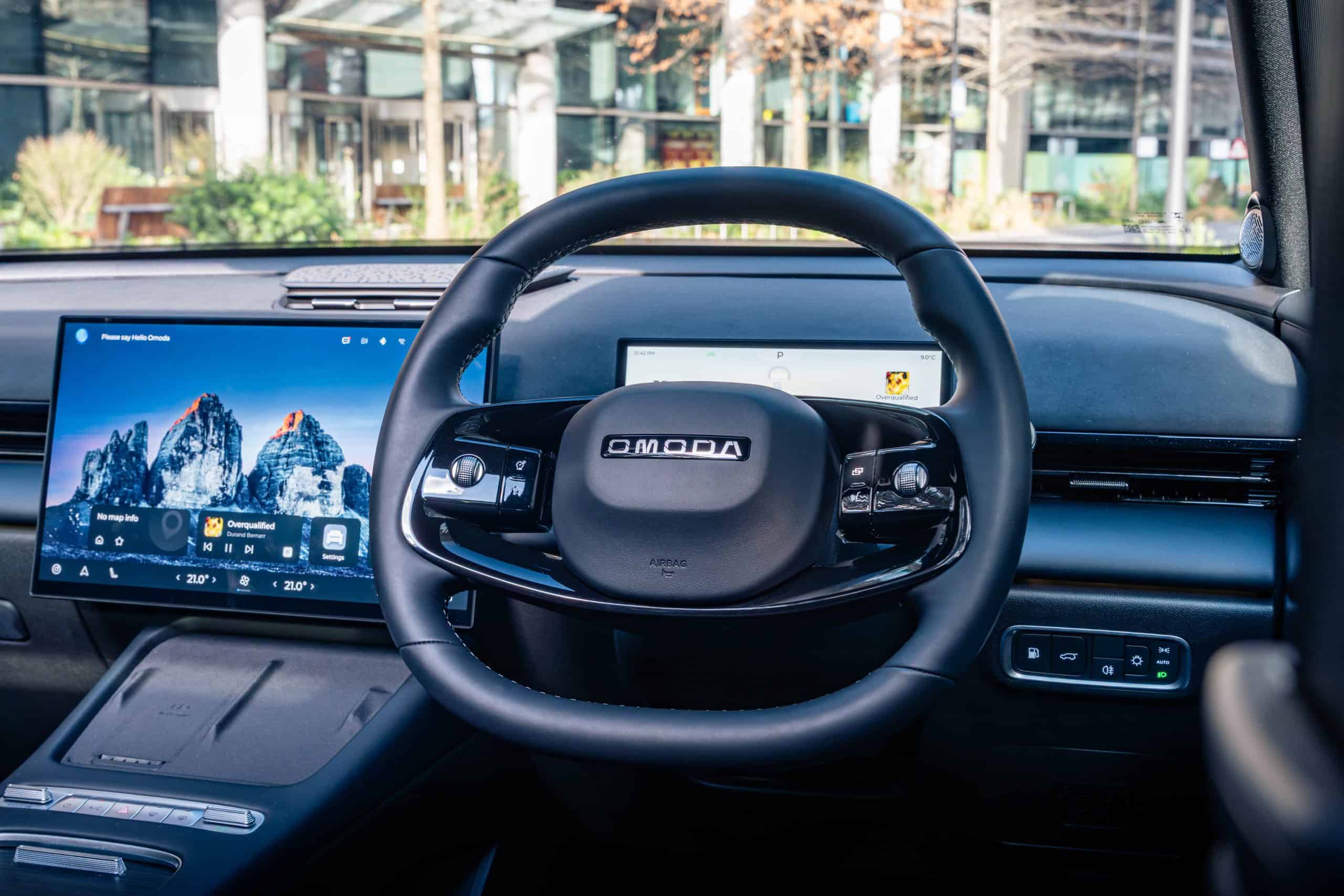
The Knight specification is not an entry-level stripped-out special. It comes with eco-leather upholstery, Sony audio, dual digital displays, wireless Apple CarPlay and Android Auto, and the full suite of active safety systems. The Noble trim adds six-way electric seat adjustment for driver and front passenger, a 1.45-metre panoramic sunroof, an air-conditioning fragrance system and four-zone voice control.
The emphasis across both trims is on making the cabin feel calm and spacious. Early reviews have been consistent on this point: the OMODA 7’s interior punches above its price bracket, with a level of comfort and finish that sits closer to the premium segment than the budget end of the market.
The Company Car Angle
For company car drivers, the OMODA 7 SHS-P is worth serious consideration. At 23 g/km CO2, it sits in the 10% Benefit in Kind bracket for the 2026/27 tax year. On a list price of £32,000, that gives a BiK value of £3,200 per year. For a higher-rate taxpayer, that translates to £1,280 per year in tax. For a basic-rate taxpayer, £640.
Compare that to a petrol SUV of equivalent size sitting in the 30% bracket, where the BiK bill on a £35,000 car would be £4,200 per year before tax. The saving is substantial, and it recurs every year of the lease.
The seven-year, 100,000-mile warranty and eight-year battery warranty also reduce the risk profile for fleet managers evaluating the car against more established brands.
How It Compares
The OMODA 7’s most direct competitors are the Hyundai Tucson plug-in hybrid and the Volkswagen Tiguan eHybrid. Both are proven, well-regarded family SUVs from manufacturers with decades of UK market presence. Both also cost significantly more. The Tucson PHEV starts from over £38,000. The Tiguan eHybrid starts from around £40,000. Neither offers a seven-year warranty as standard, and neither matches the OMODA’s specification at the entry level.
The trade-off is brand familiarity. Hyundai and Volkswagen have established dealer networks, proven residual values and a track record that OMODA does not yet have. Buying an OMODA 7 today means buying into a brand that has been in the UK for less than two years. The warranty is long, the specification is high and the early reviews are positive, but the long-term ownership experience, including resale value, parts availability over time and dealer service quality, is still unproven.
That is a calculated risk. At a price difference of £6,000 to £8,000 against the Tucson and Tiguan, it is a risk that an increasing number of UK buyers appear willing to take.
The Warranty
All OMODA 7 models are covered by a seven-year, 100,000-mile vehicle warranty with no mileage cap for the first three years. The SHS-P adds an eight-year, 100,000-mile battery warranty. RAC Home Start roadside assistance is included as standard for the lifetime of the warranty, provided the car is serviced within the OMODA and JAECOO dealer network in line with the scheduled maintenance plan.
The warranty transfers to subsequent owners for the remainder of the term, which should provide some reassurance on resale.
Victor Zhang, UK Managing Director of OMODA UK, said: “The OMODA 7 was designed to be a popular model for us in the UK. Seeing the first cars now with customers is a genuine milestone, because this is where the brand really starts to be experienced day to day on British roads. It’s a car that quietly demonstrates what OMODA stands for in terms of design, comfort and technology, and we’re very pleased to see it begin its journey with owners.”
The OMODA 7 SHS-P is available now through OMODA’s UK-wide dealer network. The petrol version follows later this quarter.

Leave a Comment
More in News

EV Owners Face £6,830 Bills in a Battery Gap Warranty and Insurance Both Reject

Why Driving Test Waits Rose Even as DVSA Ran a Record Number of Tests

Nearly a Third of Car Finance Trade-Ins Are Now Underwater, Data Shows

How to Have Your Say Before Self-Driving Car Safety Rules Are Set This Week
300,000 Uninsured Cars Are Driven in Britain Every Day and Honest Drivers Pick Up the Bill
Trending on Motoring Chronicle

UK Driving Convictions Hit a Ten-Year High as Average Fines Reach £327

How Long Does Car Paint Last? Complete Timeline and Protection Guide

Blue Badge Holders Now Pay to Park as More Councils Scrap Free Spaces
Croydon Drivers Still Owed £6.9 Million From Traffic Fines a Court Ruled Unlawful