
Is It Bad To Charge Your EV To 100% Every Night?
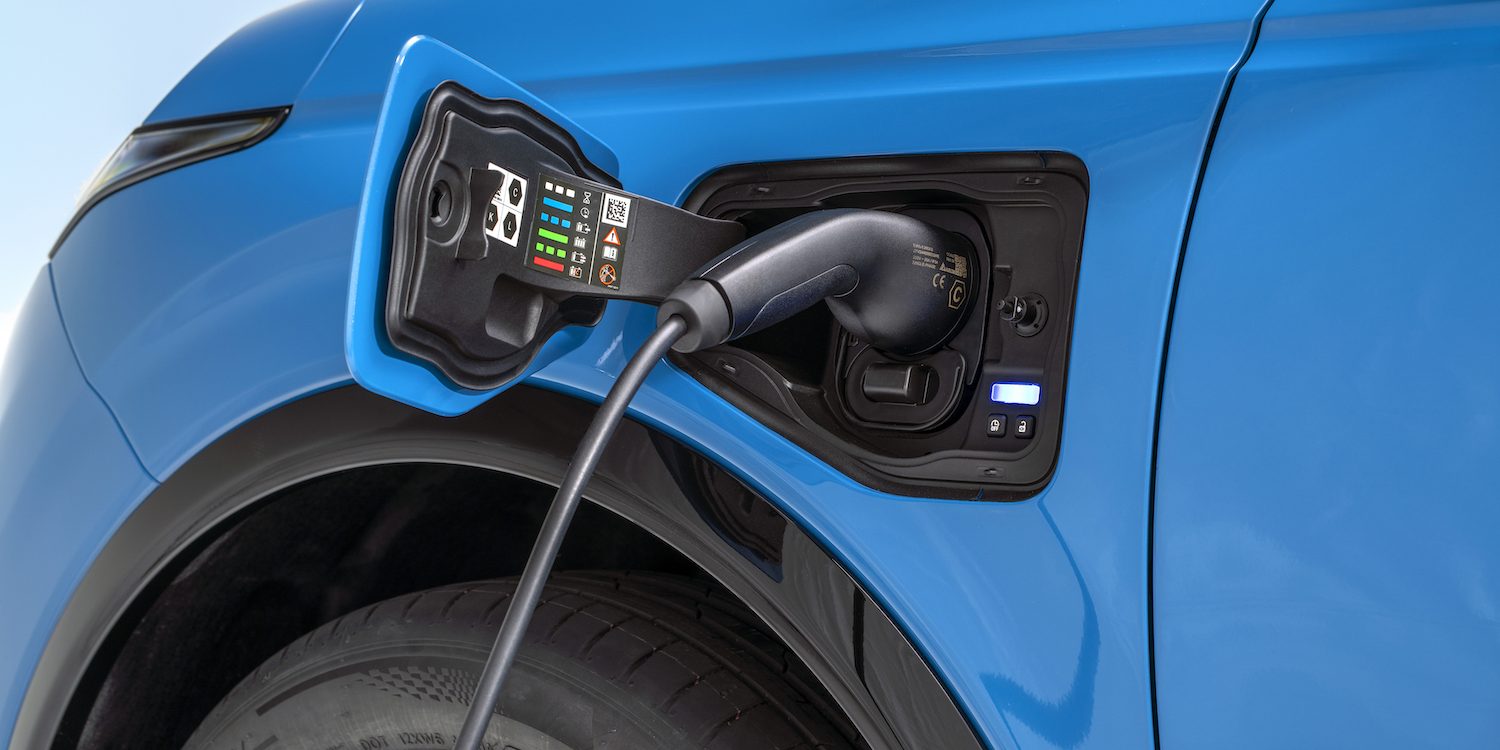
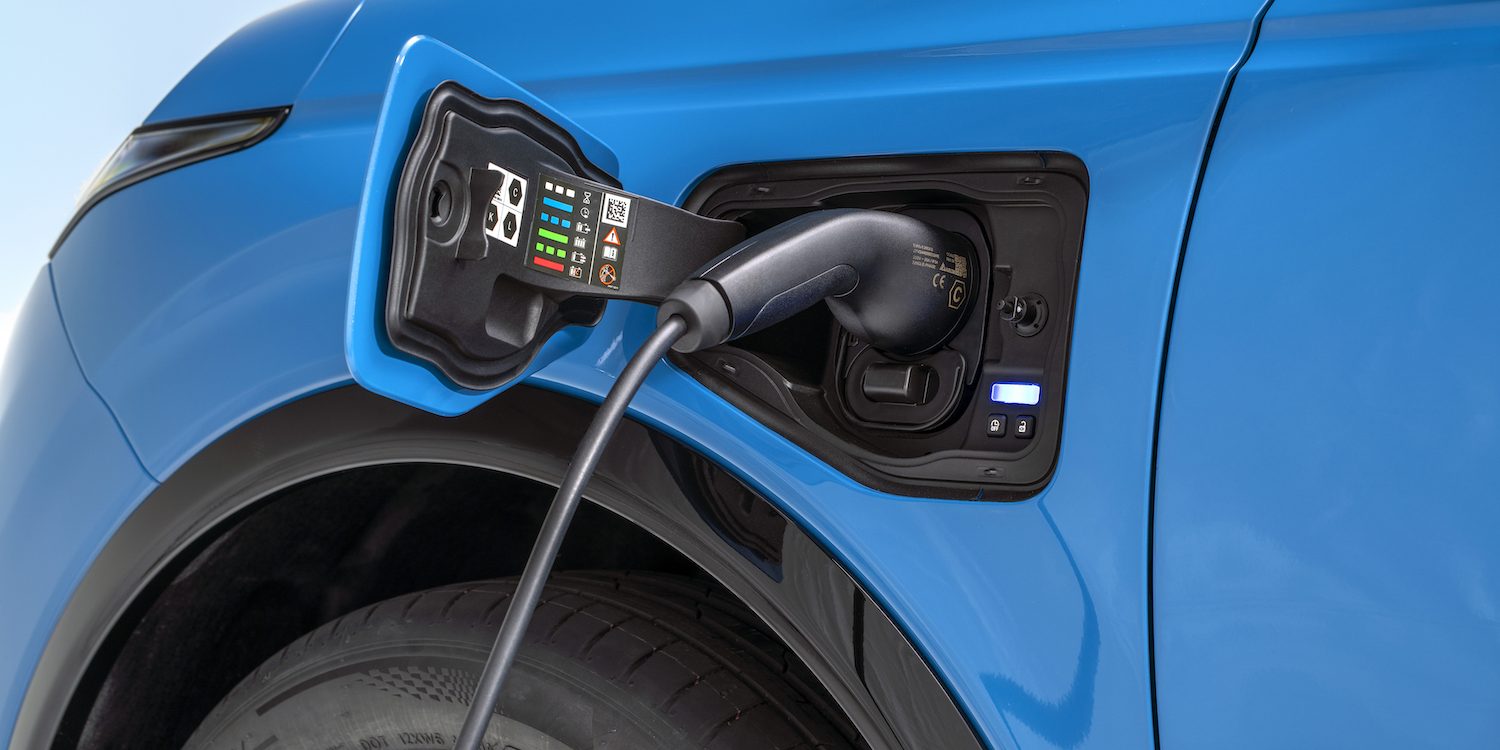
It depends on the battery chemistry. EVs with LFP (lithium iron phosphate) batteries are designed to be charged to 100 percent daily. Tesla’s owner manual recommends it. EVs with NMC (nickel manganese cobalt) batteries degrade 20 to 30 percent faster when routinely held at full charge versus an 80 percent limit. Here is how to tell which type your car has.
Why Does Battery Chemistry Change the Answer?
LFP batteries and full charging
Lithium iron phosphate (LFP) cells have a different voltage profile from nickel-based cells. Their voltage curve is flatter across the state of charge range, which means the cells experience less electrochemical stress at high charge levels. An LFP cell sitting at 100 percent state of charge is under significantly less internal pressure than an NMC cell at the same level. This tolerance is built into the chemistry itself and is the reason manufacturers of LFP-equipped vehicles set the default charge limit to 100 percent.
LFP batteries are rated for 3,000 to 5,000 full charge-discharge cycles before capacity drops to 80 percent of original. For context, a driver covering 12,000 miles per year in an EV with a 250-mile range completes roughly 48 full equivalent cycles per year. At that rate, an LFP battery rated for 3,000 cycles would take over 60 years to reach the 80 percent threshold through cycle aging alone. The cycle life of LFP is so long that calendar aging (degradation from time and temperature regardless of use) will limit the battery before cycle count does.
There is also a practical reason to charge LFP batteries to 100 percent regularly. The battery management system relies on reaching the top voltage to calibrate its state-of-charge estimation. If an LFP battery is never fully charged, the displayed range percentage can drift, showing inaccurate numbers that make range planning unreliable. Tesla advises LFP owners to charge to 100 percent at least once per week specifically to keep the range estimate calibrated. Setting the daily limit to 100 percent satisfies this requirement automatically.
NMC batteries and the 80 percent guideline
Nickel manganese cobalt (NMC) and nickel cobalt aluminum (NCA) cells behave differently at high states of charge. Their voltage rises more steeply as the cell approaches full, and the cathode material experiences greater mechanical and chemical stress when held near its maximum voltage. At 100 percent state of charge, the crystal structure of the cathode is in a highly oxidised state that accelerates parasitic side reactions, consuming electrolyte and forming resistive layers on the electrode surfaces.
Research across multiple studies shows NMC cells degrade 20 to 30 percent faster when routinely stored at 100 percent compared to 80 percent, with the effect amplified at higher temperatures. A vehicle in a hot climate that charges to 100 percent every night and sits fully charged until the morning commute experiences a compounding effect: the high state of charge stresses the cathode, and the elevated temperature accelerates the parasitic reactions that the high voltage promotes.
This is why every manufacturer using NMC or NCA chemistry sets the default daily charge limit below 100 percent. Tesla Long Range and Performance models default to 80 percent. Hyundai, Kia, BMW, Volkswagen, and Ford all recommend similar limits in their owner manuals for daily use. The 80 percent guideline is not arbitrary caution. It reflects the measured relationship between sustained high voltage and accelerated chemical aging in nickel-based cathode materials.
How Do You Know Which Battery Your EV Has?
Checking your specific vehicle
The simplest way to check is the vehicle’s owner manual or the manufacturer’s online specification sheet for your model year and trim level. The battery chemistry is listed under the technical specifications. If the manual is not readily available, the vehicle’s default charge limit setting is a reliable indicator: a default of 100 percent almost always indicates LFP chemistry, while a default of 80 or 90 percent indicates NMC or NCA.
Tesla Standard Range versions of the Model 3 and Model Y use LFP batteries. Tesla Long Range and Performance versions use NMC. This is a trim-level distinction within the same model, so knowing you have a “Tesla Model 3” is not enough: you need to know which variant. The easiest check on a Tesla is to open the charging settings screen. If the slider defaults to 100 percent and the software label says “Daily” at 100, the vehicle has an LFP pack.
Among other manufacturers, BYD uses its proprietary Blade battery, which is LFP chemistry, across most of its lineup. The Ford Mustang Mach-E Standard Range uses LFP in some markets. The Hyundai Ioniq 5, Kia EV6, Volkswagen ID.4, BMW iX, and most other mainstream EVs from European, Korean, and Japanese manufacturers use NMC chemistry. The trend is shifting toward LFP for entry-level and standard-range models, with NMC reserved for long-range and performance variants where energy density per kilogram is the priority.
Why the industry is moving toward LFP
LFP batteries are cheaper to produce, contain no cobalt or nickel (reducing supply chain risk and ethical concerns), and tolerate more charge cycles before degradation becomes significant. The trade-off is lower energy density: an LFP pack stores less energy per kilogram than an equivalent NMC pack, which means either a heavier battery or a shorter range for the same physical size. For urban commuters and standard-range models, this trade-off is acceptable. For long-range touring EVs and performance models, NMC’s higher energy density remains the preferred choice.
Tesla has been the most aggressive in adopting LFP, using it in all Standard Range Model 3 and Model Y vehicles globally. BYD, the world’s largest EV manufacturer by volume, uses LFP across the majority of its range. Ford, Volkswagen, and Rivian have all announced plans to expand LFP usage in future models. As LFP adoption grows, the proportion of EV owners who can charge to 100 percent daily without any degradation concern will increase.
For buyers, the chemistry choice affects daily life in a tangible way. An LFP owner plugs in, sets 100 percent, and never thinks about charge management again. An NMC owner sets an 80 percent daily limit, raises it to 100 percent before road trips, and returns it to 80 on arrival. The real-world lifespan of an EV battery is excellent under either approach, but LFP removes the management overhead entirely.
What Actually Happens Inside the Battery at 100 Percent?
The hidden buffer
When the dashboard displays 100 percent, the cells are not at their absolute physical maximum. Every EV manufacturer programs a buffer at both the top and bottom of the usable charge range. The battery management system stops charging before the cells reach their true maximum voltage, and it shuts down the vehicle before the cells reach their true minimum. The driver never has access to the full electrochemical range of the cells.
This buffer exists specifically to protect the cells from the voltage extremes where damage occurs most rapidly. The size of the buffer varies by manufacturer and is not disclosed publicly, but it is typically 3 to 5 percent at each end. What the driver sees as “100 percent” is actually around 95 to 97 percent of the cell’s true capacity. What the driver sees as “0 percent” is actually 3 to 5 percent above the cell’s true empty state.
The buffer is the reason that charging to the displayed 100 percent on a modern EV is not the same as pushing the cells to their physical limit. It is also the reason that running the battery to the displayed 0 percent does not cause immediate cell damage, though letting it sit at that level for extended periods is still not recommended. The BMS manages these limits invisibly, and the driver interacts only with the usable portion of the battery’s capacity.
Time at full charge is the real factor
For NMC batteries, the degradation concern is not the act of reaching 100 percent. It is the time spent sitting at that level. Charging to 100 percent and driving immediately puts the cells at high voltage for a short period, which has minimal impact. Charging to 100 percent at 10pm and leaving the car parked until 7am puts the cells at high voltage for nine hours, and doing this every night for years adds up to a measurable difference in long-term capacity.
Scheduled charging addresses this directly. Most EVs allow the owner to set a departure time, and the vehicle calculates when to start charging so that it finishes at or near the scheduled time. A departure time of 7am with an 80 percent charge limit means the car finishes charging in the early hours rather than reaching full charge at 10pm and sitting for nine hours. This feature is available on Tesla, Hyundai, Kia, BMW, Ford, and most other modern EVs.
For LFP batteries, time at full charge is a non-issue. The chemistry tolerates sustained high voltage without the accelerated parasitic reactions that affect NMC cells. An LFP vehicle can charge to 100 percent at 8pm and sit until morning with no meaningful degradation penalty. This is the fundamental practical difference between the two chemistries and the reason manufacturers give different charging advice for each. The charging curve also behaves differently between chemistries, with LFP packs tapering less aggressively near the top of the charge.
What Are the Best Charging Habits for Each Battery Type?
LFP daily routine
Set the charge limit to 100 percent and leave it there. Plug in every night or whenever convenient. No charge management is needed. Tesla’s owner manual states this explicitly for Standard Range vehicles: “For Model 3 vehicles equipped with an LFP Battery, Tesla recommends that you keep your charge limit set to 100%.” Follow the manufacturer’s guidance and do not apply the 80 percent rule to an LFP vehicle, as it was designed for NMC chemistry.
Charge to 100 percent at least once per week to keep the BMS calibration accurate. If you charge daily to 100, this happens automatically. If you only charge a few times per week and typically top up to 60 or 70 percent for short commutes, run a full charge at least every seven days. Inaccurate state-of-charge readings on an LFP vehicle are almost always traced to infrequent full charges.
Use a Level 2 home wallbox (7 kW in the UK, 7.2 to 11.5 kW in the US) as your primary charging method. This is the gentlest way to charge any battery chemistry and produces the slowest long-term degradation. Save DC fast charging for road trips. An LFP battery will tolerate fast charging well, but home charging is still cheaper, more convenient, and marginally better for longevity.
NMC daily routine
Set the daily charge limit to 80 percent. This keeps the cells in the middle of their voltage range where degradation is slowest. For most EVs with a 250-mile rated range, 80 percent provides approximately 200 miles of usable range, which is more than enough for typical daily driving distances of 30 to 50 miles.
Raise the limit to 100 percent the night before a long trip. Drive soon after in the morning so the cells spend minimal time at full voltage. Reset the limit to 80 percent when you return. Most EVs make this adjustment easy through the touchscreen or the companion phone app. Some, including Tesla and BMW, allow location-based charge limits that automatically apply different settings at home versus away.
Use scheduled charging to finish as close to your departure time as possible. This minimises the hours the battery sits at its target level, whether that is 80 or 100 percent. If your wallbox or the vehicle supports it, a departure time of 7am with an 80 percent limit is the optimal daily setup. The vehicle manages the timing, and you simply plug in whenever you arrive home.
EV Charging FAQs
Is it bad to charge an EV to 100 percent every night?
It depends on the battery chemistry. LFP batteries are designed to be charged to 100 percent daily, and Tesla recommends it. NMC batteries degrade 20 to 30 percent faster when routinely held at full charge. For NMC vehicles, an 80 percent daily limit is recommended, with 100 percent reserved for long trips.
How do I know if my EV has an LFP or NMC battery?
Check the owner manual or specification sheet. Tesla Standard Range models use LFP. Tesla Long Range and Performance models use NMC. BYD vehicles use LFP. Most other mainstream EVs from Hyundai, Kia, BMW, Volkswagen, and Ford use NMC. The vehicle’s default charge limit setting is also an indicator: 100 percent default indicates LFP, 80 percent default indicates NMC.
What happens if you charge an NMC battery to 100 percent occasionally?
Occasional full charges before long trips cause negligible additional degradation. The concern is with the daily habit of holding the battery at 100 percent for extended hours overnight, every night. A single full charge followed by immediate driving has minimal impact.
Does charging to 100 percent void the warranty?
No. Charging to 100 percent using the vehicle’s standard system does not void any manufacturer warranty. The battery management system controls the charge process and prevents cells from exceeding safe limits. Warranty exclusions relate to physical damage or unauthorised modifications, not the charge level selected within the vehicle’s own software.
Should I let my EV battery drop to zero before charging?
No. Lithium-ion batteries experience stress at very low states of charge. Letting the battery sit near zero for extended periods can cause permanent capacity loss. Most manufacturers recommend keeping the battery above 10 to 20 percent during normal use.
Sources

Leave a Comment
More in News

What Your Tyre Pressure Warning Light Actually Means (and How to Reset It)
How to Fix a Windscreen Chip Before It Fails Your MOT

Millions of Older Drivers Could Now Pay Doctors £62.50 for a DVLA Medical Letter
What Every UK Driver Needs to Know Now the Digital Driving Licence Is Live

How to Check a Used Car for Outstanding Finance Before You Lose Thousands
Trending on Motoring Chronicle
New benchmark in the compact class: the Audi Q3 [Photo Gallery]

Ford Recalls 255,404 Focus Cars Over an Engine That Can Stall While Driving

Why Hidden Disability Blue Badge Approvals Have Tripled to 55,000 in Just Three Years

The Top 5 Mexican F1 Drivers Of All-time
