More than a machine: the timeless passion for Bugatti racing cars


There are few racing cars that have earned the status of the Bugatti Type 35. A full century after it first competed, surviving examples are still being pushed hard on the very tracks where its reputation was made. They are driven by a small and devoted community of owners for whom racing these cars is not a hobby but a calling. Thierry Stapts, who drives a white Type 35 a hundred years after it was built in Molsheim, is one of them.
When Ettore Bugatti unveiled the Type 35 at the 1924 Lyon Grand Prix, it represented something genuinely new: a car of exceptional lightness, balance and mechanical refinement that was unlike anything else on a circuit at the time. What followed was one of motorsport’s great winning streaks – over 2,500 victories across road races, rallies, speed trials and hill climbs – cementing its place as the most successful competition car of its era.
To climb into the cockpit of a Type 35 is to experience something that almost nobody else on earth can. The car places the driver at the very center of the action, with head above the bodywork, fully exposed, the engine note filling the air, and the smell of fuel and oil immediate. The vibrations that travel through the car are a constant conversation between the driver, the machine and the track. The Type 35 feels, as Thierry puts it, somewhere between a racing car and a motorcycle. It is a sensation that every one of its drivers knows, and that none of them tires of.
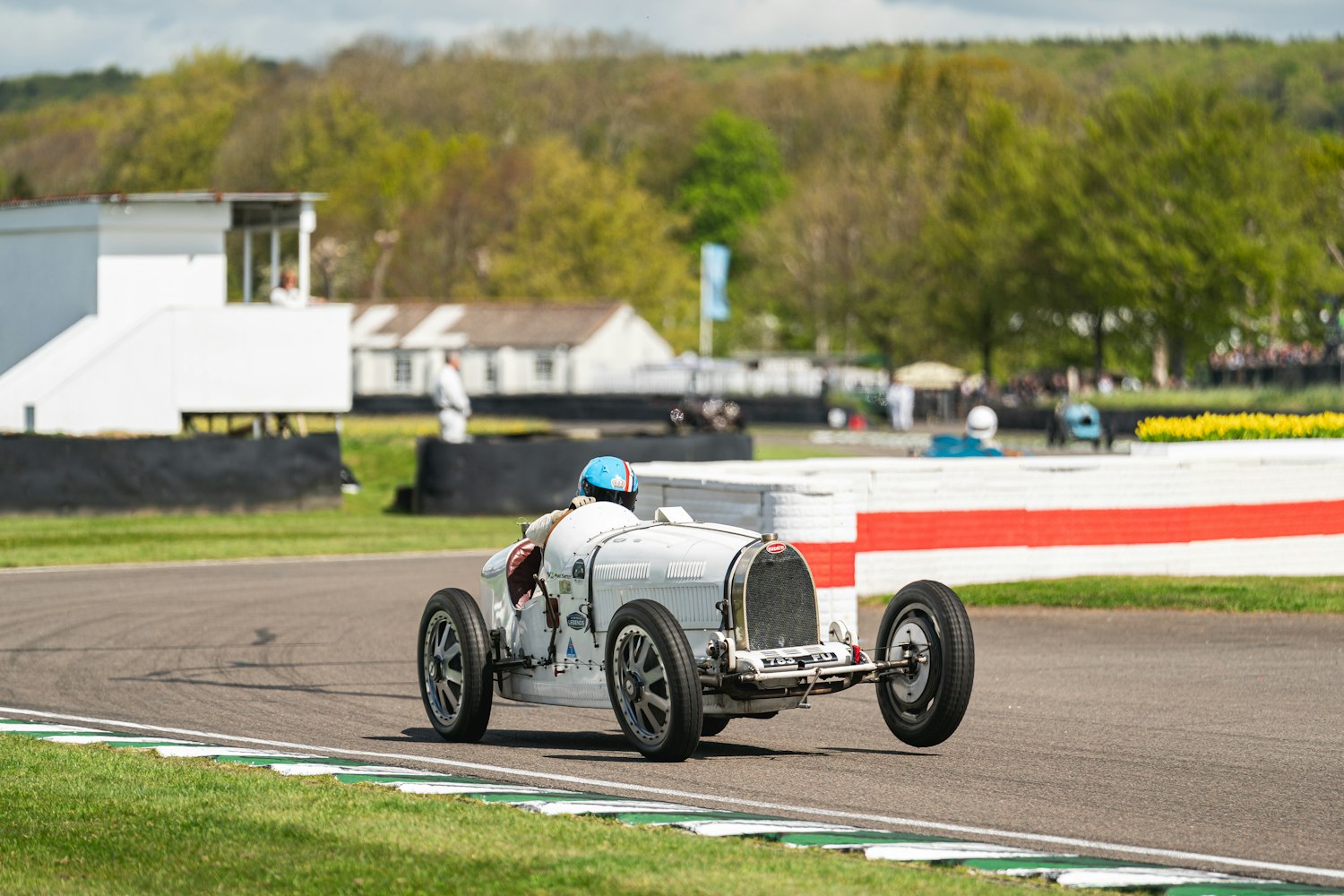
What makes these surviving examples remarkable is how little has been lost in a hundred years. The steering communicates everything. The engine is characterful. To drive the Type 35 well is to work with the car rather than against it, to understand its demands and meet them. What it gives back in return is something no modern car can replicate.
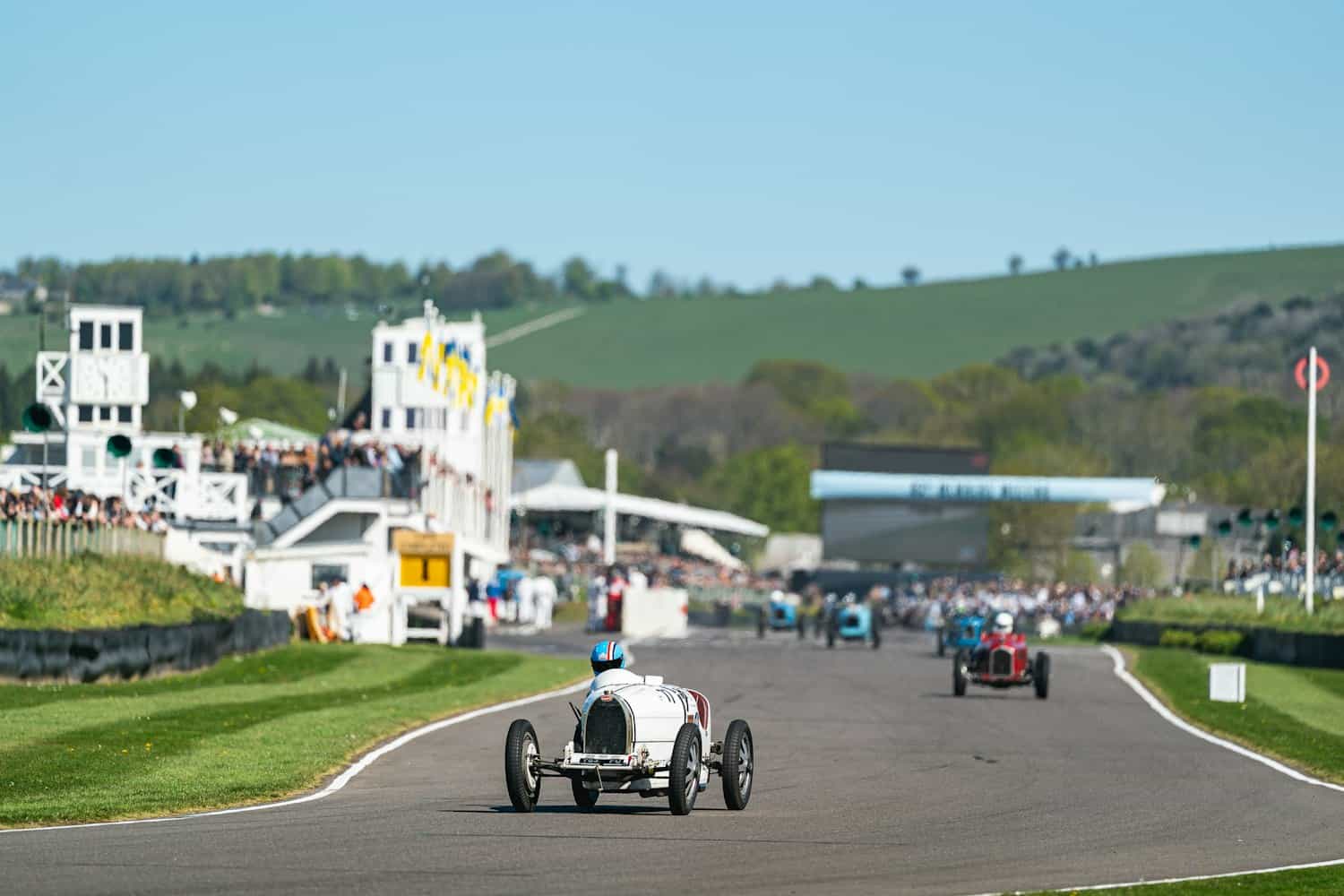
That process of learning takes time. Thierry has been driving his Type 35 for seven years and, he says, is still improving. He is not alone in that. Among the community of owners who race these cars, the relationship with the Type 35 is measured not in seasons but in decades, and there is always more to discover. On the road to the circuit, these owners are the warmest of companions. Once the timing begins, each pushes as hard as the car will allow.
Behind every lap is a considerable amount of work. Parts are scarce and often have to be fabricated from scratch. The knowledge required to work on these cars is specialist and not easily found. Much of what keeps historic Bugattis racing, Thierry notes, comes from the United Kingdom, where specialists continue to manufacture components year after year.
Thierry’s mechanic, Pascal Dussouchet, a specialist of rare dedication who works passionately on historic Bugattis, is the reason the car remains both competitive and safe. It is a relationship built on trust and on a shared understanding that these cars deserve to be looked after properly. They are raced hard, and they are maintained accordingly.
After seven years together, the Type 35 has become something more than a racing car to Thierry. He calls it “grandmother”: old, nimble and beautiful. “It’s like a part of my family,” he adds. It is a feeling that resonates across the entire community. The people who race these machines share something that is difficult to explain to anyone outside it. It is a bond formed through shared passion and a shared refusal to let these cars stand still. “The more you drive the car, the more you go racing, the more you meet fans of Bugatti, you realize how lucky you are racing a Type 35.”
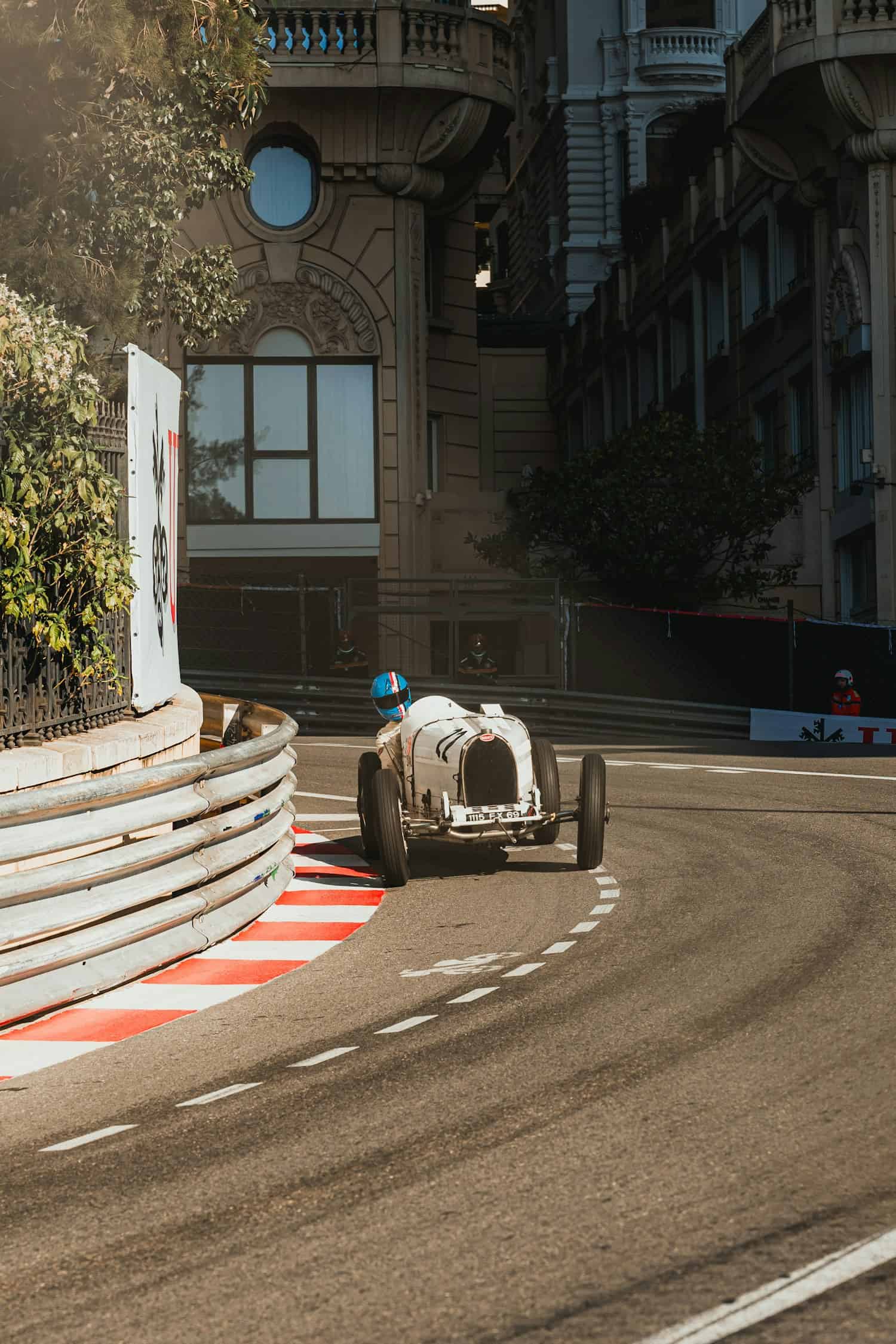
The calendar these cars keep is a remarkable one. Monaco, Le Mans Classic, Goodwood and Angoulême are regular fixtures. Villareal in northern Portugal is a particular favourite of Thierry, and Donington Park is next for him. Of all of them, Monaco carries a particular weight. To race through the streets where William Grover-Williams won the very first Monaco Grand Prix in 1929, at the wheel of a Type 35B, is to feel history not as something distant, but as something alive beneath your wheels.
At each venue, the history is impossible to ignore. These are the circuits that carried Grover-Williams, Albert Divo and Tazio Nuvolari into legend – drivers who, between them, defined Grand Prix racing in the late 1920s and made the Type 35 the most formidable car of its generation.
The very model they drove is the one still racing today, in the hands of those fortunate enough to carry that history forward. Thierry Stapts is one of them, and like all of them, he has no intention of stopping. Ask him whether there will ever come a time when he stops racing the Type 35, and the answer requires no thought. “As long as I can,” Thierry says. “I can’t stop. No way.”

Leave a Comment
More in News

Every UK Driver Can Force Council Pothole Repairs Using a Free 1980s Law

Cat A, B, S and N: What a Written-Off Car Actually Means Before You Buy One

Why Brake Fluid Needs Changing Every Two Years (and What It Costs)
Why Your Car Pulls to One Side (and What a Wheel Alignment Costs)

How to Tell if a Slow Puncture Is Repairable (and What It Costs)
Trending on Motoring Chronicle

Can You Add Oil To A Hot Engine?

Maryland Drivers With Out-of-State Plates Face $420 Fines Starting October 1

How Santa Fe Speed and Noise Cameras Will Fine Drivers Starting in August

How Car Insurance Premiums Have Fallen to Their Lowest Level in Three Years