
How to set up your mirrors to cut blind spots


To eliminate blind spots, adjust your side mirrors outward until you can just barely see the edge of your car, using the Blind-Zone Glare Elimination (BGE) method. Lean your head against the left window to set the left mirror, and lean to the center console for the right mirror.
Step-by-Step Mirror Setup
- Rearview Mirror: Frame the entire rear window directly behind you.
- Driver Side Mirror: Lean your head to the left until it touches the window, then adjust the mirror outward until you can only just see the rear fender/edge of your car.
- Passenger Side Mirror: Lean to the right (toward the center console), then adjust the mirror until you can just see the edge of your car.
- Verification: A car passing you should move from the rearview mirror to the side mirror, then appear in your peripheral vision just as it leaves the side mirror.
- Check Blind Spots: Even with proper adjustments, always perform a shoulder check before changing lanes.
- Convex Mirrors: Consider adding small, inexpensive convex mirrors to your side mirrors for a 160-degree field of view.
Blind spots are not a fact of life. Most of them are created by mirror angles that show too much of your own car and not enough of the lane beside you. The fix is a repeatable setup that links your rearview mirror to your door mirrors so a passing vehicle moves through your mirrors in one continuous track, with no gap.
Set your seat and steering wheel first
Mirror setup only works if your driving position stays consistent. If you adjust your seat after setting mirrors, you change the geometry and bring blind spots back.
Lock in a stable driving position
Start with the basics. Sit with your hips back in the seat, shoulders against the backrest, and your head upright. If you drive slouched, you will set mirrors for a posture you cannot hold for long, then the mirror coverage shifts as you sit up.
Set seat height so you can see the road close to the front of the bonnet (hood) without craning. Set seat distance so you can press the brake firmly with a slight bend in your knee, not a straight leg. Set the backrest so your wrists can rest on top of the steering wheel while your shoulders stay on the seatback.
Once the seat is set, do not move it again until you finish all mirrors. If you share the car, save the seat position first, then set mirrors for that saved position.
Level the steering wheel to reduce head movement
A mirror system works best when your head stays still. Set the steering wheel so you can reach the top without stretching and so the wheel does not block the instrument cluster. The goal is a relaxed grip that does not pull your shoulders forward.
If your steering wheel is too far away, you will lean forward in traffic and your mirror view changes. If it is too close, you will sit back and your head position drifts.
Clean the glass and check the mirror surfaces
Smudges and haze reduce contrast, especially at night. Wipe the rear window, side glass, and mirror glass before you adjust. If a mirror is heavily scratched or the reflective backing is failing, you can set it perfectly and still struggle to judge distance.
If you have heated mirrors, turn them on for a minute in winter so condensation does not trick you into chasing the wrong angle.
Set the rearview mirror first
The rearview mirror is the anchor. Door mirrors are then angled outward to cover what the rearview cannot.
Frame the full rear window
Adjust the rearview mirror so the entire rear window is visible, with the horizon roughly centred. You are building a reference view of what is directly behind.
Do not tilt the rearview down to watch a child or cargo. That turns the rearview into a cabin camera and forces door mirrors to do a job they are not built to do.
If your rear seats are headrest heavy, raise them correctly or lower them if safe to do so, then set the mirror. A bad rearview forces you into shoulder checks that are bigger and slower than they need to be.
Use the rearview mirror for lane context, not lane changes
The rearview mirror is for what is behind you, how fast it is closing, and whether traffic is compressing. Lane changes should be decided with door mirrors plus a shoulder check, not rearview only.
If you try to use the rearview mirror to cover a door mirror blind spot, you will fail, because the rearview field is narrow and centred.
Set your side mirrors using the BGE method
This is the core of the setup. The idea is simple: push the door mirrors outward until they stop duplicating what you already see in the rearview mirror.
Driver side mirror setup
Sit in your normal position. Then lean your head left until it touches the driver window. While your head is against the glass, adjust the driver side mirror outward until you can only just see the rear edge of your car, usually the rear quarter panel.
When you sit back upright, your own car should almost vanish from the mirror. That is the point. You are trading a comforting view of your own bodywork for coverage of the adjacent lane.
If you still see a large slice of your own car in the driver side mirror, the mirror is too far inward and you are wasting field of view.
Passenger side mirror setup
Lean your head to the right toward the centre console. Keep your back against the seat. While in that leaned position, adjust the passenger side mirror outward until you can only just see the rear edge of your car.
When you return to upright, the car body should be barely visible or not visible at all. This is normal. The mirror is now aimed to show what sits beside your rear quarter, which is where blind spots live.
On many cars, the passenger mirror is slightly convex by design, which makes objects look smaller and farther away than they are. That is not a flaw, it is a wider view. You just need to learn the distance scale.
What your mirrors should look like when finished
When both mirrors are set, the side mirrors should mainly show lanes, not your own doors. The rearview mirror covers directly behind. The side mirrors cover adjacent lanes and the area your rearview cannot see.
A useful mental check is overlap. You want a small overlap between rearview and side mirrors so a passing car is never invisible. You do not want full overlap, because that creates duplicate views and leaves a gap further out.
Verify the setup with a real passing car
You do not know you have eliminated blind spots until you test the transition from mirror to mirror.
The passing car transition test
On a multi lane road, watch a car pass you in the next lane while you hold your lane steady. You should see it in the rearview mirror first. As it draws level, it should move into the near edge of the side mirror. As it leaves the side mirror, it should be visible in your peripheral vision through the side window.
If the car disappears between rearview and side mirror, your side mirror is too far outward or your rearview is not centred. If the car stays visible in both rearview and side mirror for too long, your side mirror is too far inward and you are duplicating coverage.
Do this test on both sides if possible. The passenger side is often the side drivers misjudge because they rarely practise reading distance on that mirror.
Check the lane line reference
Use lane markings to calibrate what you are seeing. In each side mirror, identify where the lane line sits relative to the mirror edge. This gives you a repeatable reference if mirrors get bumped or folded.
When you drive a different car, this reference step helps you adapt quickly, because the mirror size and convex shape vary widely.
Repeat after any seat change or driver swap
If you share the car, mirror positions drift. If your seat moves forward for another driver, then back, mirrors may be close yet not identical. The BGE method depends on head position, so a small seat change matters.
A quick repeat setup takes less than a minute once you have done it a few times. That minute is cheaper than a sideswipe.
Shoulder checks are still mandatory
Even a perfect mirror setup does not replace a shoulder check. It reduces the size of the blind spot and reduces how long you need to look away, yet it does not eliminate the need to confirm.
When shoulder checks matter most
A shoulder check is critical when:
- Changing lanes near motorcycles or small cars
- Merging onto a motorway (freeway)
- Exiting a queue where cars are staggered in two lanes
- Passing lorries (trucks) where wind and spray reduce visibility
- Driving at night when headlight glare hides a dark vehicle
The shoulder check should be quick and targeted. You are not turning your head for a long look. You are confirming that the space you plan to move into is empty right now.
Use a scanning sequence that matches how mirrors work
A good sequence is rearview mirror, side mirror, shoulder check, then move. The rearview tells you what is closing. The side mirror tells you what is alongside. The shoulder check confirms the last slice that mirrors do not show.
If you reverse the order and shoulder check first, you may miss a fast closing car behind you. If you side mirror only, you may miss a vehicle sitting just outside mirror coverage.
Blind spot monitors help, yet they can’t be your only check
Blind spot monitors are useful, yet they are limited by sensor placement, weather, and closing speed. Treat them as an alert system, not a decision system.
If your mirror setup is poor, a blind spot monitor becomes a crutch. If your mirror setup is correct, the monitor becomes a backup.
Convex stick on mirrors can help, if you place them correctly
Small convex mirrors can widen coverage, yet bad placement can create more confusion than clarity.
Where to place a convex mirror
Place the convex mirror in the outer upper corner of the side mirror, the corner furthest from the driver. This placement expands the view into the adjacent lane without blocking the main mirror view you use for distance judgement.
Do not place it in the centre of the mirror. That forces your eyes to choose between two images when you need one clear reference.
After fitting, redo the BGE setup. The convex mirror changes how you read the edge of your own car, so set the main mirror first, then treat the convex section as bonus coverage.
Learn what the convex section is for
Use the convex section to spot a vehicle entering the zone beside your rear quarter. Use the main mirror to judge distance and speed. If you try to judge distance only with the convex mirror, you will overestimate gaps, because convex optics make objects appear farther away.
With practice, the convex mirror becomes a quick confirmation tool that reduces the size and duration of shoulder checks.
Common setup mistakes that bring blind spots back
Most mirror problems are not subtle. They come from predictable habits.
Seeing too much of your own car
If you can see the side of your car clearly in the side mirror, you are wasting mirror area. That mirror area should be looking outward at the lane beside you.
Drivers often do this because it feels reassuring. It is a visual comfort that costs you safety.
Setting mirrors while parked on a slope or uneven ground
If the car is tilted, the horizon and lane lines do not sit where they will on a flat road. You will still get close, yet it can shift your references, especially on the passenger side.
If you must set mirrors on a slope, verify the passing car transition test as soon as you are on flat road.
Adjusting mirrors for reversing
Some cars dip the passenger mirror in reverse. That is useful for kerbs (curbs) and parking lines. It is not a driving setup. Make sure the mirror returns to the driving position after reversing.
If you manually tilt mirrors down for parking, reset them properly before driving off.
Ignoring the rearview mirror alignment
If the rearview mirror is not centred on the rear window, you create a dead zone behind you that side mirrors cannot cover. Always set rearview first.
When your mirrors are set to cover lanes instead of your own bodywork, you reduce blind spots, reduce head movement, and make every lane change safer for the people riding with you and the drivers sharing the road.
You may also like: Mastering The Art Of Parallel Parking
If you enjoyed this article, be sure to follow us on Microsoft Start.

Leave a Comment
More in News
Disabled Drivers Now Pay Up to £400 More to Join the Motability Scheme

A Third of Drivers Missed a Motoring Deadline That Risks a £1,000 Fine
One in Seven Drivers Could Have Invalid Insurance Without Knowing It
Chery Extends Seven-Year Warranty Cover to More Parts for All UK Owners
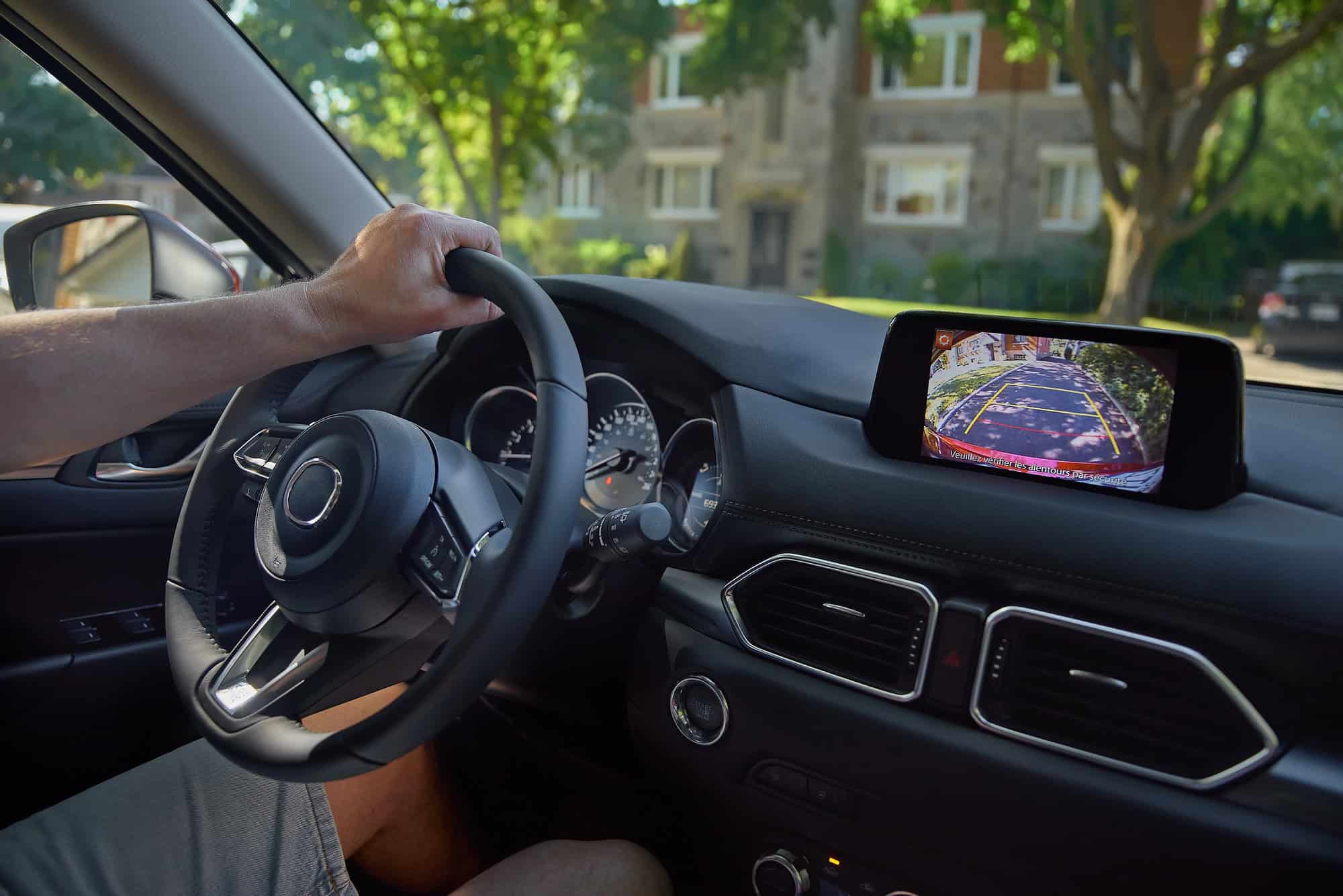
Honda Recalls 325,588 Odyssey Minivans Over Backup Cameras That Go Dark in Reverse
Trending on Motoring Chronicle
Lamborghini Esperienza Giro USA takes on New England [Photo Gallery]
What Higher North Somerset Parking Charges From 6 July Mean for Drivers

Pennsylvania Begins Fining Handheld Phone Use as Paul Miller’s Law Grace Period Ends
Volvo Cleared by US Commerce Department to Keep Selling Connected Cars in America
