
Why Your New Car Keeps Showing the Wrong Speed Limit (and What to Do)

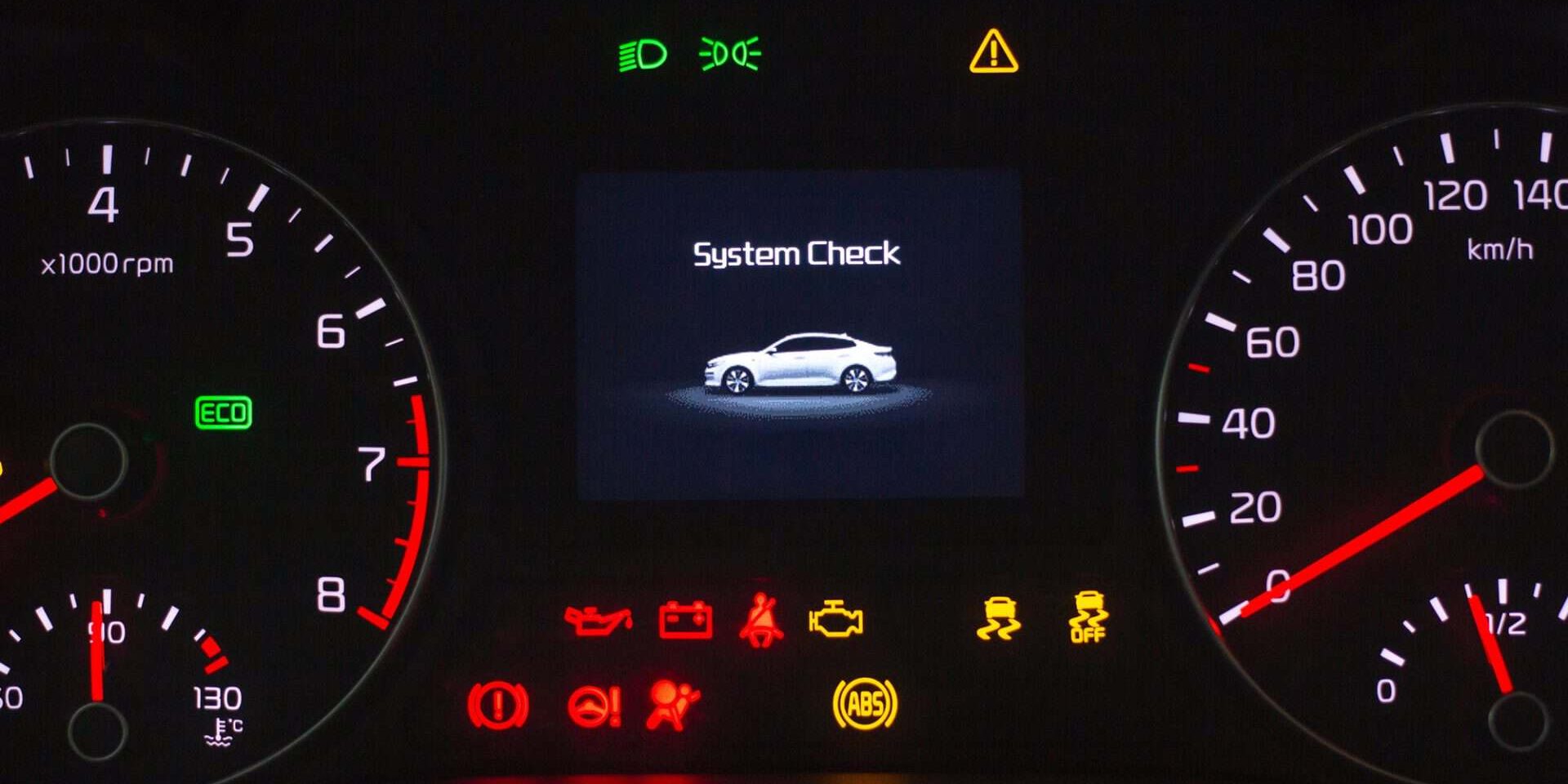
If you have driven a new car recently and found yourself bonging at by a speed warning that insists the limit is 5mph, or watched the dashboard flash up a 100mph limit on an ordinary A road, you are not imagining it. Fresh research from the automotive risk specialist Thatcham Research has found that the speed assistance technology now fitted to new cars is getting the limit wrong often enough to annoy drivers, and that growing numbers of motorists are simply switching it off. The worry, safety experts say, is that a system designed to stop people speeding only works if drivers trust it enough to leave it on.
This affects a huge and rapidly growing group of drivers. The technology in question, Intelligent Speed Assistance, is built into effectively every new car now reaching UK forecourts. If your car was registered in the last couple of years, it almost certainly has it. Here is what the system is meant to do, why it keeps getting things wrong, and what your options are if it is driving you to distraction.
What Intelligent Speed Assistance is and why it is in your car
Intelligent Speed Assistance, usually shortened to ISA, is a system that works out the current speed limit and tells the driver about it. It does this in two ways: a forward-facing camera reads roadside speed limit signs, while GPS mapping data tells the car what the limit should be for the stretch of road it is on. The car then displays that limit to the driver, and in many vehicles will sound a chime or visual warning if you go over it. In some cars ISA links to systems such as adaptive cruise control to help hold the car within the detected limit.
The reason it is suddenly everywhere comes down to European law. Under the European Union’s General Safety Regulation, often called GSR2, ISA became mandatory on all new cars sold in the EU from 7 July 2024. The same regulation brought in autonomous emergency braking, driver drowsiness and attention warnings and emergency lane keeping. Britain is not formally aligned with GSR2, and there is no UK law that forces carmakers to fit these systems to cars sold here. In practice, though, manufacturers build to a single European specification to avoid the cost of engineering separate cars for the UK, so new British cars carry the same ISA technology as their EU equivalents.
What the Thatcham research found
Thatcham Research, the body whose work underpins much of the UK insurance industry’s view of vehicle safety, put a range of new models through real-world testing and focused on the moments that matter most to drivers: the points on a journey where the speed limit actually changes. These are the situations where you most need accurate information, and where you are most likely to notice if the car gets it wrong.
The results were uneven. In the worst-performing vehicle tested, the system displayed an incorrect speed limit in around one in four of these key change points. Even the best-performing car still showed errors in roughly one in ten of those moments. More striking still, researchers recorded cases where vehicles displayed speed limits that do not legally exist anywhere in the UK, including readings of 5mph, 10mph, 15mph and even 100mph. For a driver trying to do the right thing, a dashboard that confidently announces a 5mph limit on a 30mph street is not just useless, it is a distraction.
Yousif Al-Ani, principal ADAS engineer at Thatcham Research, said the systems need tighter limits on what they are allowed to display. “Systems should be aligned with the defined speed limit parameters for each market. Where readings fall outside those recognised limits, they should be filtered to avoid unintended responses,” he said. “Presenting a driver with readings that fall outside recognised limits can erode confidence in the technology, and that is the trend we are seeing across the vehicles we assess.”
Why the system gets it wrong
ISA is only ever as good as the information it is fed. The camera can be fooled by a speed limit sign on a side road, a sign partially hidden by a lorry or foliage, a derestriction sign it misreads, or temporary limits on motorway gantries. The GPS map data, meanwhile, can lag behind real-world changes when councils alter a limit, which is happening a great deal at the moment as 20mph zones spread across towns and cities. When the camera and the map disagree, the car has to make a judgement, and that is where the odd readings creep in.
Thatcham argues that the way these systems are signed off may be part of the problem. Official assessments tend to measure accuracy across the whole distance travelled, which can flatter a system that is broadly right over a long motorway run but wrong at the very moments a limit changes. Thatcham’s testing instead looked specifically at those change points, and found that the picture is less reassuring than the headline approval figures suggest. The organisation says the issue does not appear to be confined to a single manufacturer, but reflects a wider challenge in how driver assistance systems read messy, real-world roads.
Jonathan Hewett, chief executive of Thatcham Research, said the success of the technology ultimately depends on whether drivers are willing to rely on it. “The intent behind the legislation is sound, helping drivers stay within speed limits saves lives,” he said. “But a system that misreads limits, intervenes unexpectedly or presents drivers with speed data that bears no relation to the road they are on does not assist them. It frustrates and distracts them, and they turn it off.” That, in a sentence, is the danger: a safety feature that is ignored delivers none of the safety.
How to switch it off, and why you might think twice
If your car’s speed assistance is bonging at you for a limit that is plainly wrong, you can override it. The most immediate way is simply to keep applying pressure to the accelerator, which lets you drive through and past the warning. Most cars also allow you to turn the audible warning or the system itself off through the settings menu, often on the touchscreen or via a steering wheel control.
There is an important catch, though. Under the GSR2 design rules, ISA must reset to on every time you start the car. So even if you switch it off for a journey, it will be active again the next time you turn the key, and you will need to disable it once more. There is no permanent off switch. For drivers who find the system truly unhelpful, the practical reality is a small ritual of turning it down at the start of each drive.
Before you commit to disabling it for good, it is worth weighing what the system is trying to do. Speeding remains one of the biggest contributors to deaths and serious injuries on British roads, and a tool that nudges you when you drift over the limit can really help on a long, monotonous drive or in an unfamiliar town. The sensible middle ground for many drivers is to keep the visual speed limit display, which is useful, while turning down the more intrusive audible warnings if your particular car is prone to false alarms. It is also worth keeping your car’s software up to date, as manufacturers issue map and system updates that can improve accuracy over time, and reporting persistent faults to your dealer so they are logged.
The wider point from Thatcham is aimed less at drivers than at regulators and carmakers: if these systems are going to be mandatory, they need to be accurate enough that people leave them switched on. Until the technology improves, the choice sits with you at the start of every journey. Understanding why your new car keeps insisting the limit is 5mph at least makes that choice an informed one.
Sources:
- https://www.carwow.co.uk/news/10906/safety-experts-driver-assist-tech-switched-off
- https://www.thatcham.org/thatcham-research-explains-new-eu-vehicle-safety-regulation-and-what-it-means-for-uk-drivers/
- https://www.rac.co.uk/drive/advice/road-safety/what-is-gsr2-important-eu-car-safety-features-explained/
- https://www.autoexpress.co.uk/news/103530/speed-limiters-now-required-all-new-cars-know-rules-and-how-they-work

Leave a Comment
More in News

Only 33 Percent of UK Drivers’ Car Insurance Complaints Succeed With the Financial Ombudsman

What Actually Happens When You Make a Car Insurance Claim After a Crash

London Drivers Pay £577 for Car Insurance, 76 Percent More Than Wales, Go.Compare Reveals

How to Calculate What It Actually Costs to Charge Your EV at Home

What to Do if Your Car Overheats on the Motorway Before the Engine Fails
Trending on Motoring Chronicle

Chery Extends Seven-Year Warranty Cover to More Parts for All UK Owners
What Dorchester’s Plan to Drop Almost Every Road to 20mph Means for Drivers

Renault 5 E-Tech Gains Up to 259-Mile Range for MY27 with No Price Rise

Lamborghini Day UK celebrates the marque’s present, past and future
