Why It Is Getting Much Harder to Swap a Speeding Fine for a Speed Awareness Course


For two decades, the speed awareness course offered many drivers caught speeding a way to keep three points off their licence in exchange for a few hours of education and a fee of around £100. The deal was widely taken up — roughly 1.6 million drivers attended a National Speed Awareness Course in a typical year before 2026. That deal is now getting harder to access. Eligibility rules are tightening, thresholds are being lowered, and higher fines are being introduced as part of the government’s Road Safety Strategy. If you are caught speeding in 2026 and beyond, the chance of being offered a course instead of points is meaningfully lower than it was two or three years ago.
How the Speed Awareness Course System Works
When a driver is caught speeding by a fixed or mobile camera, the penalty notice goes to the registered keeper. For lower-level speeding offences — those that fall within a specific speed band above the limit — police forces have the discretion to offer a speed awareness course as an alternative to a fixed penalty notice. Accepting the course means no points are added to your licence and no fine is paid to the court. Instead, you pay the course fee (typically between £80 and £100) and attend a session lasting around four hours, either in person or online depending on the provider.
The course is administered by the National Driver Offender Retraining Scheme, known as NDORS. Police forces must use NDORS-approved providers, and the course content is standardised. The aim is to address the attitudes and behaviours that led to the speeding offence, rather than simply punishing the driver financially.
Crucially, the offer of a course is at the discretion of the relevant police force, not a legal right. Different forces apply the eligibility criteria slightly differently, creating what critics have called a postcode lottery in how speeding is treated. A driver caught doing 36mph in a 30mph zone in one county might be offered a course; the same driver caught at the same speed in an adjacent county might receive a fixed penalty notice with three points.
What the Eligibility Criteria Were — and How They Are Changing
The traditional NDORS eligibility window sits between 10 per cent of the speed limit plus 2mph and 10 per cent plus 9mph. In a 30mph zone, that means the course could historically be offered for speeds between 35mph (10% + 2 = 35) and 42mph (10% + 9 = 42). In a 70mph zone on a motorway, the band runs from 79mph to 86mph.
Below the lower threshold — so below 35mph in a 30mph zone — the offence is generally not prosecuted at all, as it falls within the widely cited “10 per cent plus 2” tolerance. Above the upper threshold — so above 42mph in a 30mph zone — the offence is too serious for a course and a fixed penalty notice or court summons is the consequence.
In 2026, that lower threshold — the point at which a course is offered rather than an outright course refusal — is being applied more strictly by a growing number of forces. Several police forces have reduced or removed the informal tolerance at the lower end of the band, meaning drivers who might previously have expected a course for a speed just above the threshold are finding the offer is not forthcoming. The broader Road Safety Strategy signals an intention to make enforcement more consistent nationwide, which in practice means the more lenient interpretations used by some forces are being phased out.
The three-year bar on repeat courses remains in place. If you attended a speed awareness course within the previous 36 months, you are not eligible for another one regardless of your speed. This rule has always existed, but with more drivers having completed courses in recent years — partly because of the expansion of online courses during and after the pandemic — a larger proportion of the driving population is now in the three-year exclusion window at any given time.
Higher Fines and Tougher Consequences
For those who are not offered a course, the consequences of a speeding offence are becoming more expensive. The Road Safety Strategy includes proposals to increase minimum fixed penalty fines in line with inflation, after years in which fines remained static while average earnings rose. The current minimum fixed penalty fine for a speeding offence is £100. Proposed increases would see this rise to reflect the real-world deterrent value that £100 had when the figure was first set.
For more serious speeding offences that go to court, the Sentencing Council guidelines already allow fines of up to 150 per cent of weekly net income for the most serious band of speeding offences. A driver caught doing 51mph or above in a 30mph zone, or 101mph on a motorway, faces the Band C penalty: a fine worth 150 per cent of their weekly take-home pay, up to six penalty points, and potentially a driving ban of between seven and 28 days. With average UK earnings around £35,000, a Band C fine could run to several hundred pounds for an average earner.
The combination of tighter eligibility for courses and higher fines at the point of penalty shifts the calculus considerably for drivers who currently think of a fixed penalty notice as a minor inconvenience. Three points is also not a trivial addition to a licence — for new drivers in their first two years (who lose their licence at six points under the New Drivers Act 1995), even a single speeding fixed penalty can have catastrophic consequences for their ability to drive.
Expanded Speed Camera Coverage
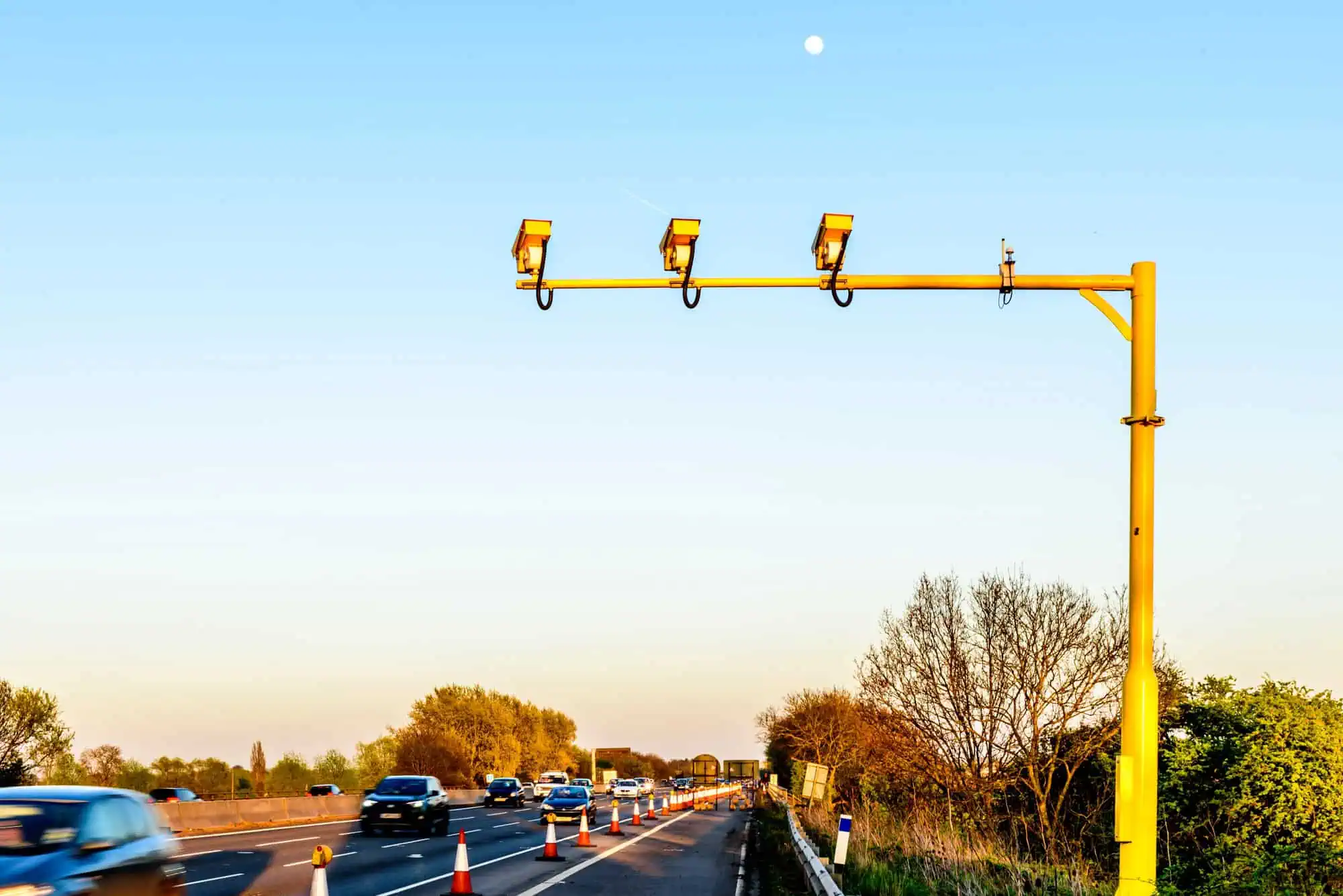
The tightening of course eligibility and the increase in fines are happening against a backdrop of dramatically expanded camera enforcement. Average speed cameras — which measure a vehicle’s speed over a set distance rather than at a single point, making it impossible to brake for the camera and then accelerate — have been rolled out to more A-roads, motorway roadworks zones, and high-risk rural routes. The camera network on UK roads has grown significantly in the past two years.
AI-enabled cameras capable of simultaneously detecting speeding, mobile phone use, and seatbelt non-compliance have been piloted in Sussex and Edinburgh and are being rolled out more widely in 2026. Unlike a single fixed Gatso camera, which a driver with local knowledge can identify and slow for, average speed systems and AI cameras create a zone of enforcement that covers entire road sections. The probability of being caught speeding in a camera-enforced area is close to 100 per cent.
For drivers who relied on knowing the location of fixed cameras and adjusting their speed accordingly, the shift to average speed and AI enforcement represents a fundamental change in the risk calculation. Speed limits must now be observed as a continuous requirement throughout a journey, not just at specific known camera locations.
The Postcode Lottery and What Is Changing
One of the stated aims of the Road Safety Strategy is greater consistency between the 43 police forces in England and Wales in how they enforce speeding. Currently, the probability of being offered a course for the same speed in the same limit zone varies significantly depending on which force area the offence occurs in. Some forces apply the NDORS eligibility window generously; others have historically applied it narrowly.
The push for consistency means that forces currently operating at the more lenient end of the spectrum are under pressure to align with national guidance. The effect on individual drivers is that the chance of a more favourable outcome — a course offer rather than points — is narrowing for those in areas that previously benefited from less strict application of the rules.
What to Do
The practical advice has not changed but the consequences of ignoring it have become more significant. Speed limiters — now standard on all new cars sold in the UK since July 2022 — can be set to alert you or intervene when you exceed a posted limit. Using cruise control on motorways and dual carriageways reduces the likelihood of inadvertently exceeding 70mph. In 20mph zones — increasingly common in urban areas — treat the limit as an absolute rather than a guideline with a built-in buffer.
If you receive a Notice of Intended Prosecution, check carefully whether a course is offered before responding. If a course is offered, accepting it within the stated deadline is almost always the better option — the cost is broadly similar to a fine, and you avoid the three points. If you have attended a course within the last three years, you are not eligible for another regardless of the circumstances, so declining points through this route is not available to you.
The era of treating the speed awareness course as a reliable backstop against penalty points is ending. Tighter eligibility, higher fines, and more cameras mean the consequences of speeding in 2026 are materially worse than they were even two years ago.
Sources:

Leave a Comment
More in News

Leicestershire Council Took £900,127 in Parking Penalties as Notices Issued Rise 9.3 Percent

How the DVLA’s Digital Driving Licence Will Work for Every UK Driver in 2026

Autotrader Shows Used Petrol Cars Cost £14,625 as 17 Months of Price Rises End

Catalytic Converter Thefts Are Rising Again and Could Cost Every Van Owner over £1,000

How California’s New Robotaxi Law Could Fine Waymo and Tesla $10,000
Trending on Motoring Chronicle

Belfast Drivers Pay £892 for Car Insurance, £309 More Than Causeway Coast, Quotezone Shows

Why California’s Gas Tax Just Hit a Record 63.4 Cents a Gallon

100 Years, 100 Cars: Caterham Reveals £48,995 Nürburgring Seven Built for the Green Hell
FCA Pushes £7.5 Billion Car Finance Payout Back to 2027 for Millions