Why Connecticut Is Adding Speed Cameras to School Zones Across the State
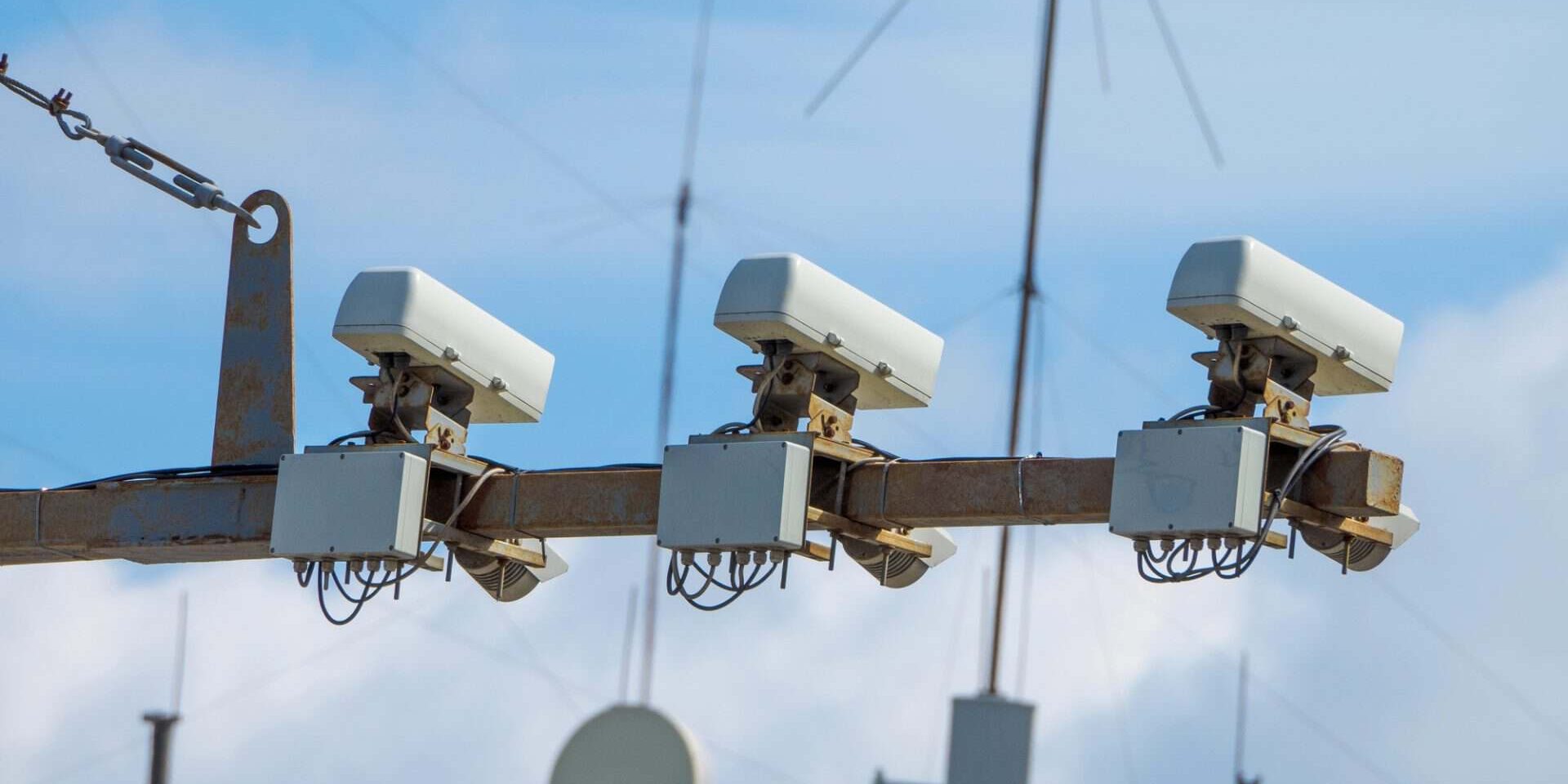
- Hartford just became the 19th Connecticut city or town cleared to install automated speed cameras, adding 11 cameras at six school zones where drivers have been clocked going as fast as 90 mph.
- Stamford, West Hartford, Fairfield and Middletown already have cameras running or installed, each with its own locations, warning period and fine schedule.
- First-time tickets run $50 to $75 depending on the town, go to the registered owner rather than the driver, and only kick in once a 30 to 45 day warning period ends.
Connecticut’s School Zone Camera Rollout Just Reached Its Capital
If you drive through Hartford, Stamford, West Hartford, Fairfield or Middletown this fall, assume there is a camera watching your speed near a school. The state confirmed on September 22 that Hartford can install 11 automated speed cameras across six school zones, making it the 19th Connecticut municipality cleared for the technology under the law lawmakers passed in 2023. The cameras are not a Hartford-only story. They are the latest piece of a statewide enforcement wave that has already written tens of thousands of warnings and millions of dollars in fines in towns that got there first.
Where Hartford’s Cameras Are Going, and Why
Hartford’s 11 cameras will cover six school zones: Blue Hills Avenue near Jumoke Academy and Jumoke Academy Elementary School, Main Street near S.A.N.D. Elementary School, Blue Hills Avenue near Achievement First Academy Elementary School, Tower Avenue near Milner Middle School, Wethersfield Avenue near Alfred E. Burr Middle School and Bulkeley High School, and Hillside Avenue near McDonough Middle School and Expeditionary Learning Academy at Moylan School. The city did not pick these streets at random. Near the Jumoke schools, the city’s own traffic study found 82% to 93% of observed vehicles exceeding the 25 mph limit. On Main Street near S.A.N.D. Elementary, the fastest recorded vehicle hit 90 mph, and the city’s safety plan documents pedestrians critically injured or killed in that corridor over the past two years. Near Wethersfield Avenue, the plan cites repeated near-misses involving students and drivers who ignored a crossing guard.
Hartford Mayor Arunan Arulampalam called the state’s sign-off a major milestone for street safety, according to CT Insider’s reporting on the approval. The city has not announced an exact go-live date for the cameras, but Connecticut’s law builds in a mandatory 30-day grace period once a camera becomes active; violators get a written warning in that window instead of a ticket.
The Rules Behind Every Camera in the State
Every one of these programs traces back to the same law: Public Act 23-116, passed by the General Assembly in June 2023 as part of a statewide Vision Zero push to eliminate traffic deaths. The act lets a city install cameras only after passing a local ordinance, holding a public hearing, and getting the state Department of Transportation to approve a specific device plan, which stays valid for three years before the city has to renew it. The law also restricts what towns can do with the money. Connecticut General Statutes Section 14-307c requires camera fine revenue to go toward local roadway safety improvements rather than the general municipal budget, a provision meant to blunt the common complaint that speed cameras exist mainly to raise cash.
Statewide, the fines follow a similar pattern from town to town, though the exact numbers vary. In Hartford, tickets apply to vehicles going 10 mph or more over the limit, with a $50 fine for a first offense and $75 for repeat violations, plus up to a $15 processing fee for electronic payment. Stamford’s program, covering 14 camera locations across seven school zones, ticket drivers going 11 mph or more over the limit at the same $50 and $75 rates, also with a $15 processing fee, after cameras there went active in September with a 45-day warning period. In every town, the ticket goes to whoever owns the vehicle, not necessarily whoever was driving, and owners have 10 days to contest a citation after receiving it. None of these are moving violations in the way a police-issued speeding ticket is. They are civil penalties that do not add points to a license or get reported to an insurance company.
What Towns Running Cameras Longer Have Already Found
The towns further along in the program show what Hartford and Stamford drivers should expect once the warning period ends. Middletown’s cameras on Route 66 have collected more than $4 million in fines and the city reports an 80% reduction in speeding on that stretch after enforcement began, the strongest evidence yet that the cameras change driver behavior rather than just generating tickets. Fairfield ran a 30-day trial across six school-zone cameras in May and issued an estimated 114,000 to 190,000 warnings in that window alone, a volume that shows just how many drivers were speeding past schools before anyone was watching. West Hartford, approved for 15 camera sites, used a $669,007 federal Safe Streets and Roads for All grant to help pay for installation, which is now underway. Waterbury has applied but is still waiting on the state to approve its plan, meaning more Connecticut cities are in the pipeline behind the ones already running.
The push to install these cameras is tied to a broader safety trend the state is tracking closely. Connecticut’s preliminary Highway Safety Office data shows roadway fatalities fell 12% in 2025, from 312 to 274 deaths. At the same time, pedestrians and cyclists made up 21% of all traffic deaths in the state, a share high enough that lawmakers and city officials keep pointing to it when they defend camera programs against critics who call them a revenue tool.
The Debate Over Cameras Hasn’t Gone Away
Not everyone in Connecticut welcomes the expansion. Critics in several towns have raised the point at public hearings that camera programs function as a disguised tax on drivers rather than a safety measure, pointing to the revenue each program generates even after lawmakers restricted how towns can spend it. Supporters counter with Middletown’s 80% drop in speeding on Route 66 as proof the cameras change behavior rather than just collecting money, and with the raw numbers from Hartford’s own traffic study, where roughly nine in ten drivers near some schools were caught speeding before a single camera went up. The Governors Highway Safety Association and similar research groups have found mixed but generally positive results for automated enforcement near schools in other states that adopted it earlier, which is likely why Connecticut’s list of approved towns keeps growing rather than shrinking.
What to Do if You Drive Through These School Zones
Slow down near any marked school zone in Hartford, Stamford, West Hartford, Fairfield or Middletown, especially at drop-off and pickup hours when the underlying traffic studies found the worst speeding. If you get a warning notice in the mail rather than a fine, treat it as exactly what it is: a 30 to 45 day grace period before real tickets start, not a one-time pass. Keep the notice until the grace period ends in your town so you know when enforcement actually begins. If you receive a fine and believe it was issued in error, each town’s ordinance gives you 10 days to contest it, typically through the police department or municipal court listed on the citation itself. The fine attaches to the vehicle’s registered owner, so anyone who recently sold a car or returned a lease in one of these towns should confirm the registration transfer went through, so a citation does not land on the wrong mailbox.
Drivers who want to check whether their regular route passes through an active or pending camera zone can look up their town’s traffic camera page directly. Connecticut does not yet publish a single statewide map of every approved location. With 19 municipalities cleared and more, like Waterbury, waiting on state approval, the list of Connecticut streets watched by automated cameras is only going to get longer through the rest of this school year.
Sources:

Leave a Comment
More in News

Toyota Recalls 30,978 RAV4 Plug-in Hybrids Over Sudden Power Loss Risk
Why Your Steering Wheel Shakes at 70mph and the £10 Fix for It
How New Speed Cameras With No Warning Could Catch Every UK Driver Out

Every Driver Owed Up to £830 in Car Finance Now Faces a 2027 Delay
What Nearly 670,000 Learner Drivers Face as DVSA Misses Its Seven-Week Test Target
Trending on Motoring Chronicle
Learner Drivers Paid £37 Million to Fail Their Theory Test Last Year

Every Driver Pays Up to £4.72 More a Tank by Postcode, AA Finds

How the U.S. Government Aims to Fix Gas Cans

8 Ways To Extend The Life Of Your Tyres