The Audi Q5 e-hybrid: all-rounder with great electric range [Photo Gallery]


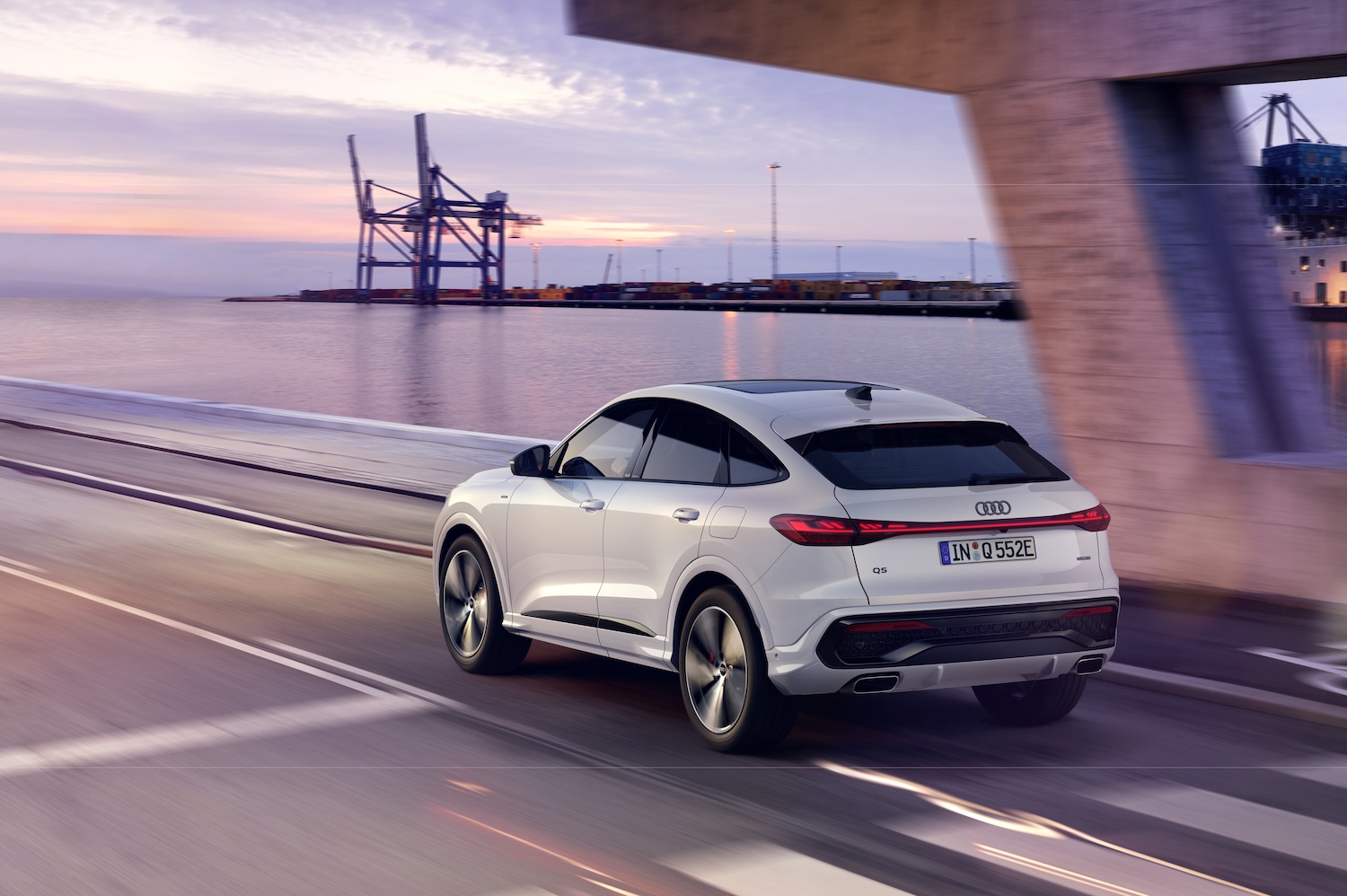
Audi is expanding the new Q5 family: in addition to the combustion models with MHEV plus technology, the SUV and Sportback will also be launched as plug-in hybrid models (PHEV). Both the Q5 SUV e-hybrid quattro and Q5 Sportback e-hybrid quattro develop 299PS (220 kW), while the new generation of high-voltage batteries in the Audi Q5 e-hybrid models has around 45 percent more capacity. As a result, 25.9 kWh (net 20.7 kWh) of power is available for electric driving.
With the new Q5 family, Audi has embarked on the next chapter in the success story of the premium SUV in the mid-size class. The Audi Q5 SUV e-hybrid quattro and Audi Q5 Sportback e-hybrid quattro plug-in hybrid models also bring all the advantages of an SUV and Sportback to the road: space, versatility, suitability for everyday use, quattro drive, plus an even more progressive and dynamic silhouette. A heightened design language, state-of-the-art combustion-engine technology, and the new operating concept are additional outstanding features of the new generation. With a system output of 299PS (220 kW) and an electric range of up to 62 miles, the plug-in hybrid models combine a sportily comfortable driving experience with a balanced blend of performance and efficiency.
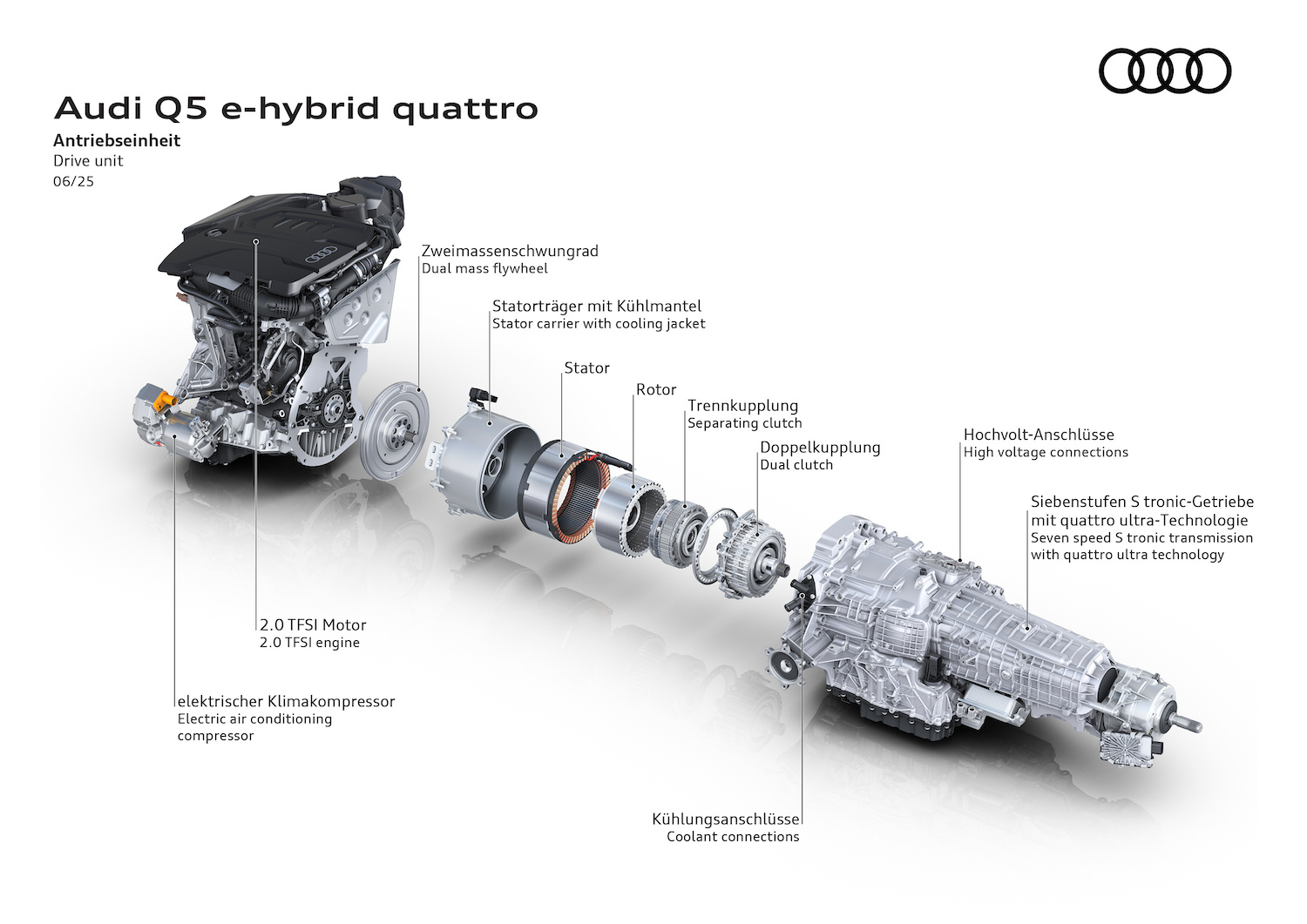
The new Audi Q5 SUV e-hybrid quattro and the Audi Q5 Sportback e-hybrid quattro are driven by a 2.0 TFSI engine with an output of 251PS (185 kW) and an electric motor. With 299PS (220 kW) total system power, 0-62mph is possible in just 6.2 seconds and top speed is 155mph. The electrified dual-clutch transmission in conjunction with the quattro ultra drive ensures a sporty yet comfortable driving experience.
One new development is the high-voltage battery, whose cells in the Q5 e-hybrid are arranged on two levels, one on top of the other. Audi has boosted the battery’s capacity to 25.9 kWh (net 20.7 kWh), roughly 45 percent higher than its predecessor. Maximum AC charging power is 11 kW. If the battery is completely empty, it takes 2.5 hours to charge it to 100 percent.
Two operating modes are available: “EV” and “hybrid.” In EV mode, the SUV and Sportback run exclusively on electric power. When driving in hybrid mode, the hybrid management system maintains a specific charge level as needed in order to save enough electrical energy for later use. In addition to the automatic hybrid mode, the desired charge level can now be individually selected for the first time using a digital slider.
Audi has also significantly increased the regenerative braking performance. The degree of thrust recuperation in EV mode can be adjusted to three different levels using paddles on the steering wheel. The vehicle recovers energy automatically when this function is activated. This is based on route data stored in the navigation system. The Audi Q5 SUV e-hybrid quattro and Audi Q5 Sportback e-hybrid quattro can also recover energy automatically without active route guidance. The hybrid management system of the new models is designed for efficiency, flexibility, and maximum customer comfort and automatically selects the optimal operating strategy.
The Q5 e-hybrid models stand out above all with their upgraded standard equipment, which includes the S sports suspension, 19-inch alloy wheels, LED headlights plus and LED rear lights pro as standard. The MMI experience plus infotainment system, which also comes as standard, is equipped with the Audi Application Store, a smartphone interface, and the Audi sound system. One especially practical feature is the fully adjustable rear seat bench plus. It can be moved lengthwise, and its angle can be adjusted as well.
Produced in San José Chiapa in Mexico, the new PHEV models will be available to order starting in July 2025.

Colour: Glacier white

Colour: Glacier white

Colour: Glacier white

Colour: Glacier white

Colour: Glacier white

Colour: Glacier white

Colour: Glacier white


Colour: Glacier white

Colour: Glacier white
Colour: Glacier white

Colour: Glacier white

Colour: Glacier white

Colour: Glacier white

Colour: Glacier white

Colour: Glacier white

Colour: Glacier white




Leave a Comment
More in News

How to Free a Frozen Handbrake (and What a New Cable Costs)

What Winter Tyres Actually Do for UK Drivers (and Whether You Need Them)

Renewing Car Insurance on the Day Cover Ends Costs Drivers £331 More, MoneySupermarket Shows

Every Driver Faces £500 Seatbelt Fines as AI Cameras Flag 19,145 Possible Offences

How to Remove Moisture From Inside Your Headlight Before It Costs You £500
Trending on Motoring Chronicle
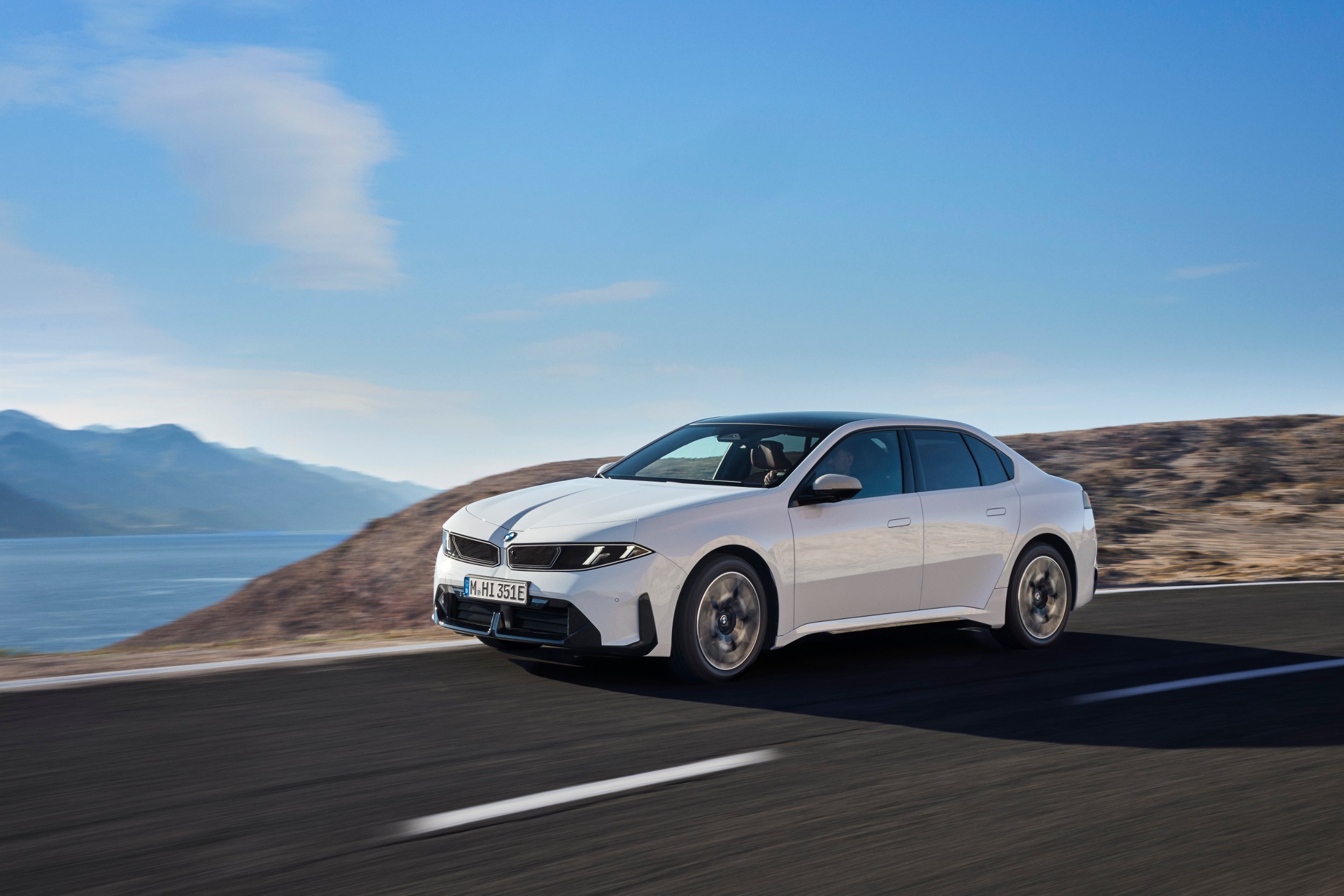
BMW 3 Series Goes Electric as New i3 with 566-Mile Range from £47,925

Bath Council Now Charges SUVs and Vans Up to £308 Extra for Parking Permits
How to Legally Wash Your Car During a Hosepipe Ban (and Avoid a £1,000 Fine)
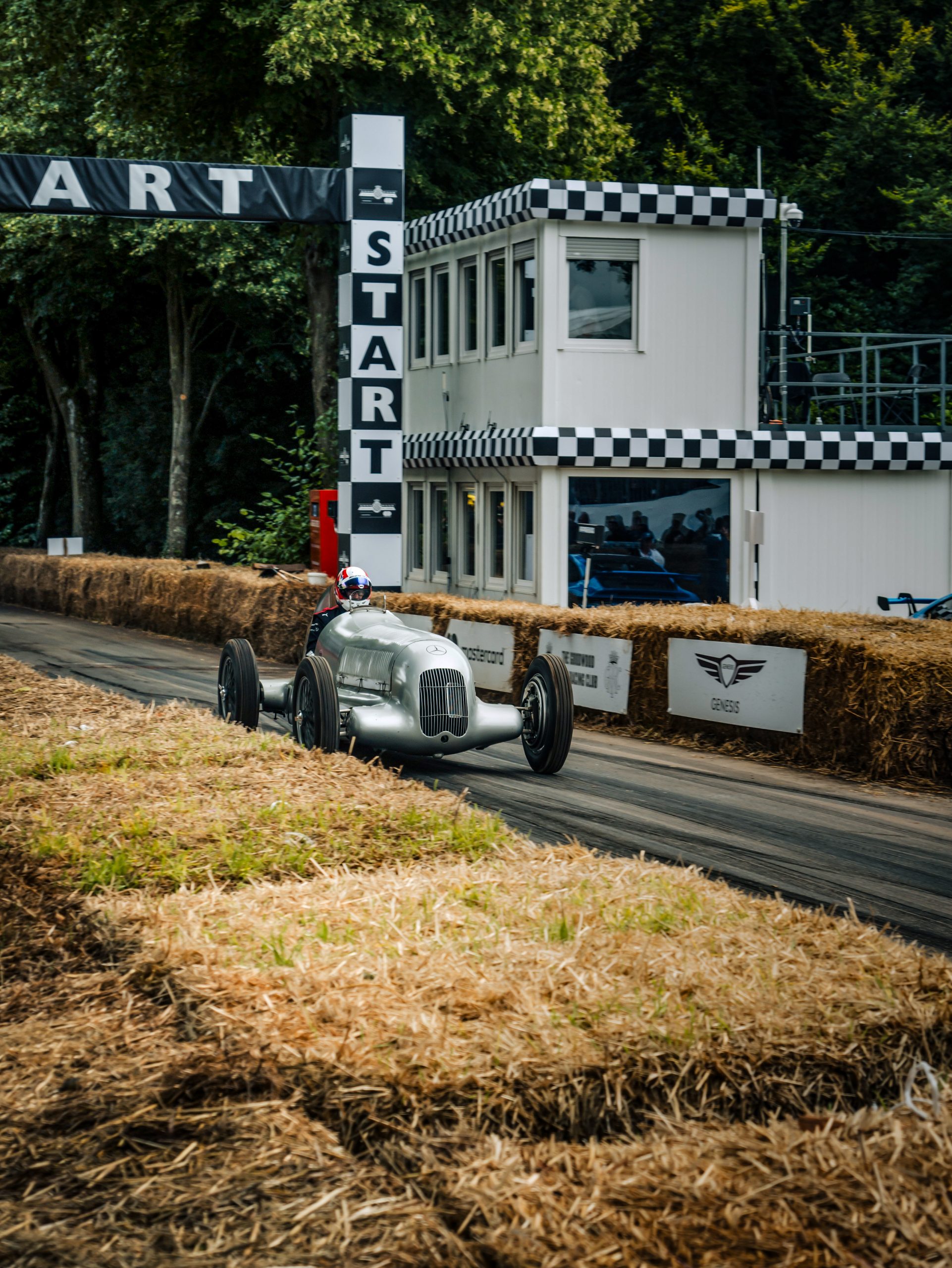
Mercedes-Benz thrills with historic parade on the hill climb circuit at the Goodwood Festival of Speed 2024 [Photo Gallery]