TfL Lost 6,949 ULEZ and Congestion Charge Appeals as Driver Challenges Jumped 21 Percent

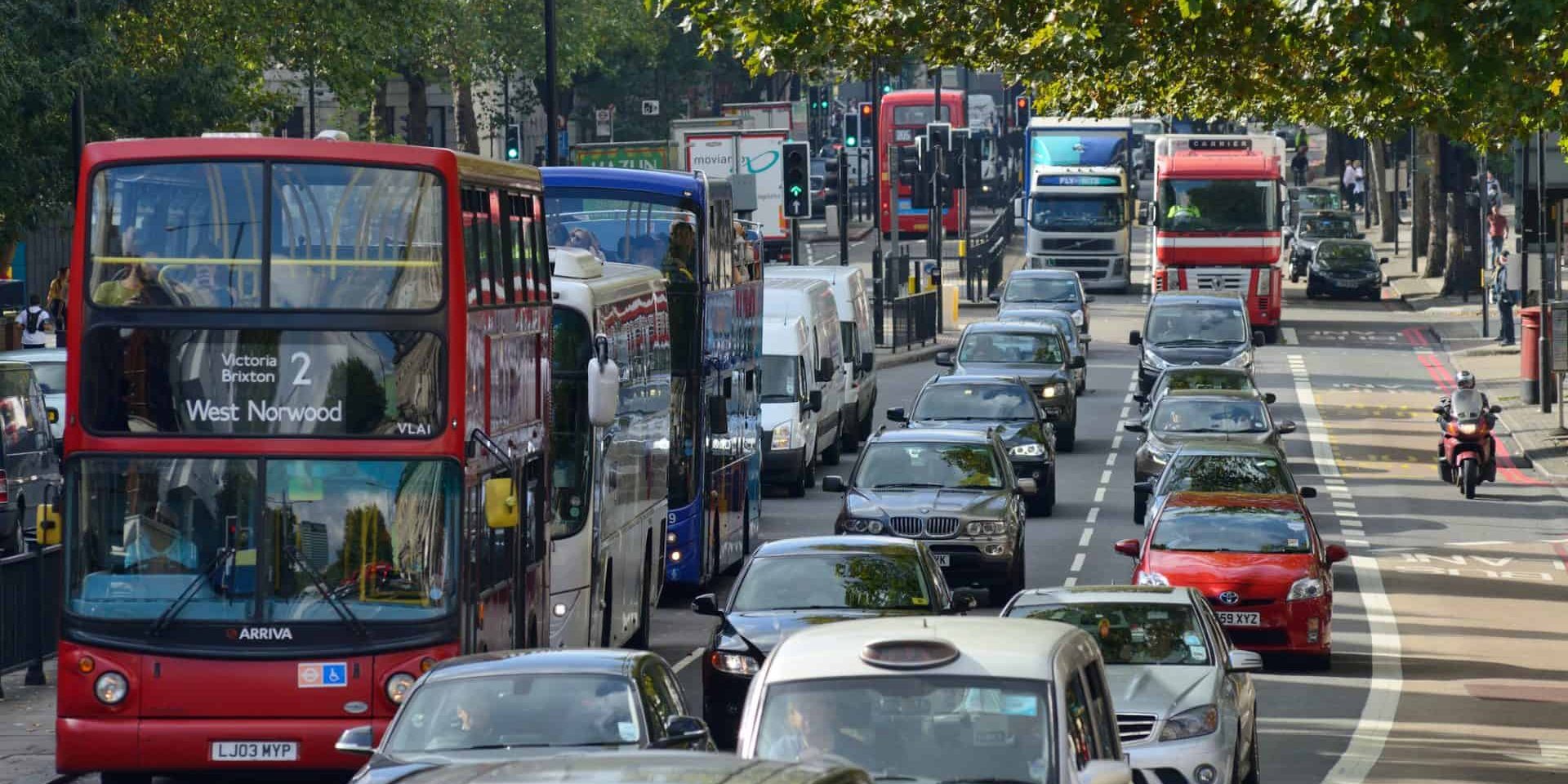
- Drivers lodged 22,420 appeals against Transport for London congestion charge, ULEZ, LEZ and tunnel penalties in 2025-26, up 21 percent on the year before.
- Drivers won 38.5 percent of the 19,525 appeals closed, and TfL did not even contest 5,447 of them.
- The appeals queue almost tripled to 1,981 cases waiting at year end, and the share heard within 56 days fell from 99 percent to 81 percent.
TfL Lost Almost 7,000 Road Charging Appeals in a Year, and Most Were Never Defended
More London drivers than at any point in the last five years took Transport for London to an independent tribunal over a road charging penalty in 2025-26. More than a third of them walked away owing nothing.
The figures come from the Road User Charging Adjudicators’ annual report for 2025-26, published by London Tribunals in July 2026 and signed off by Chief Adjudicator Alison Spicer. The adjudicators are judges appointed by the Lord Chancellor. They hear appeals against penalty charge notices (PCNs) issued by TfL under four schemes: the Central London Congestion Charge, the London Low Emission Zone, the Ultra Low Emission Zone (ULEZ) and the Silvertown and Blackwall Tunnels charge.
The headline number is 22,420. That is how many appeals the tribunal received in the year to March 2026, against 18,492 the year before. It is the highest total in the five-year run of figures the report publishes, edging past the 22,053 received in 2022-23, the year before ULEZ went London-wide.
Of the 19,525 appeals closed in the year, 6,949 were allowed. That works out at 38.49 percent. In plain terms, when a driver refused to accept a TfL road charging penalty and took it all the way to a judge, TfL lost more than one case in three.
TfL Chose Not to Fight 5,447 Appeals
The most striking line in the report is not the win rate. It is the number of cases TfL never defended.
In 5,447 appeals, TfL told the tribunal it would not contest the case. That is 30.17 percent of every appeal closed. When that happens the appeal is allowed and the penalty is cancelled, without an adjudicator ruling on the evidence.
Those uncontested cases make up the bulk of the 6,949 driver wins. Take them out and 1,502 appeals were won after an adjudicator heard the case on the papers or in person.
Every one of those 5,447 drivers had already been through TfL’s own process first. A driver can only reach the tribunal after making formal representations to TfL and having them rejected. So in thousands of cases, TfL turned a driver down, the driver appealed, and TfL then decided it would not stand behind its own decision.
The pattern is not new. The share of appeals TfL declined to contest has sat between 26 and 35 percent in every one of the last five years, peaking at 34.64 percent in 2023-24. In 2025-26 it climbed back to 30.17 percent from 26.98 percent the year before.
For the driver on the receiving end, the lesson is blunt. A rejection letter from TfL is not the final word, and in roughly three appeals in ten it has not been worth the paper TfL printed it on.
Where Drivers Win and Where They Lose
The report breaks down every decision by the legal ground the driver relied on. The split shows which arguments tend to work and which almost never do.
The most common winning ground was that no charge was payable under the scheme at all. Adjudicators allowed 4,018 appeals on that basis, against 6,721 refused. This covers cases where the vehicle should not have been charged in the first place, for example if it met the emissions standard, qualified for an exemption or was not in the zone at the time claimed.
Drivers who said they were never the registered keeper, or had sold the car before the date of the charge, did best of all in proportion. Adjudicators allowed 1,330 of those appeals and refused 479. That is a win rate of almost three in four, and it lines up with a common problem: PCNs landing on the doormat of someone who sold the car, or whose plates were copied. Motoring Chronicle has covered what to do when fines arrive for a car you were not driving.
Other grounds were far harder going. Drivers who argued the charge had already been paid won 400 appeals and lost 1,045. Those who said the penalty was more than it should have been won 147 and lost 1,225, a success rate of around one in nine. Vehicle hire firms won 825 and lost 1,356. Keepers who said the car was used without their consent won 229 and lost 277.
What the Adjudicators Say Drivers Keep Getting Wrong
This year’s report includes a section written by adjudicator Lola Moses setting out the misunderstandings that come up again and again. They explain why so many appeals fail.
The biggest is mitigation. Drivers often write in about illness, bereavement, money worries or caring duties. Adjudicators cannot cancel a penalty for those reasons. Their powers are limited to six statutory grounds of appeal, a limit confirmed by the Court of Appeal in Walmsley v TfL in 2005. Only TfL can choose to waive a penalty on compassionate grounds, so that case has to be made to TfL at the representations stage, not to the judge.
The second is who is liable. Under the road charging rules the registered keeper pays, not the driver. Telling an adjudicator that someone else was behind the wheel is not a defence.
Not knowing a charge applied is no defence either. The report says liability does not depend on whether a motorist was aware of the charging rules, even where a zone has been expanded or changed.
Auto Pay causes a steady stream of lost appeals. Adjudicators see drivers who had a basic TfL account but never added the vehicle to Auto Pay, or whose Auto Pay account had been closed after a failed payment without them noticing. The report accepts many of these are honest mistakes with no intent to dodge the charge, but says it is still the keeper’s job to check the car is registered and the payment details are current.
Payment slips are the other big category: the wrong date, a mistyped number plate or a payment that never went through. The only question the tribunal asks is whether TfL received the correct payment on time.
Adjudicators also cannot cut the penalty. TfL only has to accept the 50 percent discounted amount if it is paid within 14 days of the original PCN. After that, whether to accept the lower figure is entirely TfL’s call.
Finally, the report warns about statutory declarations. A driver who files one at the Traffic Enforcement Centre gets the charge certificate revoked, but the underlying PCN still stands and TfL can carry on enforcing it.
Longer Waits, AI Appeals and a New Online Route
The rise in appeals has put the tribunal under strain. At the end of 2025-26, 1,981 postal appeals were waiting for a decision, up from 739 a year earlier. The share of cases first looked at within 56 days fell to 80.84 percent, from 99.29 percent. The average delay was 42 days.
Alison Spicer’s foreword also flags a new trend: appeals written with artificial intelligence. She says adjudicators are receiving long, legalistic submissions that cite irrelevant case law and regulations, out of all proportion to the size of the penalty. In response she issued Practice Direction 1, which limits written representations to three A4 pages in Arial 12 and says they must relate directly to one or more of the statutory grounds of appeal.
There is better news on access. From 29 June 2026, TfL enabled online appeals, so drivers can now upload their representations and evidence straight to the London Tribunals appellant portal using a verification code from TfL. Hearings can be held by phone, video, in person at the new hearing centre at 24 Martin Lane in the City of London, or on the papers alone.
The report also records that the daily Congestion Charge rose to £18 from 2 January 2026, which raises the stakes for anyone who forgets to pay.
What to Do If TfL Sends You a Penalty
If a congestion charge, ULEZ, LEZ or tunnel PCN arrives and you think it is wrong, the numbers suggest it is worth challenging. The steps are the same across all four schemes.
Check the basics first. Look at the date, time, location, photo and number plate on the notice. If you sold the car before the date, or the plate in the photo is on a different vehicle, you have one of the strongest grounds in the tribunal’s figures.
Decide quickly whether to pay or fight. Paying within 14 days gets you the 50 percent discount. After that, TfL does not have to offer it.
Make formal representations to TfL and put everything in. This is the only stage where hardship, illness or other personal circumstances can make a difference, as TfL is the only party that can use discretion. Include evidence: sale receipts, V5C records, payment confirmations, Auto Pay screenshots.
If TfL rejects you, appeal to the tribunal within the deadline on the rejection notice. It costs nothing to appeal, and there is roughly a three in ten chance TfL will not contest it.
Keep your appeal short and on point. Three pages, tied to a statutory ground, is now the rule. Long AI-generated essays about unrelated case law will not help.
Check your Auto Pay settings now. Log in to your TfL account and confirm every car you drive into the zones is added to Auto Pay, not just to a basic account, and that the card on file is in date.
The pattern is similar in private parking, where operators also drop large numbers of cases before a formal ruling. Read how POPLA saved UK drivers £5.4 million in cancelled parking charges last year.
Sources
- Road User Charging Adjudicators, Annual Report 2025-26, London Tribunals (July 2026): https://www.londontribunals.gov.uk/sites/default/files/RUCAT%20Annual%20Report%202025-26.pdf
- London Tribunals, Annual reports and appeal statistics: https://www.londontribunals.gov.uk/about/annual-reports-and-appeal-statistics

Leave a Comment
More in News

How to Remove Moisture From Inside Your Headlight Before It Costs You £500

What Red and Amber Warning Lights Actually Mean (and Which Fail an MOT)

How to De-Ice Your Windscreen Fast Without Cracking It (and Staying Legal)

New Cars Face Euro 7 Rules From 29 November With a £264 Price Rise
What the Traffic Penalty Tribunal’s 33 Percent Success Rate Means for Every Driver
Trending on Motoring Chronicle
Vermont Loosens Vehicle Inspection Rules as Minor Defects No Longer Fail You
How Birmingham Council Racked Up £472,000 in Fines for Breaking Its Own Clean Air Zone Rules

What an MOT Advisory Actually Means (and When You Must Fix It)

Why Your Car Smells of Burning (and What to Do Next)