New Mercedes-Benz GLC is world’s first car with interior certified by The Vegan Society
- New Vegan Package: certified by the world-renowned organization, The Vegan Society
- Greater transparency for customers: Mercedes-Benz sets new standard for the use of vegan materials
- Optional interior package to be introduced in the all-new electric GLC
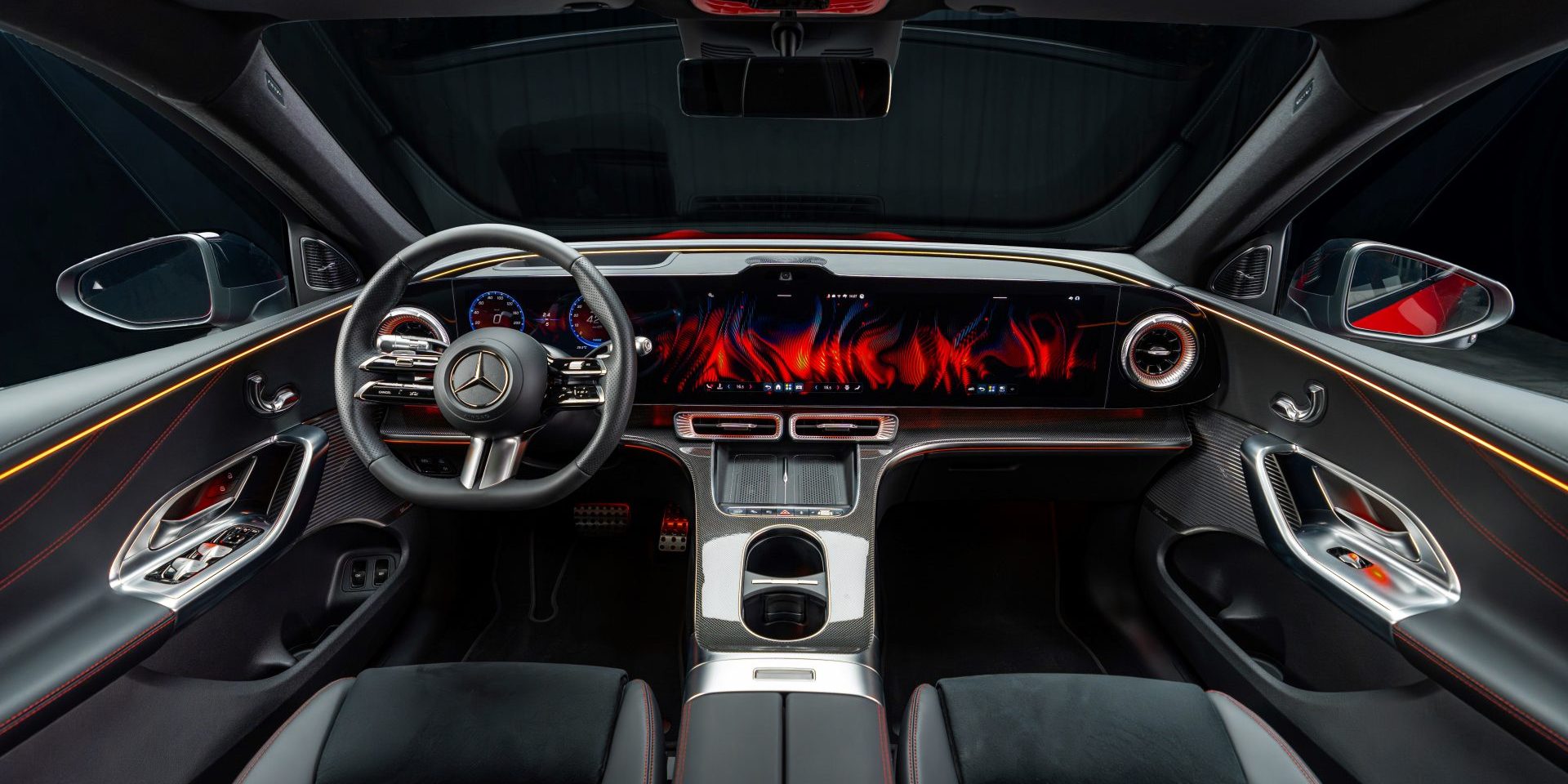
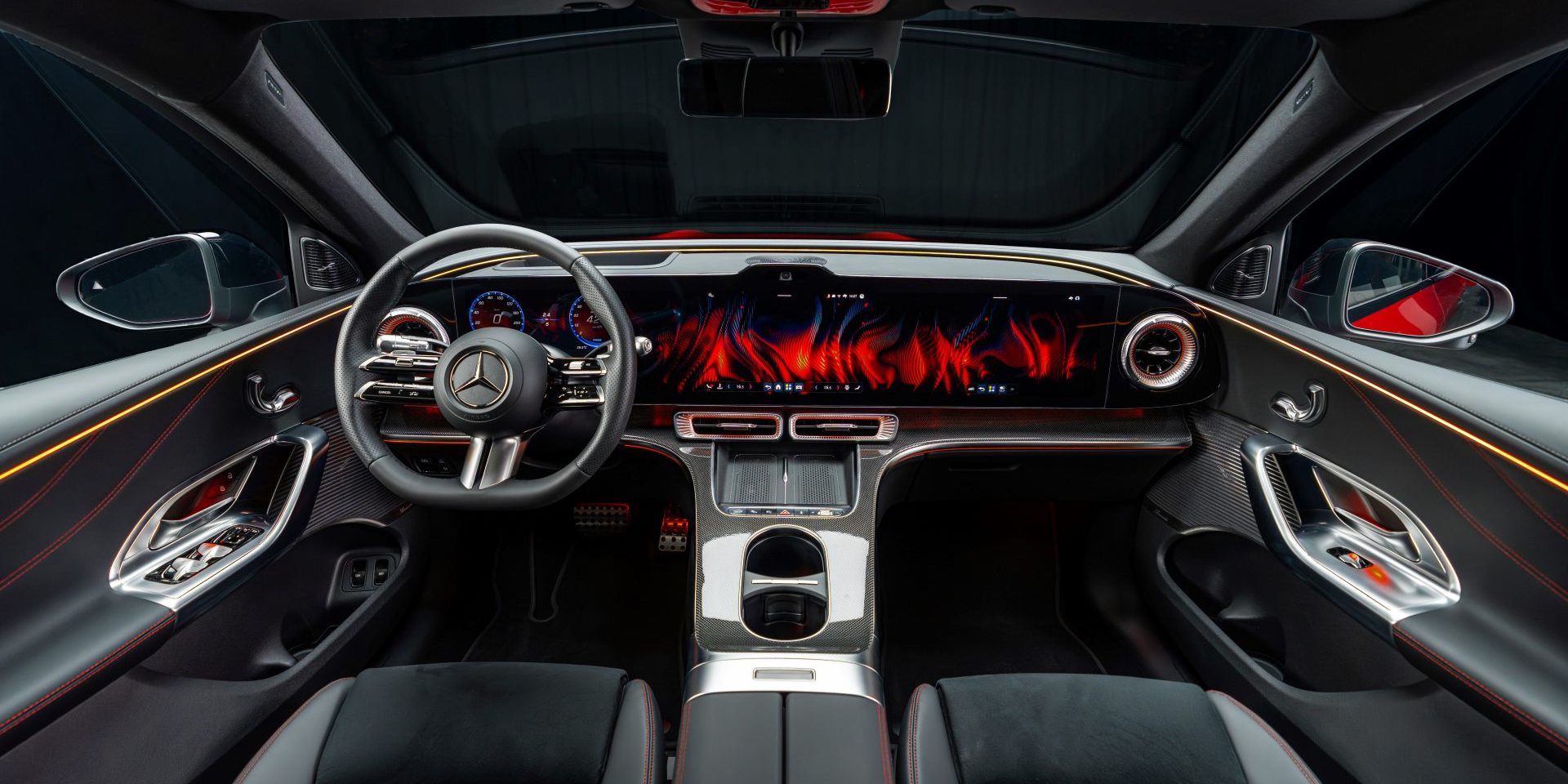
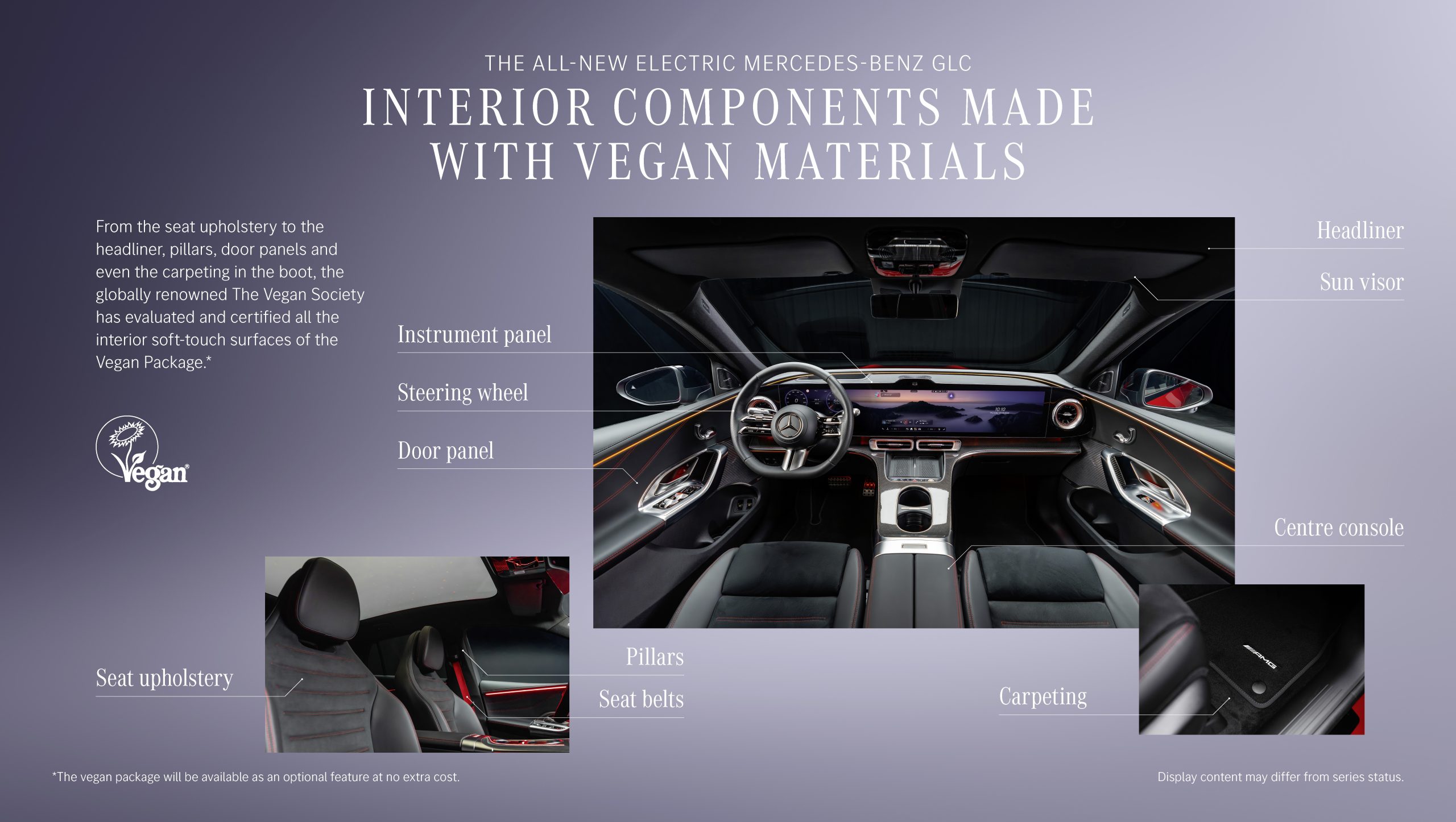
Mercedes-Benz is setting a new standard in the use of vegan materials as the world’s first car manufacturer to offer an independently certified vegan interior. The world-renowned organization, The Vegan Society, has tested all soft-touch vehicle interior materials for the new Vegan Package – from the seats to the headliner, pillar and door panels to the carpet – and awarded these the vegan certification. Customers can be confident all surfaces made using the high-quality MB-Tex as well as all textiles used in the vehicle are free of any products of animal origin. The Vegan Society has also certified that across all stages of production and processing, no ingredients or additives of animal origin – either processed or unprocessed – have been added or used in any form. The certified Vegan Package will be introduced as an interior option with the all-new electric GLC.
“At Mercedes-Benz, we don’t take shortcuts – instead, we go the extra mile. The certification of our vegan interior by The Vegan Society underlines this approach: transparency and trust are very important to us. Our customers can rest assured that our vegan interior materials do not contain any animal products and meet very high testing standards. We are delighted to be able to offer them this assurance through our partnership with an independent and globally recognized certification organization.”
Markus Schäfer, Member of the Board of Management of Mercedes-Benz Group AG, Chief Technology Officer, Development & Procurement
Test criteria for the use of vegan materials in vehicle interiors
As part of its development of vegan interior materials, the components of materials were also tested to ensure the highest level of transparency. To facilitate this, Mercedes-Benz brought in the expertise of the independent NGO, The Vegan Society. First, interior materials currently available in Mercedes-Benz vehicles – as well as the processes used to manufacture these – were audited by The Vegan Society in a pilot project. This included soft-touch materials such as MB-Tex, microfiber and other textiles. If there were any indications these contained animal-based components, the materials underwent further development, in cooperation with the respective supplier, and the affected components were replaced by other, animal-free components or alternatives. The fundamental prerequisite was that the materials had to meet the high Mercedes-Benz standards of quality and perceived value.
This was followed by independent audit and certification by The Vegan Society. The system for vegan products audited a total of approximately 100 material components from various Mercedes-Benz suppliers in accordance with its certification standards. The globally recognized “Vegan Trademark” is only awarded to successfully certified products that have been manufactured and/or developed without the use of any animal products, by-products or derivatives and that have additionally not involved testing of any sort on animals. Any potential cross-contamination with animal-derived ingredients must be prevented as far as it is practical and possible. These high standards were particularly important to Mercedes-Benz in its choice of which certification organization to work with.
The world’s first vehicle interior with “the Vegan Trademark”
With the all-new electric GLC, The Vegan Society has awarded its globally recognized “the Vegan Trademark” to a vehicle interior for the first time. The certified Vegan Package extends beyond seat surfaces to many other parts of the interior that customers come into regular physical contact with. These include exposed surfaces such as seat and steering wheel upholstery, headliner, door sills, pillars, door panels, sun visors, center console and instrument panel, as well as the carpet in the cabin and trunk. Many of these materials also feature a high proportion of recycled-material content.
If you enjoyed this article, be sure to follow us on Microsoft Start.
Leave a Comment
More in News
Driving Makes List Of ‘Top 10 Most Important Life Skills’

HondaJet Elite II Certified by FAA to Become First Production Model Twin-Turbine Very Light Business Jet Available with Emergency Autoland

Seven Honda Models Earn 2026 “Editors’ Choice” Awards from Car and Driver

Genesis receives four 2026 Car and Driver Editors’ Choice Awards
Five Kia models earn 2026 Car and Driver Editors’ Choice Awards
Trending on Motoring Chronicle
2026 GMC HUMMER EV: a more capable, more advanced supertruck

IIHS study reveals Subaru owners overwhelmingly use Driverfocus® Driver Monitoring System, say it makes them safer drivers
Legends Reborn: Iconic Liveries Dazzle at Salon Privé Blenheim Palace 2024 [Photo Gallery]

Why Car Batteries Fail Without Warning