Millions of Drivers Face a 6 Percent Car Insurance Jump This Quarter, Data Shows
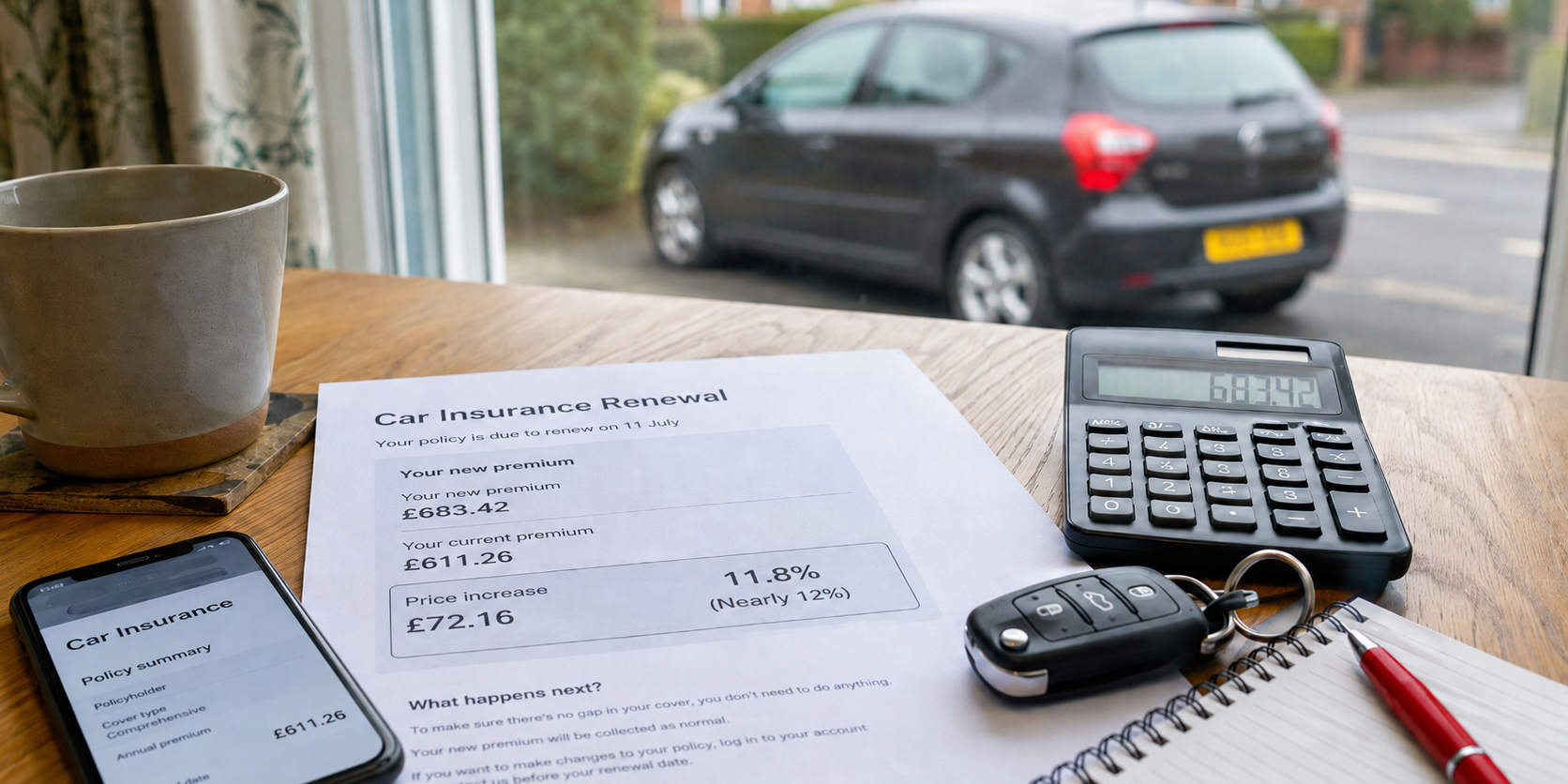
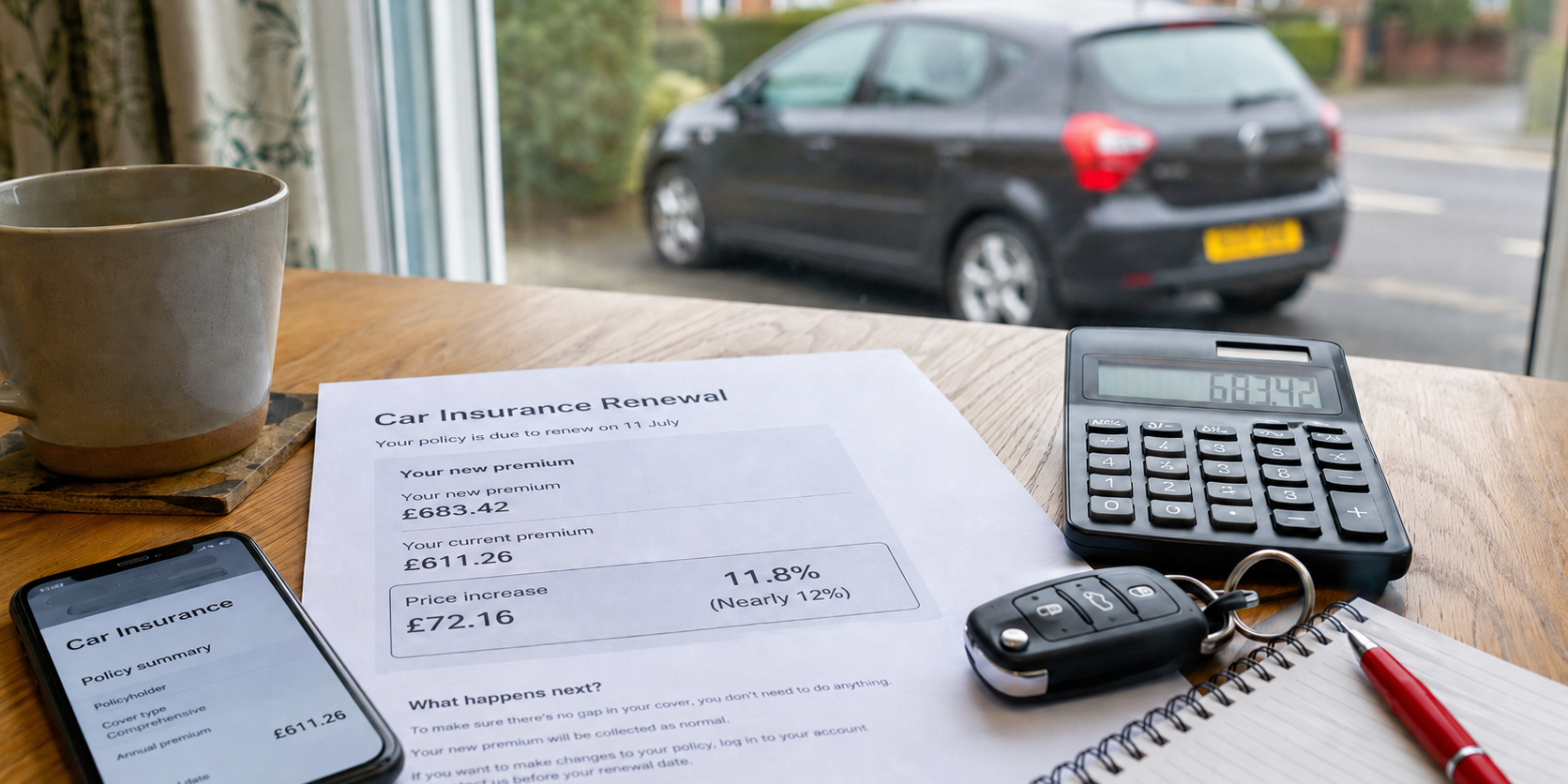
- Average full car insurance reached £586 in the third quarter of 2026, up 6 percent in just three months, according to the Confused.com and WTW Car Insurance Price Index.
- The rise breaks two years of falling or flat premiums and follows separate ABI data showing average claim payouts climbed to £4,900 in the second quarter, up 4 percent in three months.
- Drivers who have not shopped around at renewal, or who pay monthly rather than annually, are absorbing the sharpest share of the increase.
The Two-Year Discount Is Over
Car insurance had been getting quietly cheaper for the best part of two years. That run has now ended. The average full policy cost £586 in the third quarter of 2026, according to the Confused.com and WTW Car Insurance Price Index, up 6 percent as the summer and 14 percent higher than the same quarter in 2021. For a driver renewing this month, that is not a forecast or a warning about next year. It is what insurers are already charging.
Why Premiums Are Climbing Again
The Association of British Insurers’ own figures for the second quarter tell the same story from a different angle. The average premium paid by drivers rose £6 to £566, a modest 1 percent increase on the previous quarter, but the pressure underneath it is building fast. Average motor claims payouts hit a record £4,900 in the same quarter, up 4 percent on the first three months of the year. Insurers are paying out more per claim than ever, largely as parts, paint and labour costs keep rising and as modern cars, including electric models fitted with sensors and cameras behind every panel, cost more to repair after even a minor knock. When claims costs rise faster than premiums, insurers correct the gap at the next renewal round, and that correction is what shows up in the third-quarter figures.
Motor insurance fraud adds a further layer of cost that every honest policyholder ends up sharing. ABI data has put the value of detected motor insurance fraud at £576 million a year, a bill that insurers in the end spread across every premium they write, whether or not an individual driver has ever made a claim.
Who Is Paying the Most
The increase is not landing evenly. Younger and newly qualified drivers, drivers in postcodes with higher claims frequency, and anyone whose car sits in a higher insurance group are seeing steeper rises than the 6 percent average. Drivers who let their policy auto-renew without comparing the market are also more exposed, as while the regulator’s ban on the so-called loyalty penalty stops an insurer charging an existing customer more than a new one for the same policy through the same channel, it does not stop the underlying price itself from rising for everyone at renewal.
The Hidden Cost of Paying Monthly
Drivers who spread the cost across monthly instalments are absorbing an additional charge on top of the headline rise. Insurers and premium finance providers add interest to monthly payment plans, and that interest is rarely shown as clearly as the headline premium. Choosing to pay annually in one lump sum, where that is affordable, avoids this charge entirely and can be worth hundreds of pounds a year on its own, separate from anything an insurer does with the base premium.
What You Can Actually Do About It
Set a reminder for three weeks before your renewal date and get quotes from at least three comparison sites, as not every insurer appears on every panel. Ask your current insurer directly what it can offer before you switch, as some will match or beat a competitor’s quote rather than lose a customer outright. Try a modest voluntary excess increase if you could comfortably cover it after a claim, as this reliably lowers the quoted premium. A telematics or black box policy can also cut costs meaningfully for lower-mileage or careful drivers, especially younger drivers facing the steepest quotes. Finally, check that your job title, annual mileage and overnight parking location are all recorded accurately, as small inaccuracies here are a common and legitimate reason insurers quote higher than necessary.
Electric and Hybrid Cars Add Their Own Premium
Drivers switching to electric or hybrid cars are not shielded from this quarter’s rise, and in many cases they are seeing steeper increases than drivers of comparable petrol models. Repairing a modern EV after even minor front or rear-end damage often means replacing sensor-laden bumpers, recalibrating cameras and radar units, and in the worst cases working around a battery pack that some insurers write off rather than risk repairing. Specialist EV technicians remain in short supply relative to demand, which pushes labour costs higher still. Insurers price all of this in at renewal, which means an electric car that looked competitively priced to insure eighteen months ago might no longer be the cheapest option on your shortlist today.
How Much Your Postcode Still Issues
Where you park overnight remains one of the single biggest factors behind your quote, more so as insurers tighten their underwriting in response to rising claims costs. Postcodes with higher rates of theft, vandalism or accident claims carry a loading that can add hundreds of pounds to an otherwise identical policy just a few streets away from a cheaper one. If you have moved house, changed from on-street to off-street parking, or fitted a driveway or garage as your last renewal, tell your insurer. It is one of the few factors within your control that can meaningfully offset this quarter’s rise, and insurers are legally required to reprice based on accurate, up-to-date information rather than an outdated address on file.
None of this means every driver has to accept the average rise passively. Comparison sites update their panels constantly, and an insurer that was expensive for your profile eighteen months ago might now be competitive, simply as underwriters reweight their appetite for different types of risk every few months as their own claims data comes in.
What Happens Next
Neither the ABI nor the Confused.com and WTW index is predicting an imminent reversal. Claims costs are structural, driven by repair bills and parts prices that are not expected to fall, which means the third quarter’s 6 percent jump is more likely to be the start of a new trend than a one-off spike. Drivers who treat their renewal as a fixed bill rather than a number worth negotiating are the ones most likely to keep paying above the new average as it climbs further into next year.
Older Drivers and No-Claims History Still Count
A long, unbroken no-claims discount remains one of the few really reliable ways to blunt this quarter’s rise, and it is worth protecting rather than spending down. Some insurers offer protected no-claims discount as an add-on for a modest extra cost, which lets you make one claim within a set period without losing years of accumulated discount. For older drivers with decades of clean driving behind them, that discount can be worth checking is still being applied correctly at renewal, as a system error or a change of insurer occasionally resets it without the driver noticing until the quote lands. Reading the renewal letter line by line, rather than letting a direct debit simply continue, remains the single easiest way to catch a mistake before it costs you money.
None of these steps guarantee a driver avoids this quarter’s rise entirely, but together they can claw back a meaningful share of it, at a point when the overall market is moving in only one direction.
Sources:

Leave a Comment
More in News

Every Electric Car Now Costs £46 More to Insure than Petrol, MoneySuperMarket Finds

Leicestershire Council Took £900,127 in Parking Penalties as Notices Issued Rise 9.3 Percent

How the DVLA’s Digital Driving Licence Will Work for Every UK Driver in 2026

Autotrader Shows Used Petrol Cars Cost £14,625 as 17 Months of Price Rises End

Catalytic Converter Thefts Are Rising Again and Could Cost Every Van Owner over £1,000
Trending on Motoring Chronicle
Pump Pressure: Petrol at a Two-Year High and Fuel Duty Rising From September
Toyota Recalls 20,991 EVs That Can Suddenly Lose Power While Driving
Chrysler Tells Pacifica Plug In Hybrid Owners to Park Outside Over Battery Fire Risk

How Oxfordshire’s New ‘Quiet Lanes’ Plan Could Cut Off Rural Villages