Brake warning signs, explained simply
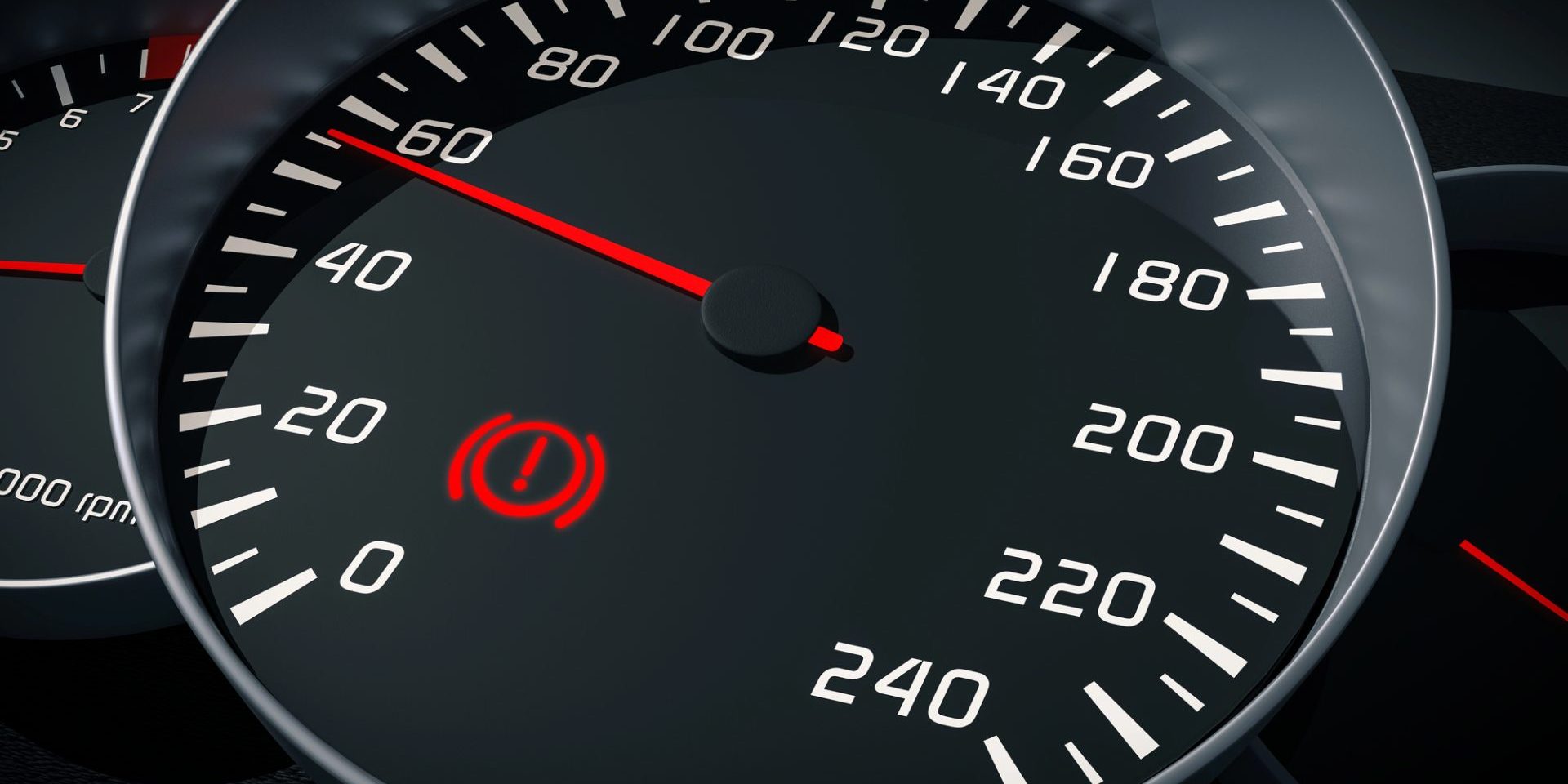
Brake warning signs are your car’s way of telling you that its most important safety system needs attention. Ignoring them can lead to dangerous situations and expensive repairs. Here are seven of the most common signs, explained simply…
1. Dashboard warning lights (red or yellow)
A brake light that says BRAKE, shows an exclamation mark in a circle, or shows ABS is the car telling you something is wrong before you feel it in the pedal.
Red BRAKE or red exclamation mark
This is the serious one. It can mean the parking brake is partly on, brake fluid is low, there is a hydraulic fault, or the system has detected a pressure problem.
Action: Check the parking brake first and make sure it is fully released. If the light stays on after that, stop driving. A hydraulic problem can turn into near-zero braking with little warning.
Yellow ABS
ABS is the anti-lock system. Your normal braking still works, but the car may not prevent wheel lock in a panic stop. On slick roads, that can mean longer stopping distances and less steering control while braking hard.
Action: Drive cautiously and get it checked soon. Treat emergency braking on wet or icy roads as a higher risk until it is fixed.
2. Squealing, screeching, or chirping when braking
A high-pitched noise that starts when you apply the brakes, especially at low speed, is often your first early warning.
What it usually means
Many pads have a wear indicator, a small metal tab designed to touch the rotor when the pad is near the end. The noise is intentional. It is the pad telling you it is almost done.
Action: Book a brake service soon. Replacing pads early is cheap compared with replacing pads and rotors later.
3. Grinding or growling when braking
If the noise is harsh and metallic, and you can feel it in the pedal, you are beyond the warning stage.
What it usually means
The pad friction material is gone. You are braking with the steel backing plate against the rotor. That chews grooves into the rotor fast and can overheat the caliper.
Action: Stop driving. This can turn into loss of braking and it will turn a basic pad job into a much bigger repair.
4. Spongy or soft brake pedal
A pedal that feels mushy, sinks lower than normal, or goes close to the floor is a red flag.
What it usually means
Hydraulic brakes rely on incompressible fluid. Air compresses, so if air gets into the lines, the pedal feels soft and stopping distances increase. Moisture-contaminated fluid can also boil under heat, creating gas bubbles and the same soft pedal feel. A fluid leak can do it too, and that is the quickest route to brake failure.
Action: Do not drive. Get it towed. A soft pedal can change from barely usable to useless with one hard stop.
5. Car pulling to one side under braking
If the car drifts left or right when you brake, braking force is uneven.
What it usually means
Common causes include a sticking caliper, a seized slide pin, uneven pad wear, a collapsing brake hose acting like a one-way valve, or contaminated pads. It can also be tyre-related, but if it only happens when braking, treat it as brakes first.
Action: Professional inspection quickly. Uneven braking can destabilise the car in an emergency stop.
6. Vibration or pulsation in the pedal or steering wheel
A pulsing pedal, shaking steering wheel, or vibration through the chassis while braking is a classic symptom.
What it usually means
Rotors rarely warp like a bent record, but they do develop uneven thickness or uneven pad deposits, usually after overheating. That creates a repeating grab release feel as the rotor rotates. Worn suspension components can amplify the sensation.
Action: Have the brakes measured. A shop can check rotor runout and thickness variation, then decide whether resurfacing is possible or replacement is the sensible fix.
7. Burning smell after braking
A sharp hot smell after heavy braking or a long downhill is your brakes telling you they are overheated.
What it usually means
Excess heat reduces friction and can boil brake fluid. That leads to brake fade, which feels like you are pressing the pedal and the car is not slowing the way it should. A stuck caliper can also overheat one corner and create a burning smell even during normal driving.
Action: Pull over somewhere safe and let the brakes cool. Do not set the parking brake if you suspect extreme heat at the rear, pads can fuse to the rotor. If the smell happens in normal driving or comes with smoke, get the car checked before driving further.
What to do right now if you notice a brake warning sign
Step 1: Decide if the car is safe to keep moving
Treat these as stop driving situations because they can turn into no brakes with little warning:
- Red BRAKE light that stays on after the parking brake is fully released
- Brake pedal sinks, feels spongy, or suddenly needs much more travel to slow the car
- Grinding or growling noise when braking
- Strong burning smell, smoke, or one wheel area feels excessively hot
- Car pulls hard to one side under braking
- Brake performance changes fast, for example one stop feels normal, the next feels weak
What to do: Pull over somewhere safe, hazard lights on, and organise a tow if the car is not clearly safe.
Step 2: If you must move the car to get out of danger
Sometimes you are stuck in a bad spot. If the car still brakes and you have no choice:
- Move at walking speed to a safer area
- Leave a huge gap to other vehicles
- Avoid steep descents and avoid highways
- Use light, steady braking, no repeated hard stops
If the pedal goes soft or braking effort rises suddenly, stop again immediately
Step 3: If it is not an emergency, capture the clues that speed up diagnosis
This is what a competent mechanic will ask, so you might as well show up with answers.
- When does it happen: first stop of the day, only in wet weather, only at low speed, only when turning, only when reversing
- Which corner: front left, front right, rear left, rear right, or unknown
- What the pedal feels like: normal, pulsing, soft, hard, or long travel
- What the noise sounds like: high squeal, dull groan, metallic scrape, single clunk
- Whether warning lights are steady or intermittent
Those details point toward different faults. For example, first stop squeal after rain often lines up with surface rust on rotors, a pull to one side points to uneven brake force from a caliper or hose, and a soft pedal points to air, moisture, or a leak in the hydraulics.
Step 4: Do not do these “quick fixes”
Brake problems are not the place for creativity.
Do not spray lubricant anywhere near pads or rotors
Do not ignore grinding to “get home”
Do not keep driving with a red brake light, hoping it clears
Do not top up brake fluid repeatedly without finding why it is low; the fluid does not disappear by itself
Step 5: The two checks you can do safely at home
These are low risk and give useful information.
Brake fluid level: If it is below minimum, treat it as urgent. Low fluid can mean a leak or severely worn pads.
Wheel heat after a short drive with minimal braking: If one wheel area is much hotter than the others, that can point to a sticking caliper. Do this carefully and do not touch hot components.
You may also like:
Why brakes squeal on cold mornings
How EV Brakes Actually Wear Faster Than You Think
If you enjoyed this article, be sure to follow us on Microsoft Start.
Leave a Comment
More in News
How to Tell if a Tyre Is Actually Punctured

Why Does Your Car Shake While Driving?
How to get the most out of your next test drive

How to prepare your car for sale to get the best price
5 Essential Tips For Driving Safely Through Floods
Trending on Motoring Chronicle
Subaru BRZ earns third consecutive spot on Car and Driver 2026 Editors’ Choice List

How GM Design put history and innovation at the heart of General Motors’ new global headquarters

Toyota Debuts Stylish, Powerful 2026 C-HR Battery Electric Vehicle [Photo Gallery]

RML Group P39 hypercar prototype debuts at Supercar Fest