
Car Insurance Prices Are Falling for the First Time in Years, Federal Data Shows
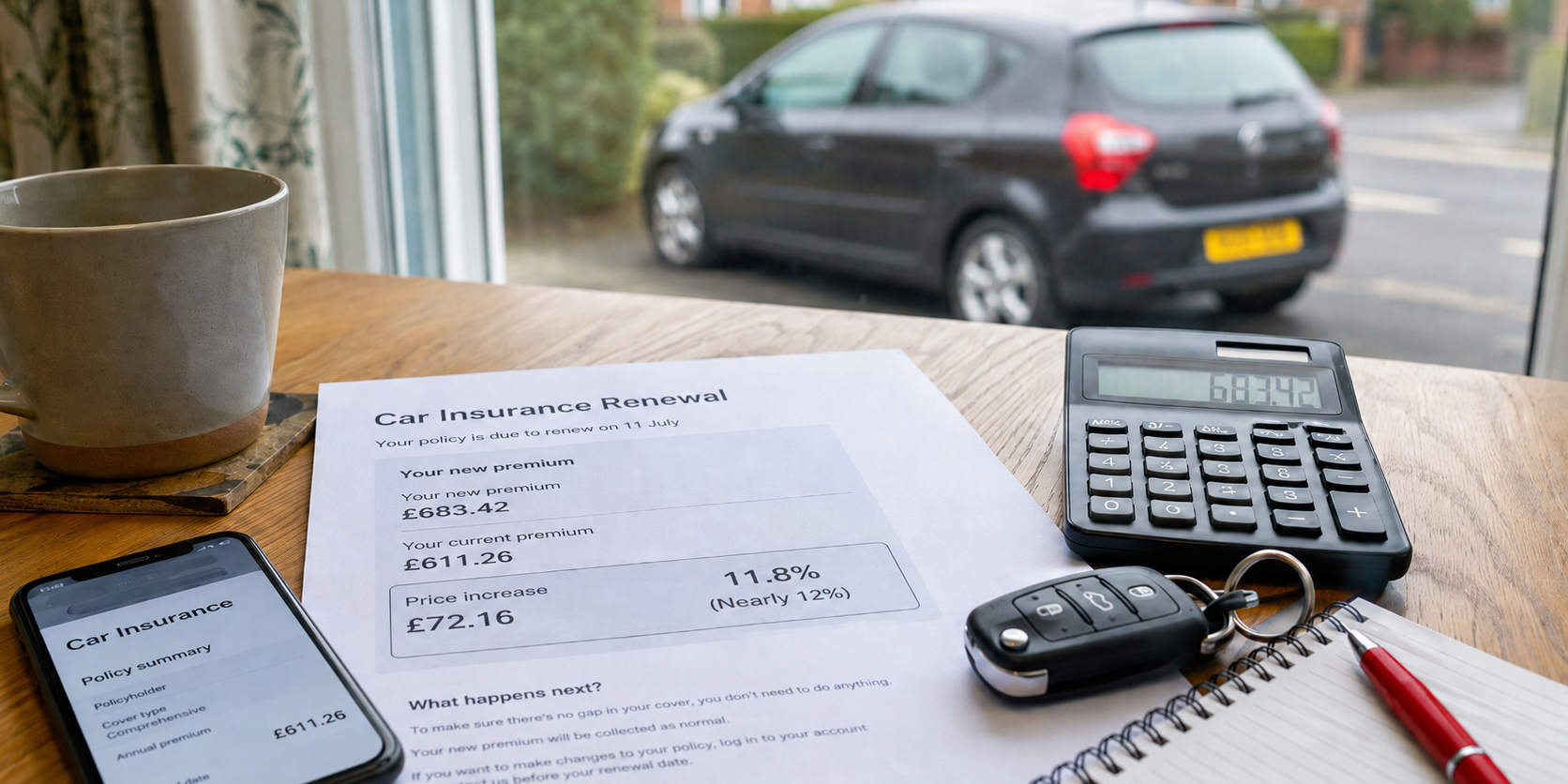
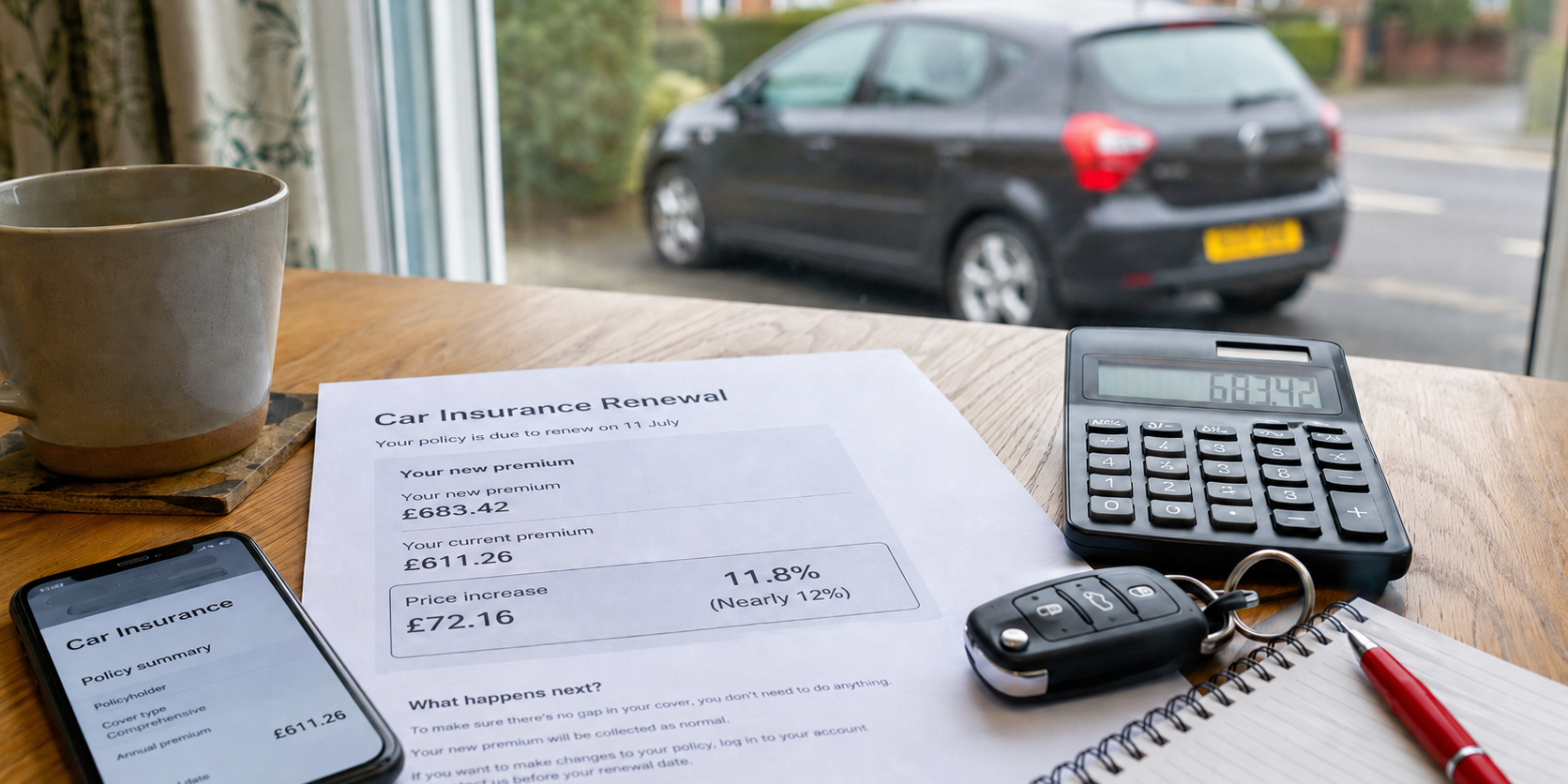
- The federal government’s motor vehicle insurance index was 5 percent lower in September 2026 than a year earlier, the fifth straight month of annual declines after two years of double-digit increases.
- Progressive, the country’s largest auto-only insurer, reported premiums per policy running roughly 3 percent below last year as it chases market share instead of margin.
- The national trend hides a split by state: drivers in Connecticut, Kentucky and West Virginia are still paying more, while New Jersey, New York and Washington, D.C. have seen some of the steepest cuts.
Your Bill Might Not Match the Headline Yet
Car insurance bills are finally moving in the other direction. The Bureau of Labor Statistics reported that its motor vehicle insurance price index fell 5.0 percent in September compared with the same month in 2025, extending a run of declines that started in May. Insurance is now one of the only major household costs tracked by the government that is cheaper than it was a year ago, even as overall consumer prices rose 3.7 percent over the same period. For a driver who watched premiums climb for three straight years, the number is real relief. It just has not reached every mailbox yet.
The monthly data shows how fast the reversal has moved. Year-over-year declines went from 2.0 percent in May to 4.1 percent in June, 4.5 percent in July and 5.1 percent in August, the deepest drop in the series. Only fourteen months earlier, in April 2024, the same index was rising at a 22.6 percent annual rate, among the fastest increases the BLS has recorded for any major spending category this decade. Insurance is still expensive by historical standards: September’s index sat about 47 percent above where it stood in January 2022, before the run-up began. Drivers are not paying less than they did five years ago. They are paying less than they did five months ago, and that trend has legs.
One Insurer’s Books Show the Shift in Real Numbers
Progressive’s third-quarter results, released the same morning as the September inflation data, put a company-level number on the trend. The insurer wrote $22.3 billion in net premiums for the quarter, up 4 percent from a year earlier, while its policy count rose 6 percent to 40.5 million. Premium growth lagged policy growth, meaning the average price per vehicle fell by an estimated 3.2 percent compared with the same quarter last year. Progressive’s own securities filing described “minimal personal auto rate decreases on a countrywide basis over the previous 12 months,” language insurers use when they are trimming prices to win new customers rather than reacting to a one-time event.
The company’s underwriting margin still held up. Its combined ratio, the standard measure of how much an insurer pays out and spends against every dollar of premium, came in at 88.7 for the quarter, meaning roughly 11 cents of underwriting profit per premium dollar after claims and expenses. That is better than the 89.5 combined ratio from a year earlier once a one-time Florida credit is stripped out of both periods. Net income fell 3 percent to $2.5 billion, driven mostly by $170 million in investment losses rather than weaker insurance results. Rivals are telling a similar story. Allstate credited a 2.8 percent increase in auto policies to what it called affordability initiatives and expanded distribution, and Berkshire Hathaway’s GEICO unit cited lower average premiums per policy in its own securities filing. When the three largest personal auto insurers in the country all report shrinking per-policy premiums in the same quarter, that is a market-wide repricing, not a rounding error.
Why Prices Spiked, and Why They Are Coming Back Down
The run-up that preceded this relief had a clear cause. Insurers spent 2022 through 2024 raising rates to catch up with surging repair costs, pricier replacement parts, and a rise in the cost of injury claims, much of it tied to higher medical bills and a higher share of claims handled by plaintiff’s attorneys, according to Progressive’s own quarterly filings. State insurance regulators, who must approve rate changes before they take effect, allowed years of increases to work through the system. By late 2024 and into 2025, insurers had largely caught up, their combined ratios improved, and competition among carriers for market share returned. Cox Automotive’s chief economist, Jeremy Robb, described the mid-2026 declines as the market “continuing to normalize after several years of elevated increases.” Analysts who track the sector now say the steepest phase of the correction has likely passed, with insurers expected to hold rates closer to flat through the rest of the year rather than keep cutting.
Not every cost pressure has eased. Vehicle maintenance and repair prices rose 5.8 percent in the twelve months to September, nearly six times the pace of overall inflation, and parts and equipment costs crept up 0.8 percent. Those are the inputs insurers price around, and they have not gone away. The BLS also flagged that its seasonally adjusted insurance index actually ticked up 0.1 percent from August to September, the first monthly increase after four consecutive drops. One month does not reverse a trend, but it is a sign the free fall in rates is leveling off rather than continuing indefinitely.
The State-by-State Gap That the National Number Hides
National averages mask sharply different experiences by state. Quote data compiled by the comparison site Insurify from more than 250 million rate quotes shows Washington, D.C. recorded the steepest first-half decline this year, down 7 percent, followed by New Mexico at 6 percent and New Jersey, New York and Massachusetts at 5 percent each. The trend flips entirely in a cluster of other states. Connecticut premiums rose roughly 10 percent in the same stretch and are on pace to finish the year about 15 percent above where they stood twelve months earlier, the sharpest increase in the country. Kentucky rose 6 percent, West Virginia climbed 5 percent, and Illinois and Nevada each rose about 4 percent. Insurify’s broader projection still points to premium increases in 32 states by the end of the year, even as the national CPI average falls: a handful of high-increase states can pull the dollar-figure average up while the price index, which tracks the typical change across all policies, moves down.
There is a second reason an individual’s bill can diverge from the national trend: insurers do not treat every customer the same. Industry pricing data has documented a pattern sometimes called price walking, in which policyholders who stay with the same insurer for years end up paying more over time than a new customer buying the identical coverage from the same company. An insurer chasing growth, the way Progressive and Allstate describe themselves doing right now, prices aggressively for new business while renewal pricing for existing, less price-sensitive customers moves more slowly. A loyal customer can easily watch national headlines announce falling insurance costs while their own renewal notice arrives with a smaller cut, or none at all.
What To Do About Your Own Renewal
The gap between the national index and an individual renewal notice means the only way to know if the price drop has reached a specific driver is to check. Pull up the most recent declarations page, the document that lists exact coverage limits, deductibles and the premium charged, and compare it line by line against quotes from at least two other carriers offering identical coverage. Insurance agents and comparison sites generally recommend shopping in the 45 days before a policy renews, when a new policy can start the moment the old one lapses with no coverage gap. State regulators require every rate filing to be approved before it takes effect, so two insurers in the same state can legally charge very different prices for the same driver at the same moment. That gap is exactly why the market has room for a shopper to find savings in a state where the average premium is still rising.
Drivers who have not had a claim or a ticket in several years hold the strongest position at renewal time: insurers compete hardest for exactly that profile right now. Bundling auto with a renters or homeowners policy, raising the collision deductible or the deductible that covers theft and weather damage, and asking directly whether a loyalty discount or a new-customer rate applies to an existing policy are all worth a phone call before assuming a renewal price is fixed. For drivers in the states still seeing increases, the national data is at least a sign that the broader market has turned, whether or not their own state has caught up yet.
Sources:

Leave a Comment
More in News
How to Tell If a Windscreen Chip Fails Your MOT (and Repair Cost)

What NHTSA’s Tesla Robotaxi Petition Over School Zone Speeding Means for You

Why Hyundai Is Telling 94,622 Genesis Owners to Park Outside

BMW Owners Have One Day Left to Claim This Shark Fin Antenna Payout

Honda Civic Hybrid Gains S+ Shift Tech and New Sport Grade from £34,325
Trending on Motoring Chronicle

2026 Jeep Wrangler In Pictures

Aston Martin and Brough Superior Reveal AMB 002 Roadster, Limited to 300 Bikes

Deer Collisions Peak From This Week, and the Instinct That Makes Them Worse

How Oxford’s New Camera Scheme Wrongly Fined Ambulances, Diplomats and Dead Drivers
