
Rivian Recalls Nearly 99,000 R1 and R2 EVs Over a Rearview Camera Glitch


- Rivian has recalled 98,828 R1S, R1T and R2 electric vehicles after finding that a software notification can pop up and block part of the rearview camera image while backing up.
- More than 95 percent of the affected vehicles had already received the fix through an over-the-air update before the recall paperwork went out, so most owners will not need to visit a dealer.
- Rivian told regulators it knows of no crashes or injuries linked to the issue, and the remedy costs owners nothing.
A Blocked Camera at the Worst Possible Moment
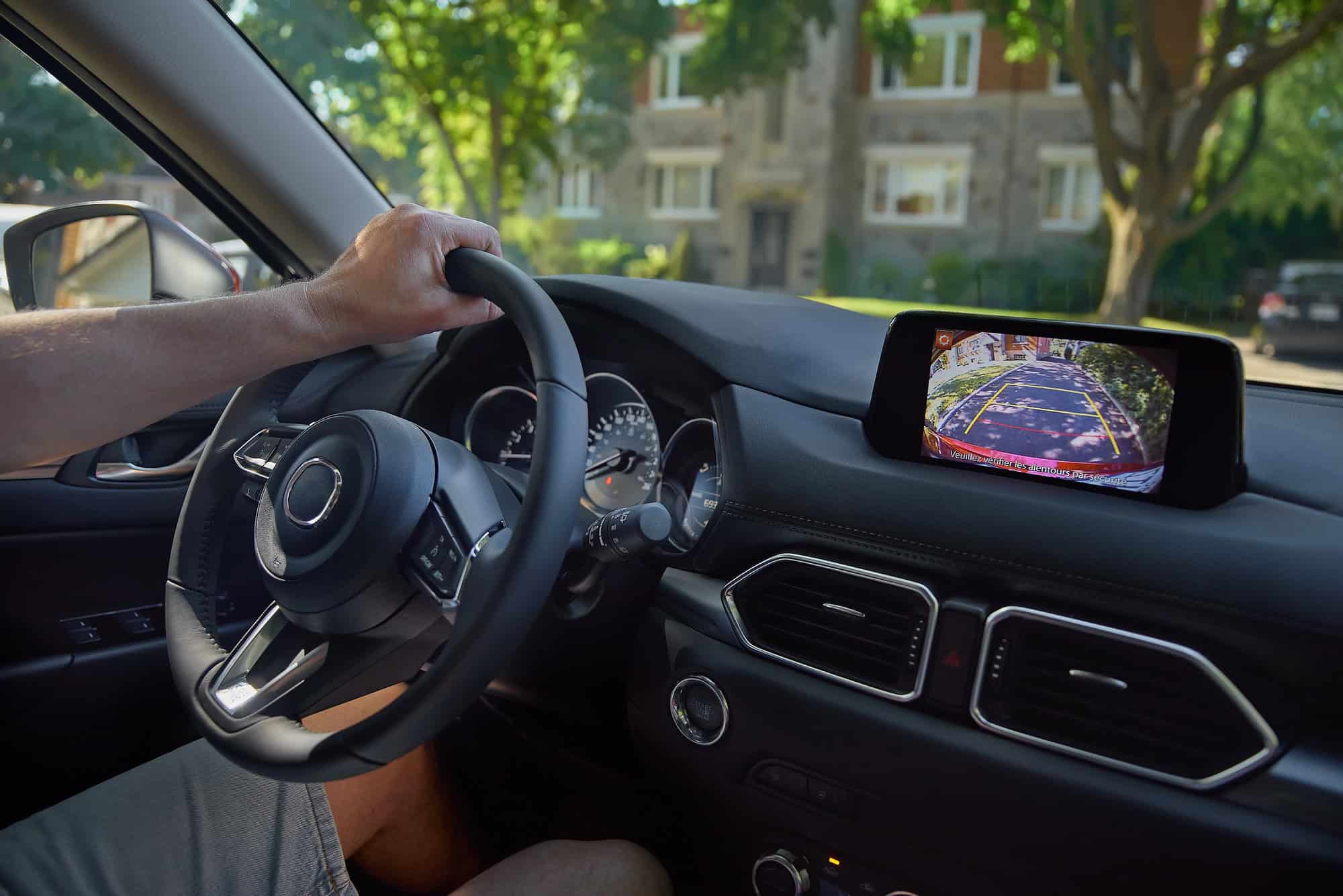
Backing out of a driveway, a parking spot or a tight garage is one of the few moments almost every driver leans entirely on a backup camera rather than mirrors alone. Rivian’s newest recall centers on exactly that scenario. A software notification, the kind that might normally alert a driver to a low tire or an incoming call, can appear on screen and sit directly over the rearview camera feed at the moment a driver needs it most, cutting off part of the view behind the vehicle and raising the odds of backing into a curb, a shopping cart or, in the worst case, a child or pet that a driver cannot see.
The recall, filed with the National Highway Traffic Safety Administration under campaign number 26V597, covers 34,088 R1T pickups from model years 2022 through 2026, 62,259 R1S SUVs from model years 2022 through 2027, and 2,481 of the newly launched 2027 R2 crossover, Rivian’s smaller and more affordable model that only began reaching customers this year. The total, 98,828 vehicles, makes it Rivian’s largest recall to date and one of the biggest safety actions any electric vehicle startup has issued.
Already Fixed for Almost Everyone
What sets this recall apart from most is timing. Rivian pushes software updates to its vehicles wirelessly, the same way a phone receives an app update overnight, and the company had already shipped a fix, update 2026.23 for R1 models and 2026.31 for R2 models, to the vast majority of the fleet before the formal recall notice went out. Rivian told NHTSA that more than 95 percent of affected vehicles had received the corrected software before owners ever got a letter in the mail.
That gap between a wireless fix and a paper notice illustrates a real quirk in how vehicle recalls work today. Federal recall rules were built for an era when the only way to fix a car was a dealer visit, so manufacturers still have to file paperwork and mail physical letters even when the actual repair reached the vehicle months earlier through the internet. Tesla, GM and Ford have all faced the same mismatch as more of their repairs move to over-the-air delivery, and it means an owner might read about a recall on their own vehicle well after the fix quietly finished installing itself.
What Owners Should Check
Rivian owners can confirm which software version their vehicle is running through the vehicle’s own touchscreen settings menu or the Rivian mobile app, both of which display the current update number. Anyone running an earlier version than 2026.23 (R1 models) or 2026.31 (R2 models) should either wait for the automatic wireless update, which Rivian is continuing to roll out, or contact a Rivian service center to request the update be pushed manually. There is no cost to the owner at any point in the process.
Owners who want to check their specific vehicle against the recall can also enter their 17-digit VIN at nhtsa.gov/recalls or call the NHTSA Vehicle Safety Hotline at 1-888-327-4236. The vast majority of the fleet is already patched, so most owners who check will likely find the update has already landed. Confirming it directly removes any doubt rather than relying on the absence of a warning message as proof the software is current.
Rivian’s Growing Pains as It Scales Up
The recall arrives at a busy stretch for Rivian. The company spent 2026 ramping production of the R2, its bid to compete in the compact electric SUV segment against the Tesla Model Y and Chevrolet Equinox EV at a lower price point than the R1 lineup, while working through its second full year of R1S and R1T deliveries at scale. Software recalls tend to climb alongside vehicle count for any manufacturer that relies heavily on connected features and frequent updates. Rivian has issued several smaller campaigns over the past two years covering everything from turn signal glitches to seatbelt sensor errors, most resolved the same way this one largely has been, through a wireless patch pushed before most drivers noticed anything wrong.
That track record cuts two ways for consumers comparing an R1 or R2 against gas-powered or rival electric options. On one hand, a company that can identify a software defect and fix it across nearly its entire fleet within weeks, without requiring a single dealer visit for most owners, is demonstrating a real advantage of connected vehicle architecture over older recall models that could take months to reach affected cars sitting on dealer lots and in driveways. On the other hand, the frequency of these campaigns is a reminder that a heavily software-defined vehicle carries a different kind of risk profile than a traditional car, one where a bug in a notification system, not a mechanical part wearing out, can become a federal safety recall. Buyers cross-shopping Rivian against more established brands should factor both sides of that trade-off into the decision, not just the sticker price and range figures on the window.
Why Camera-Based Safety Systems Carry a New Kind of Risk
Rearview cameras became mandatory equipment on new vehicles sold in the United States in 2018 under a federal rule aimed at reducing backover deaths and injuries among children, who are disproportionately represented in low-speed backing incidents. A child is often too short to appear in a driver’s mirrors or over the rear end of a tall SUV or pickup, which is exactly the gap the camera mandate was written to close. That mandate assumed the camera feed itself would remain reliable and unobstructed at all times. Software-driven interfaces complicate that assumption in ways federal regulators are still catching up to: a notification, a menu overlay or a glitchy graphic can now interfere with a safety system in a way no amount of camera hardware quality can prevent on its own.
Rivian is not the only automaker to run into this exact problem. Several manufacturers building highly digital dashboards have issued smaller recalls in recent years after discovering that pop-up alerts, turn-by-turn prompts or infotainment errors could obscure a backup camera or other driver-assistance display at an inopportune moment. As more vehicles pack additional software features onto the same screens that display safety-critical camera feeds, this category of recall is likely to keep showing up alongside the more traditional mechanical and electrical recalls that have always dominated NHTSA’s database. Regulators have not yet written rules specifically addressing screen real estate conflicts between infotainment and safety displays, leaving each automaker to define its own priority order between the two on a single shared screen.
What to Do Right Now
Rivian owners do not need to schedule a dealer appointment for this recall in most cases. Checking the software version through the in-car display or mobile app takes only a minute, and the fix, where it hasn’t already landed, arrives at no cost through the same wireless channel Rivian already uses for routine updates. Owners who prefer certainty rather than waiting on an automatic rollout can call their local Rivian service center directly and ask for the update to be applied on the spot.
Owners should also expect the recall notice to arrive in the mail even after their vehicle has already received the fix. Federal law still requires manufacturers to send that paperwork to every registered owner regardless of whether the wireless update already resolved the underlying defect, so a letter showing up weeks or months after the fact does not necessarily mean anything is still wrong with the vehicle. Anyone unsure whether their car needs further attention can always call Rivian directly at the number listed in the letter or reach a service advisor through the mobile app’s support chat.
How This Compares to Rivian’s Earlier Recalls
This is not Rivian’s first software-related safety action, but it is by far its largest by vehicle count. Earlier campaigns affecting turn signals and seatbelt sensors each covered a fraction of the fleet this recall touches, reflecting how much larger Rivian’s total vehicle count has grown now that the R2 has begun reaching driveways this year. A company selling tens of thousands of vehicles a year issues recalls on a different scale than one selling a few thousand, and Rivian’s expanding production numbers mean future software issues, however minor, will likely generate larger headline vehicle counts even when the underlying defect rate per vehicle stays flat or improves.
Sources:

Leave a Comment
More in News

Why Catalytic Converter Theft Is Surging Again [and How to Protect Your Car]
What Michigan USAA Drivers Must Know Before the Oct 8 Deadline

How Rivian Fixed 98,828 EVs Camera Bug Before Owners Even Knew
Ford Recalls 11,405 Rangers After Fake Parts Knock Out the Backup Camera

Why Alabama Just Made Fatal Hit and Run Crashes a More Serious Felony
Trending on Motoring Chronicle

Maserati MCPURA brings the pure essence of Italian performance on the roads of Versilia
New Crash Tests Reveal Why Cars Slam Into the Back of Lorries on Motorways

Electric vs Hybrid: Which Saves You More Money In 2026?
How Flip Flops and the Wrong Sunglasses Could Cost Summer Drivers £100 and Three Points
