Why One in Four UK Drivers Has Cut Back Night Driving Because of Dazzling LED Headlights
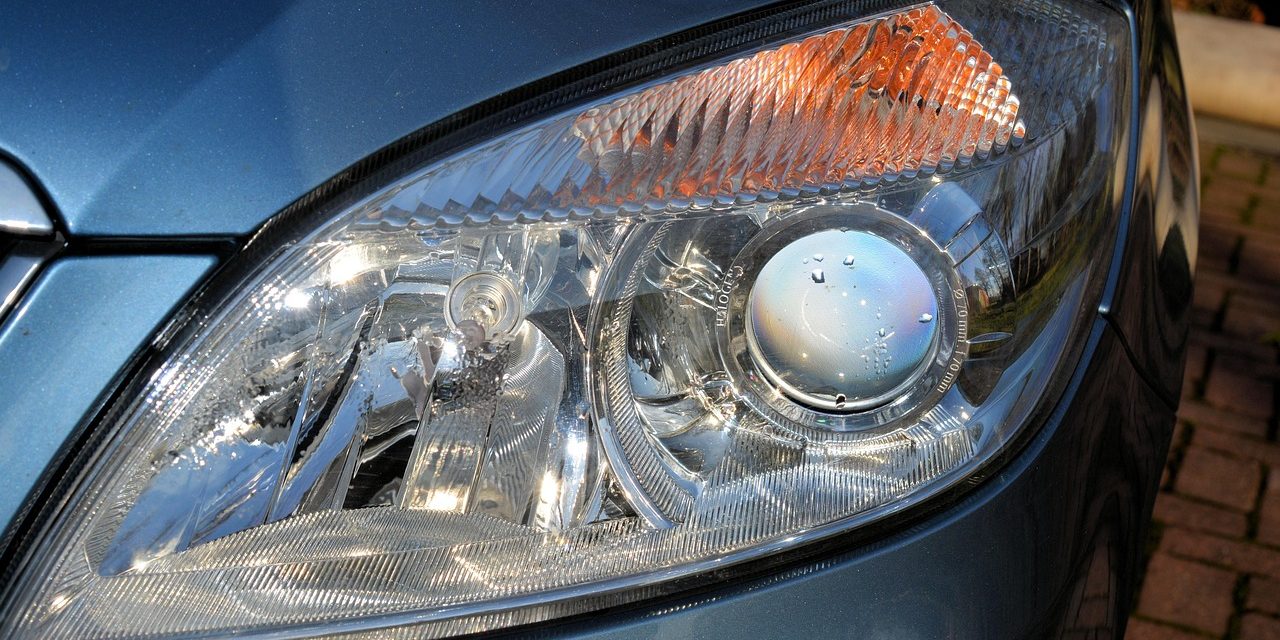
A quarter of UK drivers who find modern headlights too bright have cut back on driving at night, and a further 22 percent say they wish they could but have no choice. A government-commissioned report from the Transport Research Laboratory, published in November 2025, has confirmed what millions of drivers already knew from bitter experience: dazzling LED headlights are making British roads genuinely harder and more dangerous to drive at night.
The TRL study, commissioned by the Department for Transport and covering more than 50 hours of on-road testing alongside a survey of 1,850 UK drivers, is the most thorough official investigation into headlight glare ever conducted in this country. Its findings are stark, and the government’s response to its recommendations has so far been cautious. Six months on from publication, drivers are still waiting for the regulatory changes the report calls for.
What the Data Shows
RAC research carried out in early 2026 found that 82 percent of UK drivers are concerned about being dazzled by headlights from oncoming vehicles. When the RAC surveyed 1,701 regular drivers, four in ten said they feel nervous driving after dark. Of that group, three quarters pointed directly to bright headlights as the primary cause of their anxiety, ahead of difficulty spotting hazards, judging vehicle speed, and low driver confidence in general.
The figures become more troubling when broken down by age. Among drivers under 35, 33 percent said they have either stopped or reduced their night driving because of headlight glare. Among drivers aged 75 and above, that figure rises to 43 percent. These are not marginal inconveniences. For older drivers in particular, the combination of age-related changes to vision and the intensity of modern LED headlights is effectively forcing a significant portion of the driving population off the roads after dark.
Why LED Headlights Are So Much More Dazzling Than Older Bulbs
The shift from halogen bulbs to LED lighting has transformed how bright and directed headlights are. Traditional halogen bulbs produce around 24 lumens per watt and emit a warm, yellowish light at a colour temperature of approximately 3200 Kelvin. Their light scatters relatively broadly, which softens the effect on oncoming drivers.
LED headlights operate at 200 lumens per watt, more than eight times the output of halogens, and emit a much cooler, bluer-white light at 5,000 to 6,500 Kelvin. This mimics natural daylight closely, which is why LED-equipped cars offer dramatically better forward illumination for the driver. But it also makes the lights significantly more intense for anyone looking at them from the front, particularly in wet conditions where road surfaces reflect and scatter the blue-white light in unpredictable ways.
The TRL on-road tests demonstrated a strong correlation between higher luminance levels and the glare experienced by occupants of approaching vehicles. The research also found that the geometry of the road, the pitch and roll of the vehicle producing the light, and the height difference between vehicles all influence how severe the glare effect becomes. As the UK fleet has shifted toward higher-riding SUVs and crossovers, the headlight beam of many modern cars sits at exactly eye level for the driver of a lower-slung vehicle travelling the other way. This is not a coincidence or an edge case. It is an increasingly common experience on every UK A-road.
What the TRL Report Recommends
The Transport Research Laboratory’s report, published in November 2025 following more than a year of testing and analysis, makes several specific recommendations for both government and the automotive industry. These include establishing regular national surveys to track trends in driver experience of glare over time, launching public information campaigns to raise awareness of the risks, conducting further research into vehicle design elements including the height of headlight mounting and the behaviour of novel LED configurations, and reviewing and updating vehicle lighting standards.
On the regulatory side, TRL proposes a shift in how headlights are tested and approved for road use. Currently, the standards measure luminous intensity, which is the total amount of light emitted in a given direction. TRL recommends shifting focus to luminance, which measures the concentration of light per unit area as perceived by the human eye. This distinction reflects the real-world difference between a lamp that produces a lot of light in absolute terms and one that produces that same light in a tightly focused beam that hits approaching drivers directly in the eyes.
RAC senior policy officer Rod Dennis said: “We look forward to the publication of the Government’s report and hope that it helps explain why so many drivers report struggling to cope with dazzling headlights, whether that’s due to changes in technology, the fact more of us than ever are driving vehicles that sit higher on the road, or for some other reason. We also hope it comes with recommendations that lead to road users feeling safer behind the wheel at night.”
Nicholas Lyes, director of policy and standards at IAM RoadSmart, added: “Sadly, the impact of headlight glare is now also a worry for motorists, so much so the evidence suggests many are reducing their driving in the evenings.” He urged drivers to check their own headlight aim, keep lenses clean, and replace faulty bulbs promptly. “Drivers should also consider adjusting their speed and increasing stopping distances during darker hours to account for any limited visibility,” he said.
Denise Voon, clinical advisor at the College of Optometrists, said: “Patients are telling us more frequently that headlight glare from oncoming vehicles is affecting their ability to see clearly while driving, particularly at a time when brighter LED headlamps and larger SUV-type vehicles have become more common on the roads.”
What You Can Do Right Now
While the government has yet to publish its formal response to the TRL recommendations or announce regulatory changes to vehicle lighting standards, there are practical steps that affected drivers can take.
The College of Optometrists recommends keeping the inside and outside of your windscreen clean. Even slight smearing on a windscreen spreads and distorts incoming light, dramatically worsening the glare effect. If you wear glasses, make sure they are clean and smudge-free before driving at night, and ensure your prescription is up to date. If your eyesight has changed recently and you have not had a test in more than two years, book one. Prescription errors that barely affect daytime vision can become significant at night when the pupils dilate and depth of field narrows.
When faced with bright oncoming headlights, optometrists advise keeping your eyes open and briefly redirecting your gaze to the left-hand kerb or road edge, rather than looking directly at the source of the glare. This minimises the time your pupils are exposed to the full intensity of the beam and allows your eyes to recover more quickly. If you find you are consistently dazzled on a particular stretch of road, reduce your speed, increase your following distance, and if necessary pull over in a safe and legal location until your vision fully recovers.
Adjusting your interior rear-view mirror to the anti-dazzle position, which is a lever or switch on the underside of most mirrors, reduces the intensity of headlights from vehicles behind you at night. Some cars offer automatic dimming mirrors, which do this electronically, though these only address the rearward glare problem.
If your own headlights are incorrectly aimed, they may be dazzling other drivers without you knowing it. A qualified mechanic or an MOT tester can check headlight alignment quickly and adjust it for a modest cost. This is particularly worth doing after any front-end repair or if you have recently changed headlight bulbs.
A Westminster Hall debate on headlight glare was held in October 2025, led by the MP for Crawley, Peter Lamb. The government was formally required to respond. While a specific legislative response has not yet followed, the fact that the issue has reached parliamentary debate level and that a government-commissioned report has now confirmed the problem with specific data means the pressure for regulatory action is building. Drivers who wish to add their voices to the campaign can contact their MP or write to the Department for Transport directly.
For more on road safety and how new technology is changing the UK’s roads, see our guide to the 18 mandatory safety systems coming to every new car from July 2026.
Sources:

Leave a Comment
More in News
What Is a Tire Rim?
Nissan LEAF PCP Deals From £321 a Month for New 76-Plate Cars

Why NHTSA Is Investigating 1.2 Million Teslas Over Suspension Failures
How to Claim Your VW Atlas Water Pump Refund Before October 5
Kia Recalls 21,290 EV9 SUVs Over a Child Airbag Sensor Flaw
Trending on Motoring Chronicle

Defender upgraded: the unstoppable 4×4 is now even more distinctive

How Much a Windshield Replacement Really Costs on a Car With Driver-Assist Cameras
DWP Can Now Take Driving Licences From Benefit Debtors Who Refuse to Repay
How Northern Ireland’s Graduated Driving Licence Changes Everything for Young Drivers From October