Which One Is the Brake in a Car?

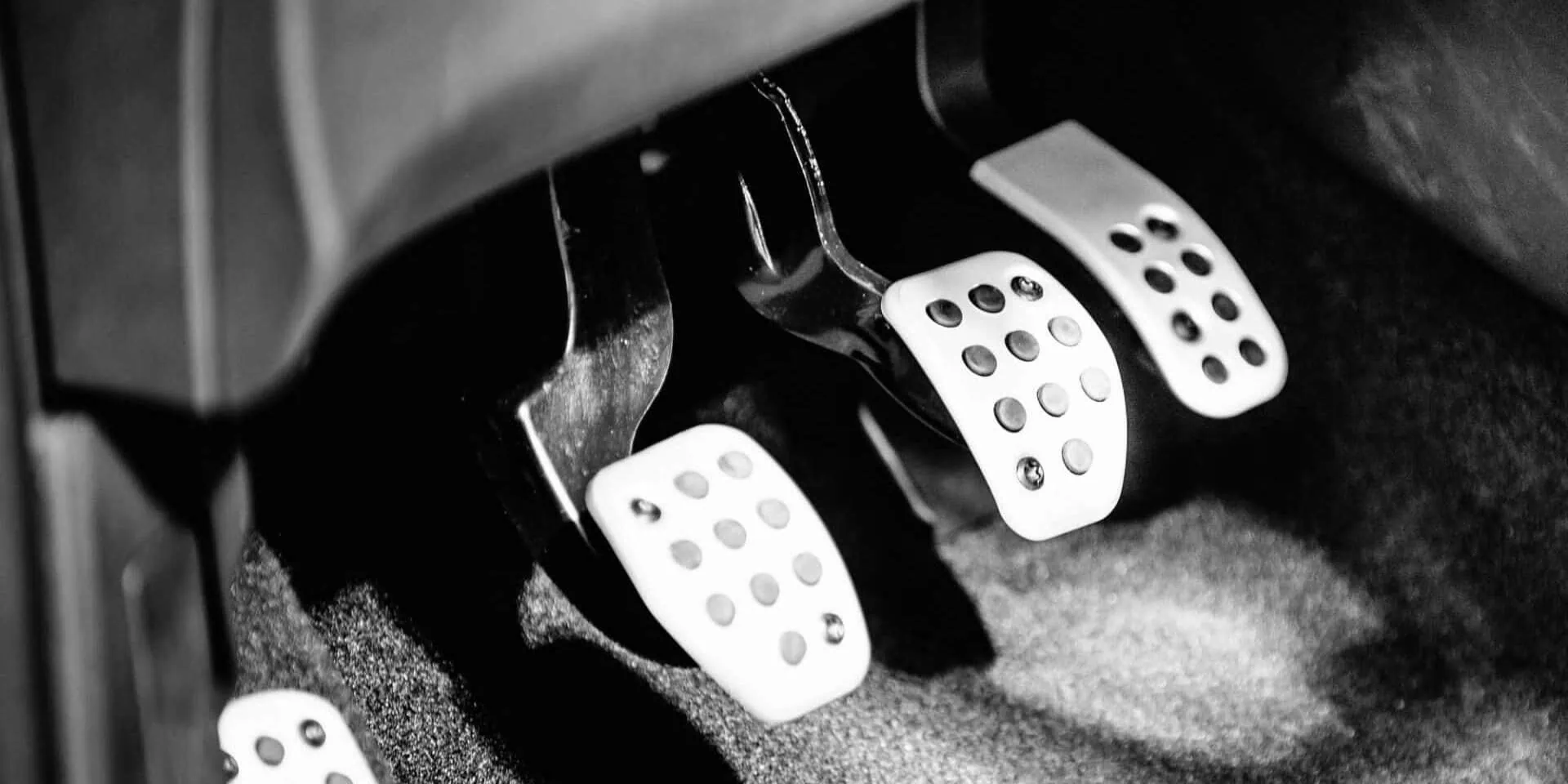
- In an automatic car, the brake is the wide pedal on the left and the gas (accelerator) is the narrower pedal on the right. Use your right foot for both.
- In a manual car, the clutch is on the far left, the brake is in the middle, and the gas is on the right. Your left foot operates the clutch and your right foot handles the brake and gas.
- NHTSA data links around 16,000 crashes per year in the United States to pedal misapplication, where the driver pressed the gas when they intended to brake. Using one foot for both pedals is the single most effective way to avoid this error.
The Pedal Layout in Every Car on the Road
Every car sold in the United States, Europe, Japan, and most of the rest of the world follows the same pedal arrangement. The accelerator is always on the right. The brake is always immediately to its left. In a manual transmission car, the clutch pedal sits to the left of the brake. This layout has been standardized across the global automotive industry for decades, and it applies regardless of the make, model, year, or country of origin.
The question sounds simple, but it comes up constantly from new drivers, people switching from automatic to manual or vice versa, and passengers who have never paid attention to the floor of the driver’s side. Getting this right on day one and building the correct muscle memory from the start prevents a category of accident that remains one of the most common causes of low-speed crashes in parking lots and driveways.
Automatic Cars: Two Pedals
Brake on the Left, Gas on the Right
An automatic car has two pedals. The brake pedal is on the left. It is wider and sits slightly higher than the gas pedal. The gas pedal, also called the accelerator or throttle, is on the right. It is narrower and positioned closer to the floor.
The brake pedal is designed to be wider for a practical reason. In an emergency stop, the driver’s foot needs to find the brake quickly and press it with full force. A wider pedal gives a larger target and reduces the chance of the foot slipping off or landing on the wrong pedal under stress. The height difference between the two pedals also provides a tactile cue. The driver’s right foot moves from the lower gas pedal to the higher brake pedal, and the change in position is felt through the sole of the shoe before any pressure is applied.
Using Your Right Foot for Both Pedals
In an automatic car, both pedals are operated with the right foot. The left foot rests on the dead pedal, the flat footrest built into the floor to the left of the brake. This is not a suggestion or a preference. It is the method taught by every accredited driving school, recommended by NHTSA, and built into the ergonomic design of the pedal box.
Using one foot for both pedals makes it physically impossible to press the brake and gas at the same time. The foot is either on one pedal or the other, never both. This eliminates the most dangerous pedal error: pressing the gas when intending to brake, or pressing both simultaneously and overriding the brake with engine power.
Manual Cars: Three Pedals
Clutch, Brake, Gas from Left to Right
A manual transmission car adds a third pedal to the left of the brake. The order from left to right is clutch, brake, gas. The clutch pedal disengages the engine from the gearbox, allowing the driver to change gears. It is operated exclusively by the left foot. The brake and gas are still operated by the right foot, just as in an automatic.
New manual drivers sometimes struggle with the coordination required to operate the clutch with the left foot while braking or accelerating with the right. The key to building this coordination is to treat the left foot and right foot as having separate, independent jobs. The left foot only ever touches the clutch. The right foot only ever touches the brake or gas. Crossing feet between pedals, such as using the left foot to brake, creates confusion in high-pressure situations and should be avoided from the very first lesson.
The Clutch Pedal Feel
The clutch pedal has a distinctly different feel from the brake and gas. It requires more travel (the distance from resting position to fully depressed) and has a specific engagement point, often called the bite point, where the clutch plates begin to grip. Learning to feel this engagement point smoothly is the core skill of manual driving. Releasing the clutch too quickly stalls the engine. Holding it at the bite point for too long generates excessive heat and accelerates wear on the clutch disc.
Why Two-Foot Driving in an Automatic Is Dangerous
Pedal Misapplication Statistics
NHTSA data shows that roughly 16,000 crashes per year in the United States result from pedal misapplication, where the driver intended to press the brake and hit the gas instead, or pressed both pedals at the same time. The overwhelming majority of these incidents occur at speeds below 15 mph, in parking lots, driveways, gas station forecourts, and drive-throughs. The results can still be catastrophic. Vehicles driven into storefronts, pedestrians struck in crosswalks, and cars launched off parking structures all feature in the annual data.
Drivers who use two feet in an automatic, left foot on the brake and right foot on the gas, are statistically more likely to make this error. With both feet hovering over pedals simultaneously, a moment of panic or confusion can result in the wrong foot pressing down. One-foot driving removes the possibility entirely. If the right foot is on the gas and the driver needs to brake, the foot must physically move from one pedal to the other. There is no second foot in a position to make an independent, conflicting input.
Brake Riding and Premature Wear
Two-foot drivers frequently rest their left foot lightly on the brake pedal while cruising. This habit, called brake riding, keeps the brake pads in light contact with the rotors at all times. The result is accelerated wear on both pads and rotors, elevated brake temperatures that reduce stopping power when the brakes are needed at full force, and constantly illuminated brake lights that desensitize the drivers behind to actual braking events.
Brake pads and rotors have a designed service life based on normal use cycles. Riding the brake shortens that life dramatically and can lead to the kind of warning signs covered in brake warning signs explained. Replacing pads and rotors earlier than necessary is an avoidable cost that stems directly from incorrect pedal technique.
How to Build Correct Pedal Habits
Foot Positioning and Seat Adjustment
Correct pedal use starts with the correct seating position. The driver’s seat should be adjusted so that the right foot can press both pedals fully without stretching, and the knee retains a slight bend at full pedal travel. Sitting too far from the pedals forces the driver to point their toes, which reduces control and increases fatigue. Sitting too close cramps the leg and limits the range of motion needed to move smoothly between brake and gas.
The ball of the foot should rest on the pedal surface, not the toes and not the heel. The heel can remain on the floor as a pivot point while the foot rocks between the two pedals. This heel-pivot technique gives the smoothest transition and the most precise pedal modulation. Drivers who lift their entire foot off the floor to switch pedals lose the tactile reference point and are more prone to mis-landing on the wrong pedal in a hurry.
Smooth Braking Technique
New drivers tend to either jab the brake or barely press it. Both extremes create problems. Jabbing the brake locks the front suspension, pitches the vehicle forward, and unsettles passengers. Braking too gently extends stopping distances and gives the driver a false sense of the vehicle’s capabilities.
The correct technique is progressive braking. Apply initial pressure smoothly, increase force as needed based on how quickly the vehicle needs to stop, and ease off the pedal just before the car comes to a complete halt. That final easing, sometimes called threshold release, prevents the nose-dip lurch that makes a stop feel abrupt. It is the same principle that separates a comfortable ride from one that leaves passengers reaching for the grab handle.
Recognizing When the Brakes Need Attention
Warning Signs from the Pedal
The brake pedal itself provides diagnostic information about the condition of the braking system. A pedal that feels spongy or sinks slowly toward the floor under steady pressure can indicate air in the brake lines or a leak in the hydraulic system. A pedal that pulsates or vibrates under braking often points to a warped rotor. A pedal that sits lower than usual before engaging may mean the pads have worn thin and need replacement.
Any change in how the brake pedal feels compared to its normal behavior is worth investigating. The braking system is the single most important safety system on the vehicle, and early attention to changes in pedal feel prevents the kind of failures that lead to accidents. Brake fluid is the hydraulic medium that transfers pedal force to the calipers, and its condition directly affects pedal feel over time. Understanding when it needs replacing is covered in how long brake fluid actually lasts.
Sounds That Indicate Wear
A high-pitched squeal during braking is the most common audible warning. Most brake pads include a metal wear indicator that makes contact with the rotor surface when the pad material has worn down to its minimum safe thickness. That squeal is intentional, a built-in alert that the pads need replacing before the backing plate begins grinding against the rotor and causes more expensive damage.
A grinding or scraping sound under braking is a more urgent signal. It typically means the pad material is completely gone and metal is contacting metal. Continued driving in this condition damages the rotor surface, and what started as a pad replacement becomes a pad-and-rotor replacement. Cold morning squealing is a separate phenomenon that does not always indicate wear, and the difference between the two is explained in why brakes squeal on cold mornings.
Dashboard Brake Warning Lights
The brake warning light on the dashboard serves multiple purposes depending on the vehicle. In most cars, it illuminates when the parking brake (handbrake) is engaged. If the light remains on after the parking brake is fully released, it typically indicates low brake fluid in the reservoir, which can point to either a leak or worn pads that have caused the calipers to extend further than normal, drawing more fluid from the reservoir.
On vehicles equipped with ABS (anti-lock braking system), a separate ABS warning light indicates a fault in the electronic braking assistance system. The standard brakes will still function, but the ABS safety net will not activate during hard braking on slippery surfaces. Either light should be investigated promptly. Ignoring brake system warnings falls into the same category of risk covered in warning lights you should not ignore.
Brake Pedal Frequently Asked Questions
Is the brake the big or small pedal?
The brake is the wider, larger pedal. In an automatic car it is on the left. In a manual car it is the middle pedal. The gas pedal is always narrower and positioned to the right. The brake pedal is designed wider to provide a larger target for the driver’s foot during emergency stops.
Can you use your left foot to brake in an automatic?
It is physically possible, but it is not recommended for everyday driving. Left-foot braking introduces the risk of pressing both pedals simultaneously, which is the leading cause of pedal misapplication crashes. Professional racing drivers use left-foot braking as an advanced technique, but the context, training, and vehicle setup are entirely different from street driving. For road use, use your right foot for both pedals.
Why do automatic cars not have a clutch pedal?
Automatic transmissions use a torque converter or dual-clutch mechanism to manage the connection between the engine and the gearbox without driver input. The clutch engagement and disengagement that a manual driver performs with the left foot is handled electronically and hydraulically by the transmission control module. Removing the clutch pedal simplifies the driving task and allows the pedal box to be designed around two-pedal, one-foot operation.
What happens if you accidentally press the gas and brake at the same time?
On most modern vehicles, the brake override system (also called smart pedal or brake-to-idle) detects simultaneous pedal input and cuts engine power, giving the brakes priority. This safety feature became widespread after NHTSA investigations into unintended acceleration events. On older vehicles without this system, pressing both pedals at once can result in the engine overpowering the brakes, especially at low speed, which is how many storefront-impact crashes occur.

Leave a Comment
More in News

How DVSA Found 70 Percent of Vans Unsafe to Drive at Roadside Checks

Every New Car Buyer Faces a £1,469 Gap Between Dealer Offers and Real Prices

RAC Data Shows Diesel Drivers Nearing a Record Price as Tanks Cost £107
What a Slipping Clutch Actually Means (and What It Will Cost to Fix)

Aberdeen’s Low Emission Zone Fined Drivers Almost £4 Million in a Single Year
Trending on Motoring Chronicle

Honda Achieves CarbonNeutral Building Certification

Your Postcode Could Cost You £801 More a Year for Identical Car Insurance

Eleven Electric Cars Now Qualify for the Full £3,750 Government Grant

Relay Attacks Now Cause 70 Percent of Car Thefts and Push Up Everyone’s Premiums