
5 Essential Tips For Driving Safely Through Floods

Aerial view of flooded street after hurricane rainfall with driving cars in Florida residential area. Consequences of natural disaster.
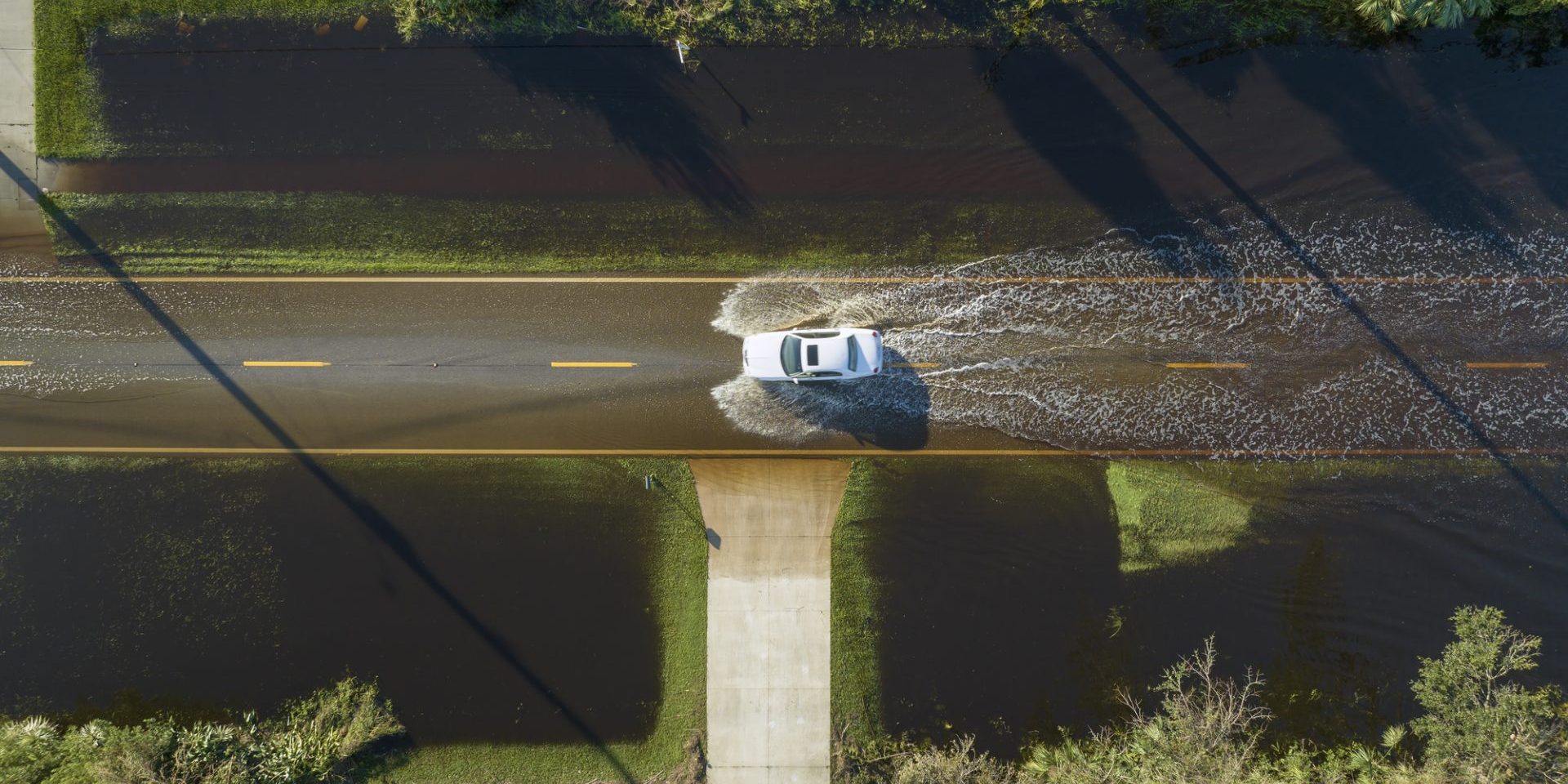
Aerial view of flooded street after hurricane rainfall with driving cars in Florida residential area. Consequences of natural disaster.
Flooding is a common occurrence that can happen anytime and anywhere, and it has become increasingly frequent due to the damaging effects of climate change and global warming.
Driving, which may otherwise seem like a simple task, can quickly become a tricky and dangerous affair during heavy monsoons and floods.
To ensure your safety and that of your vehicle, follow these five essential tips when driving through flooded areas.
- Avoid Large Pools of Water: The foremost step in ensuring your safety and that of your car is to avoid driving through heavily flooded areas. Most cars are not designed to be driven through more than half a foot of water, although SUVs may fare better than sedans. To avoid potential risks, consult Google Maps or ask locals for directions to navigate around heavily flooded areas. Before attempting to drive through a pool of water, try to assess its depth.
- Keep Moving Slowly and Steadily: When driving through a flood, it is crucial to keep your car moving slowly and steadily without coming to a halt. Avoid accelerating too much, as this may cause water to enter vital parts of the car, such as the exhaust and intake. Put your car in a lower gear, ideally not beyond the first or second gear, to prevent the engine from stalling.
- Do Not Restart the Engine if Stalled in Water: If your car stalls while driving through a water-logged area, do not attempt to restart the engine immediately. Doing so may put additional stress on the engine’s connecting rods, potentially causing them to break and resulting in costly repairs. If you suspect that water has entered the engine, turn it off immediately to prevent further damage.
- Stay Calm and Don’t Panic: If your car becomes stuck in a large pool of water, remain calm and avoid panicking. The force exerted by standing water on a car during floods is often greater than it appears and can prevent doors from opening. If the doors do not operate normally, apply force using both legs. If the problem persists, use a blunt object, such as a headrest, to break one of the windows and create an escape route. Avoid breaking the windscreen, as it is generally more difficult to break than the car windows.
- Pump the Brakes After Clearing the Water: Once you have steered clear of a body of water, press the brakes firmly to pump out any water that may have accumulated around the brake area. This issue is common in cars with drum brakes, which are often found on the rear wheels of most car models sold in India.
By following these tips, you can greatly reduce the risks associated with driving through flooded areas during monsoons. Remember to prioritise your safety and that of your vehicle by making informed decisions and taking necessary precautions.

Leave a Comment
More in News

DfT Proposes Penalty Points and Car Seizure for Driving Without a Valid MOT
The Department for Transport (DfT) is asking whether driving without ...

Do Cam Belts Really Need Changing Every 5 Years? The Number Nobody Published
Five years is a figure the motor trade works to, ...

How to Spot a Clocked Car (and What to Do If Caught Out)
The fastest way to spot a clocked car is the ...
What Dashcam Footage Actually Counts as Evidence (and the Rules on Sharing It)
Dashcam footage is legal to record in the UK, and ...

Why Connecticut Is Adding Speed Cameras to School Zones Across the State
Hartford just became the 19th Connecticut city or town cleared ...
Trending on Motoring Chronicle
How to Restore Cloudy Headlights Before They Fail Your MOT
Cloudy or yellowed plastic headlights can be restored at home ...

Ford Recalls 255,404 Focus Cars Over an Engine That Can Stall While Driving
If you drive a Ford Focus built between 2012 and ...
Blue Badge Holders Now Pay to Park as More Councils Scrap Free Spaces
If you rely on a Blue Badge and have always ...

How Secret Police Tolerance Rules on Speed Cameras Could Cost UK Drivers £2,500
Most UK police forces will only act on a speed ...
Learning to Drive Now Costs £2,600 as Lesson Prices Reach £40 an Hour
Passing your driving test has never been a cheap milestone, ...