Why Northern Ireland Could Soon Ban Drivers From Overtaking Stationary Buses Near Schools

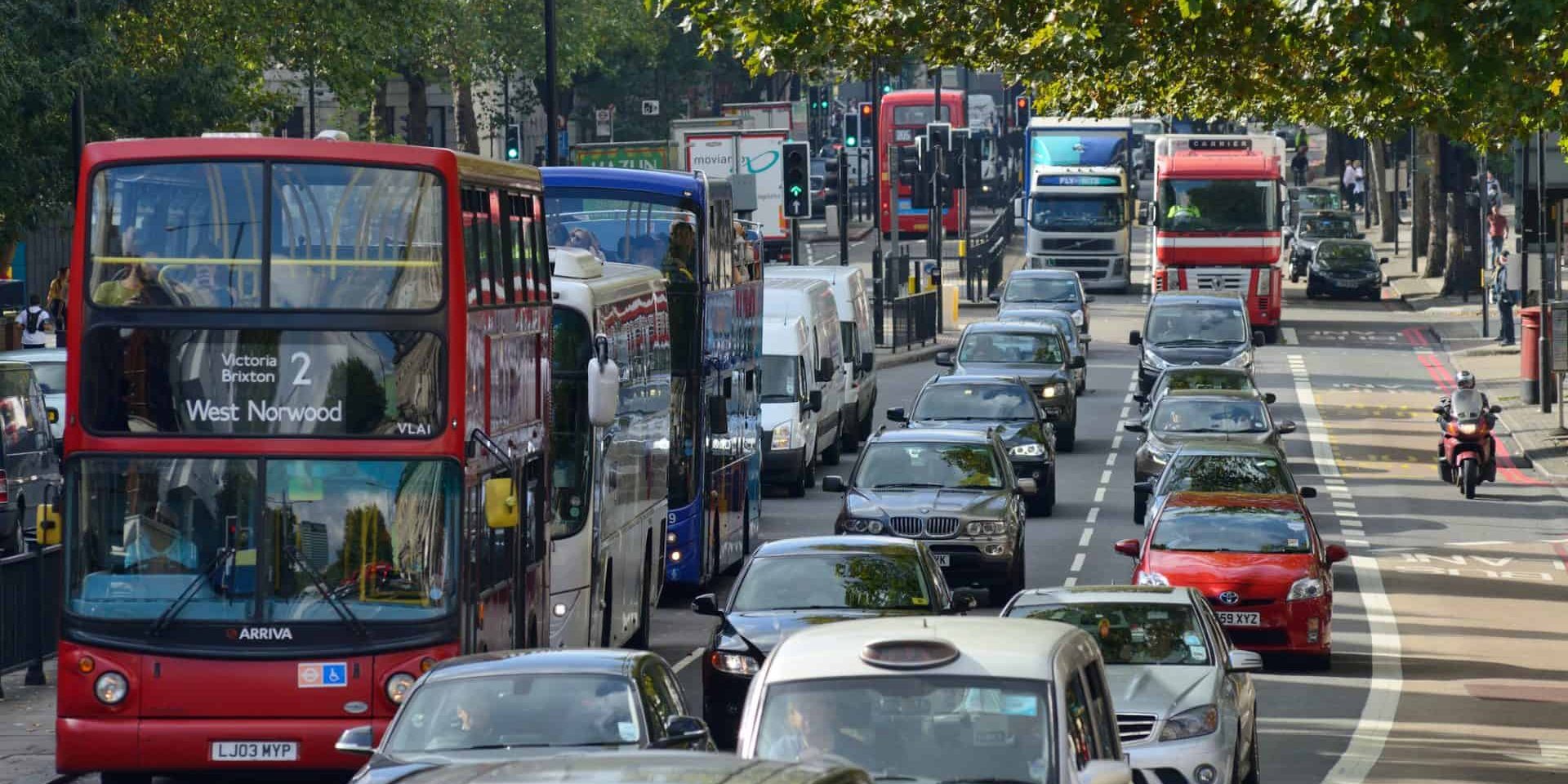
A consultation on whether Northern Ireland should introduce new rules banning drivers from overtaking stationary buses has closed after receiving 601 responses, with Infrastructure Minister Liz Kimmins describing the public engagement as “substantial” and saying the Department for Infrastructure would carefully consider every submission before deciding whether to proceed with legislation. The Safer Journeys to School consultation focused specifically on what happens when buses are stopped and passengers are boarding or alighting, a moment that campaigners and road safety groups have long identified as one of the most dangerous in a school child’s daily routine.
The consultation, which applied to all buses rather than only school vehicles, asked the public whether clearer and more enforceable rules around driver behaviour near stationary buses could reduce the risk to passengers stepping into or across the road. It also explored the potential introduction of warning lights on buses similar to systems used in the United States and Canada, where flashing red lights on school buses require following and oncoming traffic to stop until children have safely crossed.
What the Safer Journeys to School Consultation Actually Proposed
The Department for Infrastructure’s consultation set out a range of potential measures rather than a single proposal. The central idea was to consider whether drivers should face a legal prohibition on overtaking a bus that has stopped to allow passengers on or off, similar to the rules that apply at school crossings when a lollipop person is operating. Under current driving laws, there is no explicit prohibition on passing a bus at a stop, though drivers are expected to take care around pedestrians and vulnerable road users under the general provisions of the Highway Code.
The consultation also explored lower speed limits in the vicinity of bus stops during school travel hours, and the use of driver education and enforcement campaigns alongside any legislative changes. The Safer Journeys programme is conceived as a package of measures rather than a simple rule change, recognising that legal restrictions work best when combined with awareness of the risks involved and visible enforcement of the rules.
Minister Liz Kimmins, who holds the Infrastructure brief in the Northern Ireland Executive, emphasised that tragic incidents involving children at bus stops had highlighted how serious the risks could be. The consultation invited views from parents, school bus operators, road safety organisations, local authorities and the general public, and the 601 responses received are considered a significant level of engagement for a devolved government consultation of this type.
The Incidents That Prompted the Review
The consultation did not emerge from abstract policy interest. It followed a series of serious incidents in recent years in which children were struck by passing vehicles while boarding or alighting from school buses. The vulnerability of children at this moment, stepping into the road from behind a large vehicle in conditions where other drivers may have limited visibility, has been a recurring focus of road safety campaigns across the UK and Ireland.
Families affected by such incidents have been among those pushing most strongly for legislative change, and the Fermanagh area in particular has seen campaigning from families who lost children in bus-related road accidents. Their advocacy contributed to the decision by the Department for Infrastructure to launch a formal consultation, which represents a meaningful step toward potential legislation even if the outcome of the process remains undecided.
Road safety organisations including UKROEd, which provides education and training services to drivers who have committed road traffic offences, have noted that incidents at bus stops often involve misjudgement by drivers rather than deliberate law-breaking. A driver who passes a bus without checking what might emerge from in front of or behind it may simply not have considered the risk, which is precisely why educational measures are seen as a necessary complement to any legal change.
How Similar Laws Work in Other Countries
Several other countries have more prescriptive rules about driver behaviour near stationary buses than the UK currently has, and the Northern Ireland consultation drew on those international examples. In the United States, school buses are equipped with flashing amber warning lights that activate as the bus slows to a stop, alerting approaching drivers that a stop is imminent. When the bus door opens and the red stop sign arm extends from the side of the vehicle, all traffic in both directions on an undivided road is required by law to stop and wait until the bus moves off again.
Canada operates similar rules, as do some Australian states, and the systems are generally regarded as effective at reducing incidents at bus stops when properly enforced. The technology involved is well established, and modern buses are routinely fitted with the warning light systems as standard equipment in jurisdictions where the law requires them. One challenge for Northern Ireland would be the cost and timeline of retrofitting an existing bus fleet to the required standard, particularly given the budgetary pressures facing public transport operators.
Scotland has previously explored similar measures and has run pilot programmes examining whether UK-style legislation could be introduced, though no uniform national law on bus overtaking exists in any part of the United Kingdom at present. A Northern Ireland change would therefore be the first of its kind in the UK, and is likely to be watched closely by road safety policymakers in England, Scotland and Wales.
What the Current Rules Say for Drivers Around Buses
Under current UK driving rules, drivers are not specifically prohibited from passing a bus that has stopped at a bus stop, provided they can do so safely. The Highway Code requires drivers to give priority to pedestrians who are crossing or about to cross a road, and to take particular care around children and other vulnerable road users. Rule 223 of the Highway Code advises drivers to be careful when passing bus stops and to watch for pedestrians who may step into the road.
However, these are advisory provisions rather than hard prohibitions with automatic penalties. A driver who passes a bus and strikes a pedestrian may face charges of careless or dangerous driving depending on the circumstances, but the act of overtaking a stationary bus is not in itself a named offence. The proposals under consultation in Northern Ireland would change this, creating a specific prohibition with defined consequences for drivers who breach it.
The distinction is significant from an enforcement perspective. Named offences with clear descriptions are generally easier to enforce and prosecute than offences that require the application of general careless driving provisions to specific circumstances. A specific bus overtaking prohibition would also send a clearer public message about expected behaviour, which may in itself have some deterrent effect.
What Happens Next and When Drivers Might See Change
The Department for Infrastructure has indicated that it will review all 601 consultation responses alongside legal advice and input from key organisations before making a decision on whether to proceed with legislation. That review process typically takes several months, and any decision to move toward new laws would then need to go through the Northern Ireland Assembly’s legislative process, which adds further time before anything could come into effect.
A realistic timeline for any law change, if the consultation results support moving ahead, would be sometime in the 2027 to 2028 period at the earliest, though road engineering improvements, signage changes and education campaigns could begin sooner as non-legislative elements of the Safer Journeys to School programme. Drivers in Northern Ireland should not expect immediate changes to the legal position, but those who regularly pass schools and bus routes would be wise to familiarise themselves with the proposals and to adopt a cautious approach around stationary buses in the meantime.
The broader debate about bus safety and child protection on the roads is likely to attract attention beyond Northern Ireland as the consultation outcomes become public. Road safety advocates across the UK have argued for years that the gap between how other countries protect children around school buses and what exists in the UK represents a policy failure, and a Northern Ireland initiative that produces clear evidence about public attitudes could help move the conversation forward in the rest of the country as well.
For drivers who want to understand the full range of changes being considered to UK road rules and driving laws, our overview of the biggest shake-up of driving laws in years covers the key proposals affecting drivers across England, Scotland and Wales, alongside the Northern Ireland developments that may eventually inform wider policy.

Leave a Comment
More in News
How a Pothole Claim Now Costs UK Drivers £5,380 on Average This Year

Every Electric Car Driver in London Could Pay TfL Up to £3,780 a Year

What a Flashing Engine Management Light Means Before a £700 Catalytic Converter Bill

Why a Grinding Noise From Your Wheel Could Cost You £250 and Fail Your MOT
What a £10 Per Kilogram Car Tax Could Cost Drivers if Treasury Adopts It
Trending on Motoring Chronicle

What a 46 Percent Rise in Ombudsman Car Insurance Complaints Means for UK Drivers

DfT Bans Calling Cars Self-Driving From January 2027 With Two Year Prison Risk

Gas Prices Top $4 a Gallon for the First Time Since 2022

Why Your Car’s Stop-Start System Stops Working (and What a New Battery Costs)