Running a Red Light Is a Gamble With Other People’s Lives

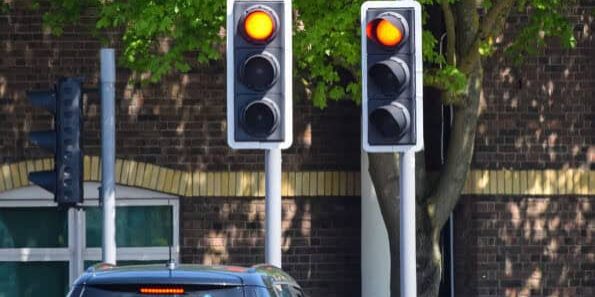
Road safety body GEM Motoring Assist has issued a fresh warning to UK drivers about red light running, calling the behaviour a reckless gamble with other people’s right of way that puts vulnerable road users in the firing line. The message lands at a moment when junction safety remains one of the most consistent flashpoints on British roads, and when traffic enforcement is being reviewed in several authorities.
The headline argument from GEM is simple. A red light is not a guideline you can negotiate with, and amber does not mean accelerate. James Luckhurst, GEM’s Head of Road Safety, framed it as a question of who pays the price when a driver decides the rules apply less to them than to everyone else at the junction.
“Running a red light is not a harmless shortcut or a bit of cheeky driving. It is a deliberate decision that gambles with the safety of other people who have the right to expect protection from the signals. The ones who pay the highest price are often those least protected – people on foot, on bicycles or on motorcycles.”
James Luckhurst, Head of Road Safety at GEM Motoring Assist
Why GEM is sounding the alarm now
Recent Police Scotland figures referenced by GEM point to red light running as a persistent rather than marginal problem on UK roads. Junctions are already one of the highest-risk parts of the network for pedestrians, cyclists and motorcyclists, and a vehicle proceeding through a red signal removes the basic assumption everyone else is relying on: that the green light in front of them grants them safe passage.
GEM argues the fix is a combination of better junction design, clearer driver education and stronger enforcement where it is needed. The aim is not to punish but to shift behaviour, so that drivers stop treating amber as a chance to push through and start treating it as the warning it is supposed to be.
Luckhurst added: “We all have a duty to avoid causing harm to others on the road. We should assume that a red light is there because someone else, somewhere on that junction, may well be about to rely on it. If you choose to ignore it, you’re not just breaking the law – you’re gambling with their priority and potentially their life.”
Three habits that take the gamble out of green and amber lights
GEM has set out three practical tips for drivers to keep junctions safer for everyone, and they are worth keeping in mind whether you commute on busy urban routes or only drive at weekends.
Decide before you reach the light. When you are approaching a green signal, pick a go or no-go point in advance. If the light changes to amber before you reach that point, you stop. If the change happens after the point, you continue if it feels safe. The decision is made before the moment, which factors out the last-second gamble that produces so many close calls.
Treat amber as stop, not sprint. Amber means stop if you can do so safely. It does not mean accelerate to beat the red. Easing off the throttle early gives you time to check your mirrors, gauge the driver behind and brake smoothly, which also lowers the risk of a rear-end shunt from another driver who has not given themselves enough thinking time.
Be honest about the time you save. How often does the driver who just shot through the junction end up alongside you at the next set of lights? Almost always. The real gains in journey time come from setting off earlier and planning your route, not from shaving two seconds off a signal you should have stopped at.
What to do when an emergency vehicle pulls in behind you
One of the more useful clarifications in GEM’s advice covers a situation that catches plenty of drivers out. You are first in line at a red light, an ambulance or police car closes in behind you on blue lights, and instinct tells you to clear the path by edging across the stop line.
GEM is clear that you should not. Emergency drivers are trained to work around stationary traffic, and crossing a red signal because a blue light is in your mirror can put pedestrians and cyclists at the junction in immediate danger. Your job is to stay predictable, avoid blocking the junction, and move off as soon as your light turns green. Doing anything else turns a controlled situation into a hazardous one.
A reminder that costs nothing to act on
Red light running is not a niche issue. It is a routine decision made by thousands of drivers every day across the UK, and GEM’s intervention is a reminder that the rules at junctions exist because people without metal around them are trusting drivers to follow them. The vulnerable road users at the centre of GEM’s warning are the same people walking children to school, cycling home from work, or riding a motorbike to a job that needs them.
For more on the rule changes UK drivers should be aware of right now, see our coverage of the biggest shake-up of driving laws in years and the practical questions facing older drivers reconsidering their licence.

Leave a Comment
More in News
What the Frozen £40,000 Car Tax Threshold Means for Almost a Million UK Drivers
DfT Asks Whether Fake Number Plates and Untaxed Cars Should Mean Points and Seizure

Every Driver Faces Higher Crash Risk After Clocks Go Back as AA Claims Jump 8%

DVLA Figures Show the Ford Fiesta Was Britain’s Most Stolen Car Again Last Year

Cadillac Escalade-V 125th Anniversary Limited to 252 Units at $239,000
Trending on Motoring Chronicle
Nine London Boroughs Roll Out No-Flash Radar Speed Cameras That Catch Drivers in Both Directions

Why Your Car Overheats in Traffic But Never on the Motorway

How Bristol Could Become Britain’s Second City to Charge Workers to Park
Tool Theft Now Costs UK Tradespeople an Average £2,646, Simply Business Reveals