I travelled down the Champs-Élysées and around the Arc de Triomphe in a self-driving car


Do you think a semi-autonomous vehicle is capable of taking on one of the most chaotic traffic experiences in Europe?
Way back in 2014 I drove to the Paris Motor Show. The last bit of the journey took me to the Champs-Élysées and involved circumnavigating the iconic Arc de Triomphe.
With 12 converging avenues, no lane markings and priority to the right (vehicles entering the roundabout have priority over those already driving inside it), it’s one of the most hair-raising city drives ever. Naturally, I vowed then to never try it again.

Fast-forward 12 years and I was back at the Paris Motor Show (via Eurostar) – but this time there’s added intrigue.
Denza, BYD’s upmarket performance brand which is about to launch in the UK, set itself a challenge to use its “God’s Eye” City Navigation on Driving Assistant (CNOA) system to tackle France’s most famous roundabout.
The car of choice was the gorgeous Denza Z9GT, which is not unlike a Porsche Taycan Sport Turismo at first glance.

With space for four six-footers, a large boot and packing 1,582bhp and 1,240Nm of torque, it can hit 62mph in just 2.25 seconds.
What’s more, thanks to BYD’s revolutionary Flash Charging tech, a 10%-97% “refill” takes only nine minutes.
Enough about the impressive Z9GT – back to the challenge.

Denza’s City Navigation on Driving Assistant (CNOA) system makes use of pre-installed hardware, a single LiDAR sensor, 11 cameras (four side-view, four 360-dgree surround-view, two front, one rear), three millimetre-wave radar sensors and 12 ultrasonic radar sensors.
CNOA is not fully autonomous (Level 5), but it is in effect Level 2+, which means that is can steer, brake and accelerate, but the driver still needs to constantly monitor progress and be ready to take over at any time.
And so it was in Paris. Apart from the reminder to touch the steering wheel every 10-15 seconds, my chauffeur was on standby for most of the 3.3-mile tour.
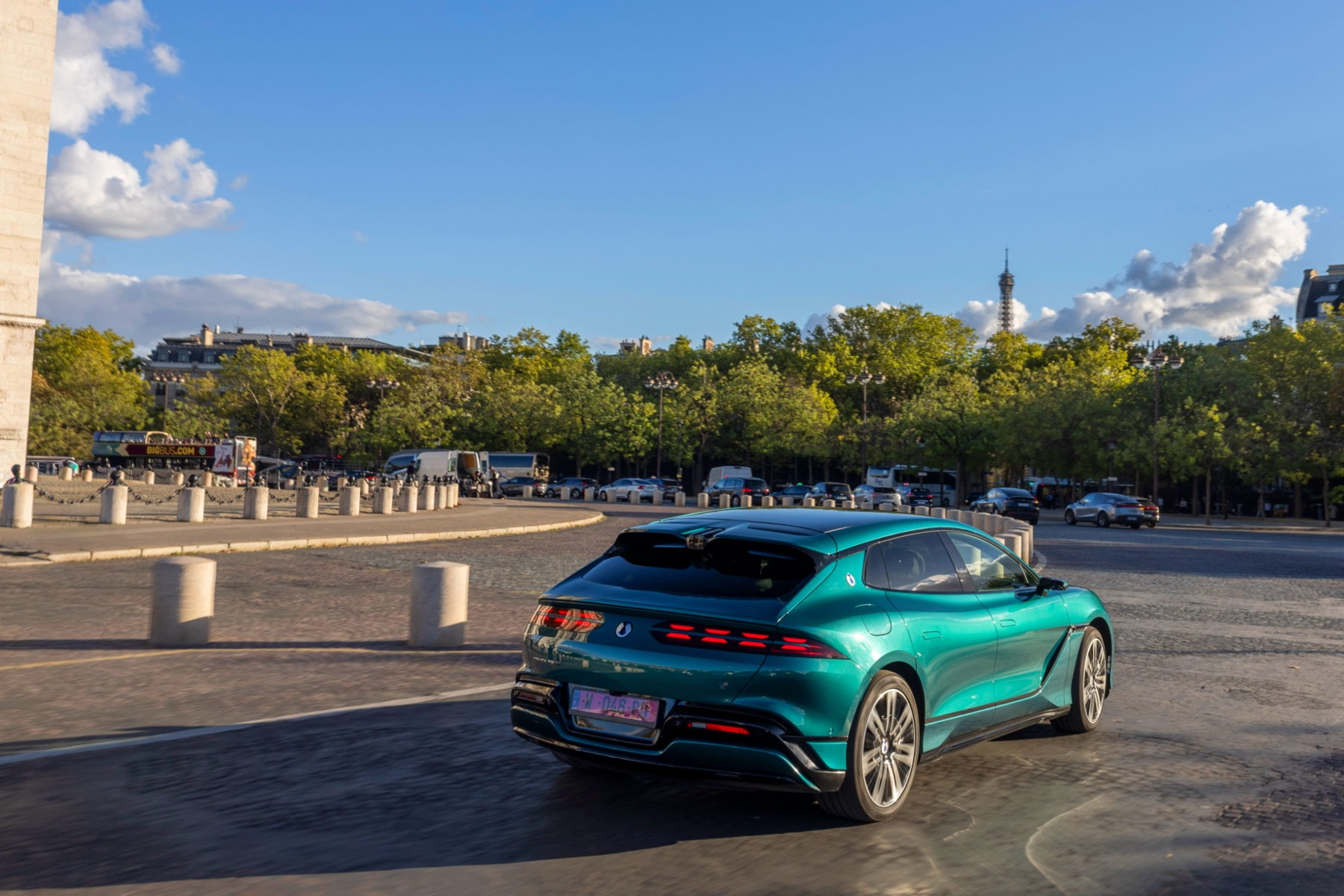
The “God’s Eye” intelligent driving assistance system is very clever. Watching it plot a route through the melee (via the infotainment screen), by creating its own imaginary lane, was fascinating.
No dramas on the Champs-Élysées, but the Place Charles de Gaulle (the actual name of the roundabout, historically known as Place de l’Étoile) was a different matter.
Despite the free-for-all of cars, vans and bikes, our Denza Z9GT managed well until it was time to turn off. Maybe the system’s a little too submissive, but my car left it almost too late to turn off at our exit, requiring the driver to take control and steer us hard right.

From then on, everything went well until we got to a side street and a Fiat 500e stopped abruptly ahead of us. It was only when the left indicator and reversing lights were activated that it became apparent that it was planning to back into a parking space. Unfortunately, by then we were too close behind so the driver had to take over and inch backwards.
Yes, the Fiat driver didn’t use Mirror Signal Manoeuvre, but this is the kind of everyday scenario self-driving cars should be able to anticipate.

We made it back unscathed and it was nowhere near as nerve-wracking as I thought it might be, but it also showed that we’re still some way off fully autonomous driving – at least in this part of the French capital.
Verdict: Full marks to BYD and Denza. It was brave to take on such an ambitious challenge, especially with the software in a pre-release state. However, in the long term, the system must be able to deal with all scenarios. In other words, it needs to be able to second-guess human behaviour, which isn’t easy at the best of times!
Note: The “God’s Eye” City Navigation on Driving Assistant (CNOA) system, which has been fitted to the Z9GT since launch, will be made available in 2027 via an over-the-air (OTA) update.
Article in association with AutomotiveBlog

Leave a Comment
More in News
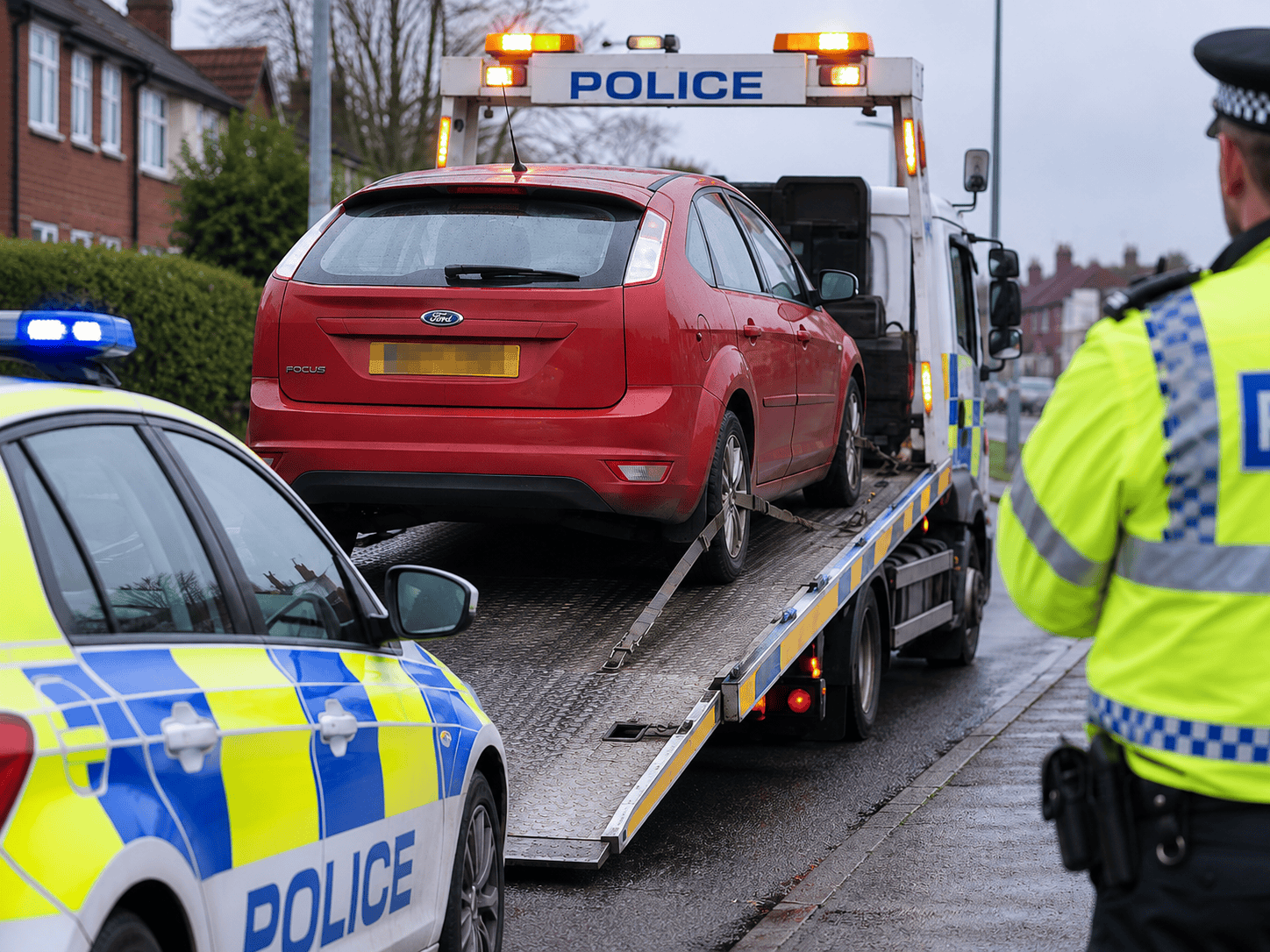
DfT Proposes Penalty Points and Car Seizure for Driving Without a Valid MOT

Do Cam Belts Really Need Changing Every 5 Years? The Number Nobody Published

How to Spot a Clocked Car (and What to Do If Caught Out)
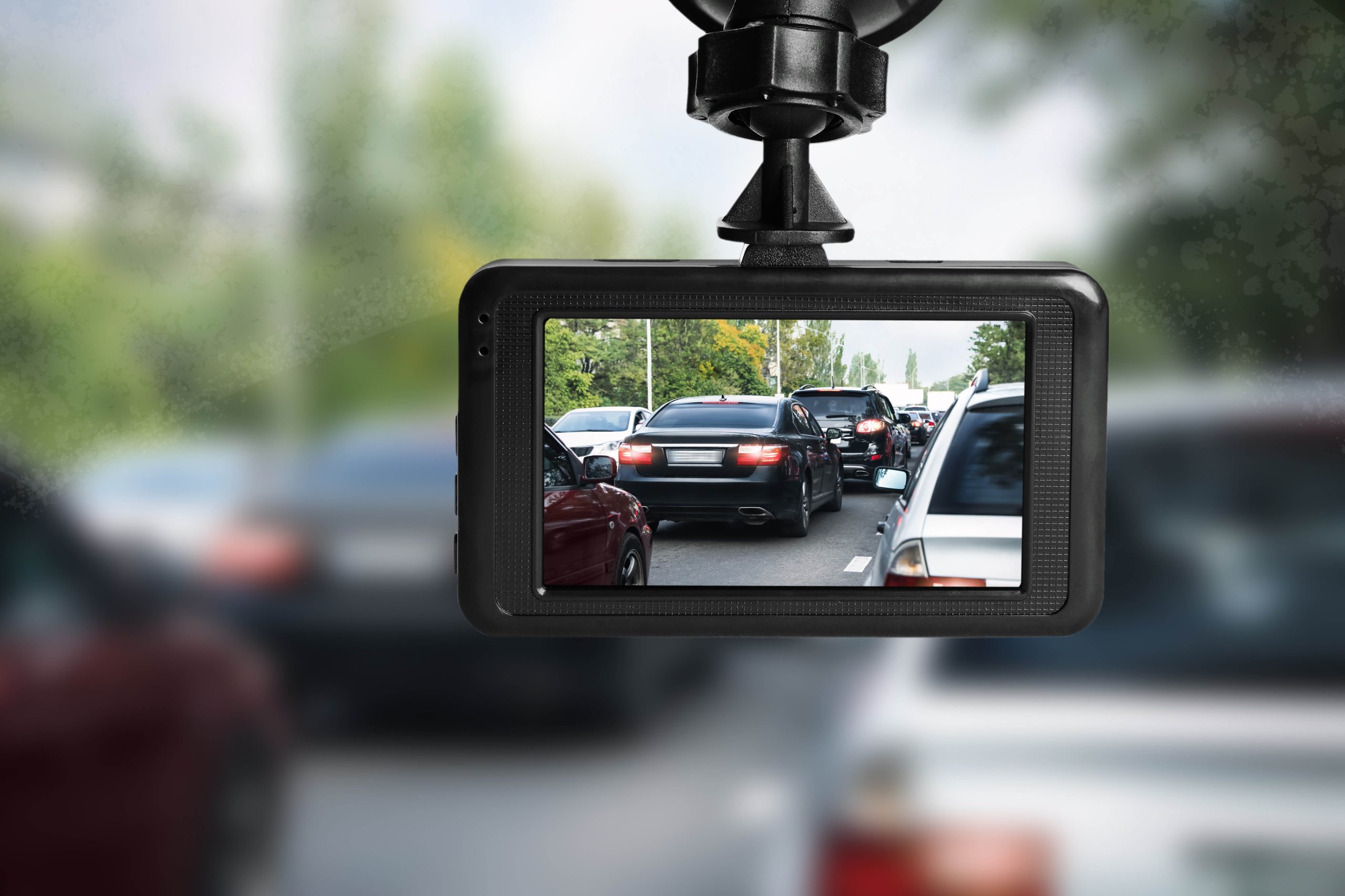
What Dashcam Footage Actually Counts as Evidence (and the Rules on Sharing It)
Drivers Aged 17 to 24 Pay £112 Extra to Spread Insurance Monthly, Quotezone Finds
Trending on Motoring Chronicle
Rolls-Royce presents Black Badge Ghost Series II: a daring expression of luxury and power [Photo Gallery]

MINI Countryman SE Midnight Edition Arrives From £41,645

New Autonomous World Speed Record set with Indy Autonomous Challenge Maserati MC20 [Photo Gallery]
Why the 2027 Audi Q9 Could Solve the Headlight Glare Problem for US Drivers