
Steering Wheels: The 9 and 3 Paradigm



Modern automotive safety standards have shifted from the traditional 10-and-2 steering grip to the 9-and-3 position to account for high-speed airbag deployment. Holding the wheel higher risks severe arm and facial injuries, while the lower placement allows hands to clear the path of expanding safety devices. This updated technique also significantly improves reaction times, enhances mechanical control during maneuvers, and reduces physical fatigue by relaxing the shoulders. Adopting these research-backed habits ensures a driver is better equipped to handle emergency evasive actions and maintain vehicle stability.
Why Driving Instructors Got the Steering Position Wrong for Decades
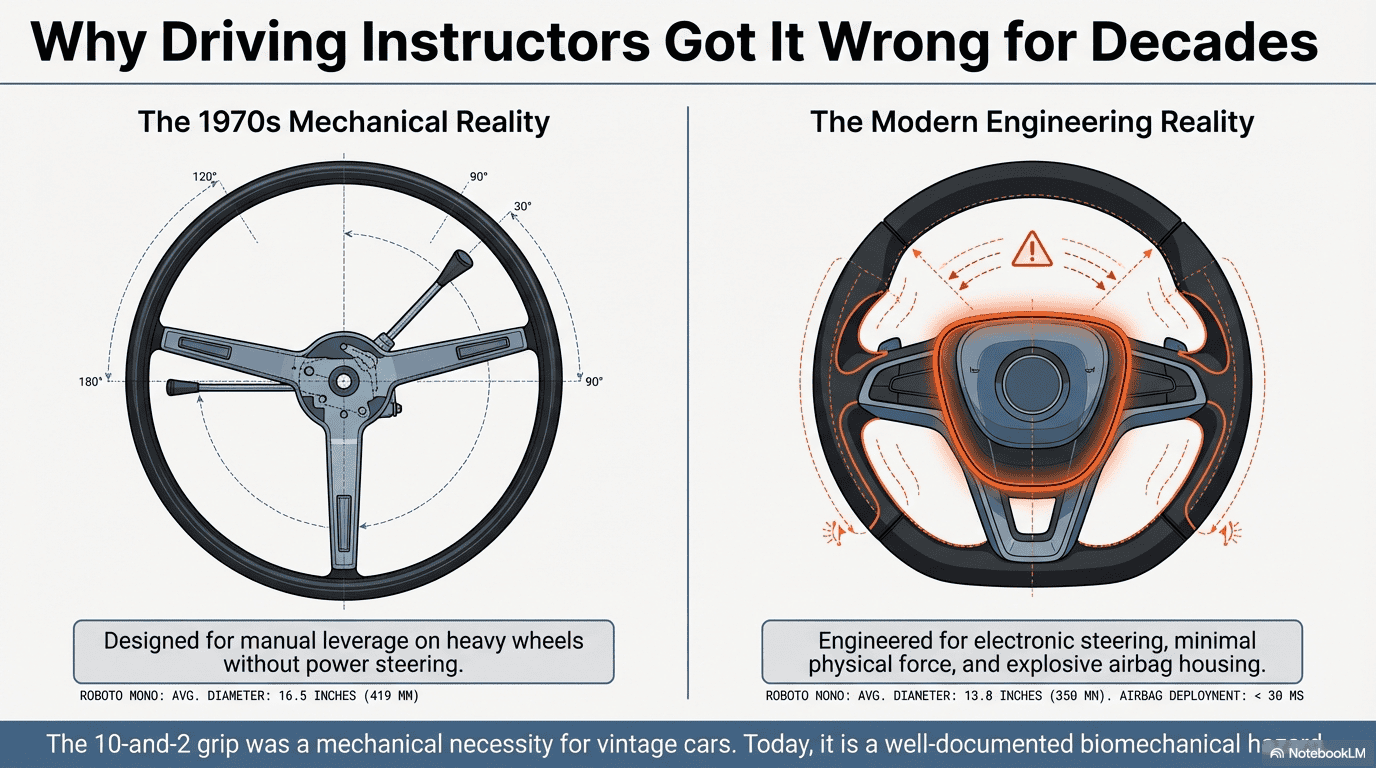
The 10-and-2 grip was born out of mechanical necessity in an era when heavy, unassisted steering wheels measured over 16 inches in diameter. Driving instructors taught it because it worked for the technology of the time. Today, with steering wheels averaging just 13.8 inches and airbags capable of deploying at 300 km/h, that same grip has become a well-documented biomechanical hazard. Modern driver training programs now unanimously recommend 9-and-3 as the safer, more responsive standard.
The Dangerous Physics of Airbag Deployment at the 10-and-2 Position
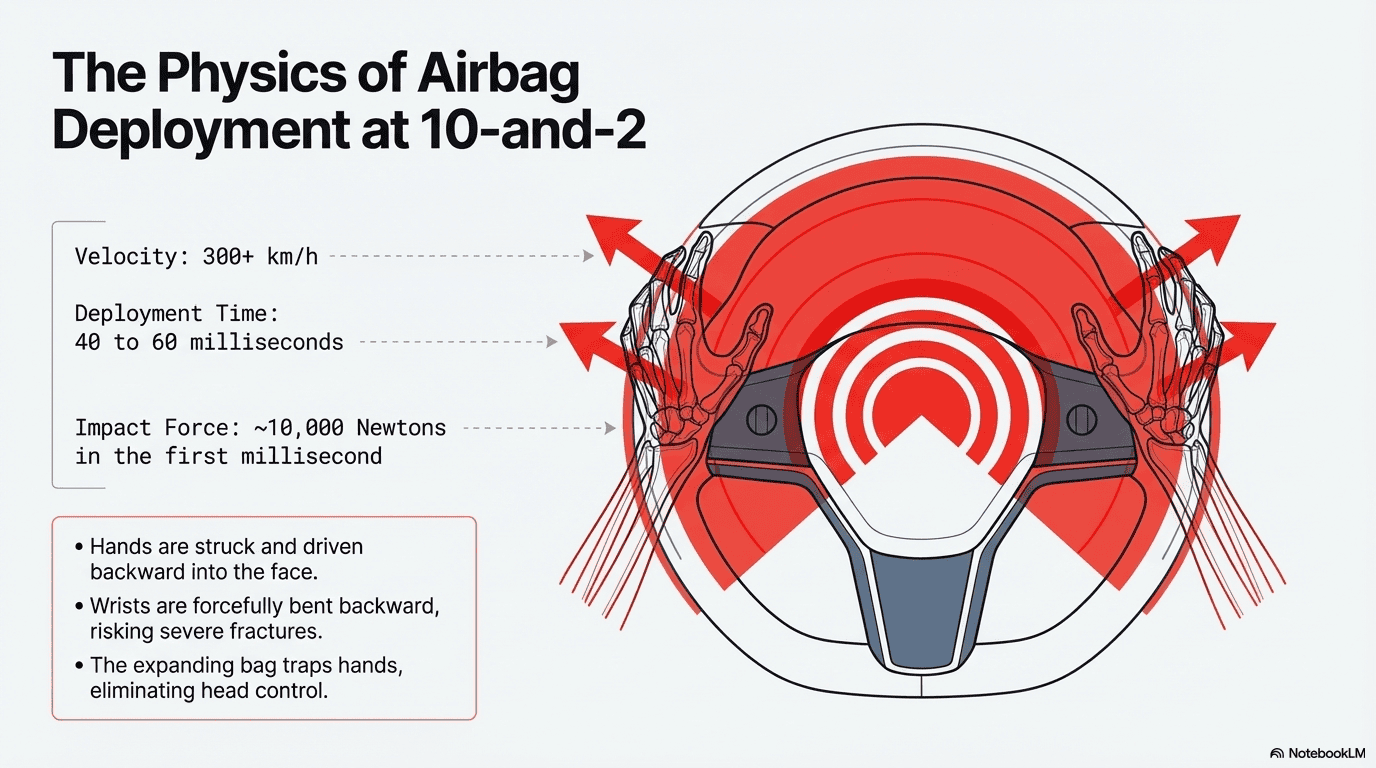
When an airbag deploys, it expands at over 300 km/h and generates an impact force of approximately 10,000 Newtons within the first millisecond. Hands held at 10-and-2 sit directly in this deployment path, meaning they are violently struck and driven backward into the driver’s face. Wrists absorb a brutal backward bend that frequently causes fractures, while the expanding bag physically traps the hands, eliminating any chance of corrective steering control in those critical moments.
How the 9-and-3 Grip Keeps Your Hands Clear of the Airbag Impact Zone
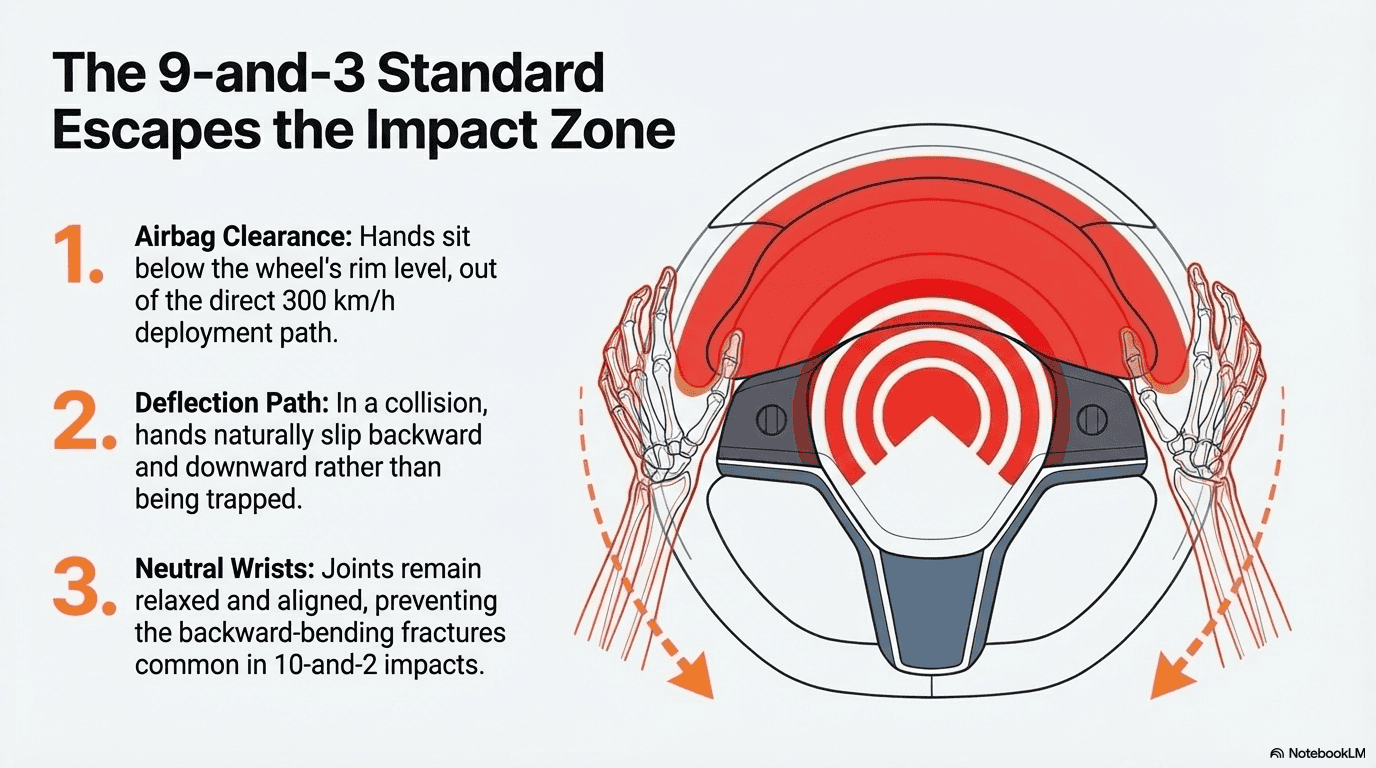
Positioning hands at 9 and 3 o’clock places them below the wheel’s rim level, entirely outside the direct 300 km/h airbag deployment path. In a collision, rather than being struck and trapped, hands naturally slip backward and downward along a safe deflection path. The wrists remain in a neutral, relaxed alignment, preventing the backward-bending fractures common in 10-and-2 crashes. This single repositioning can mean the difference between walking away from an accident and sustaining serious hand and facial injuries.
10-and-2 vs 9-and-3: A Full Biomechanical Comparison
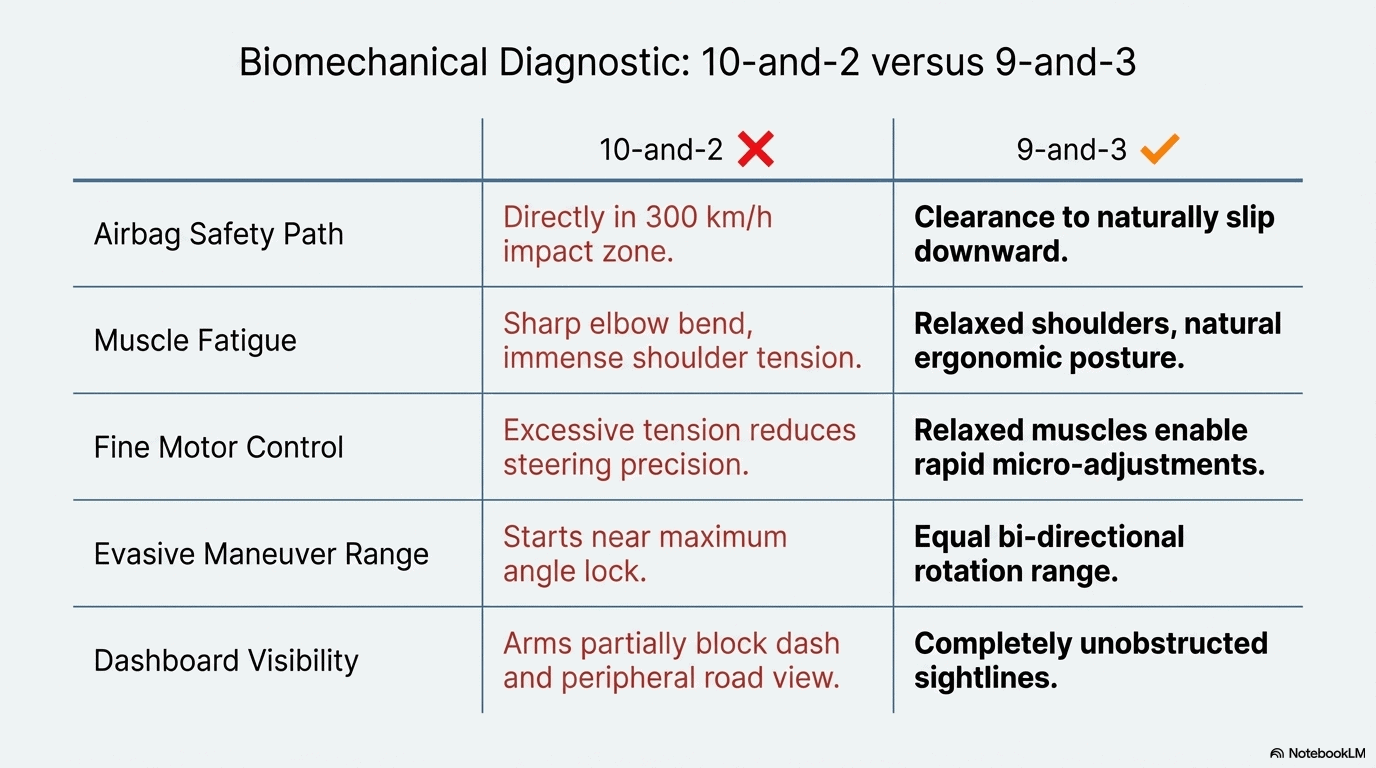
The differences between 10-and-2 and 9-and-3 extend far beyond airbag safety. At the higher position, arms create a sharp elbow bend that generates significant shoulder tension, accumulating into fatigue on long drives. The excessive muscle tension also reduces fine motor control and steering precision. On top of this, 10-and-2 places the driver at near-maximum rotational lock before an evasive maneuver has even begun, and the raised arms partially obstruct dashboard instruments and peripheral road view. The 9-and-3 standard resolves every one of these issues at once.
The Correct Seating Position That Makes the 9-and-3 Grip Work
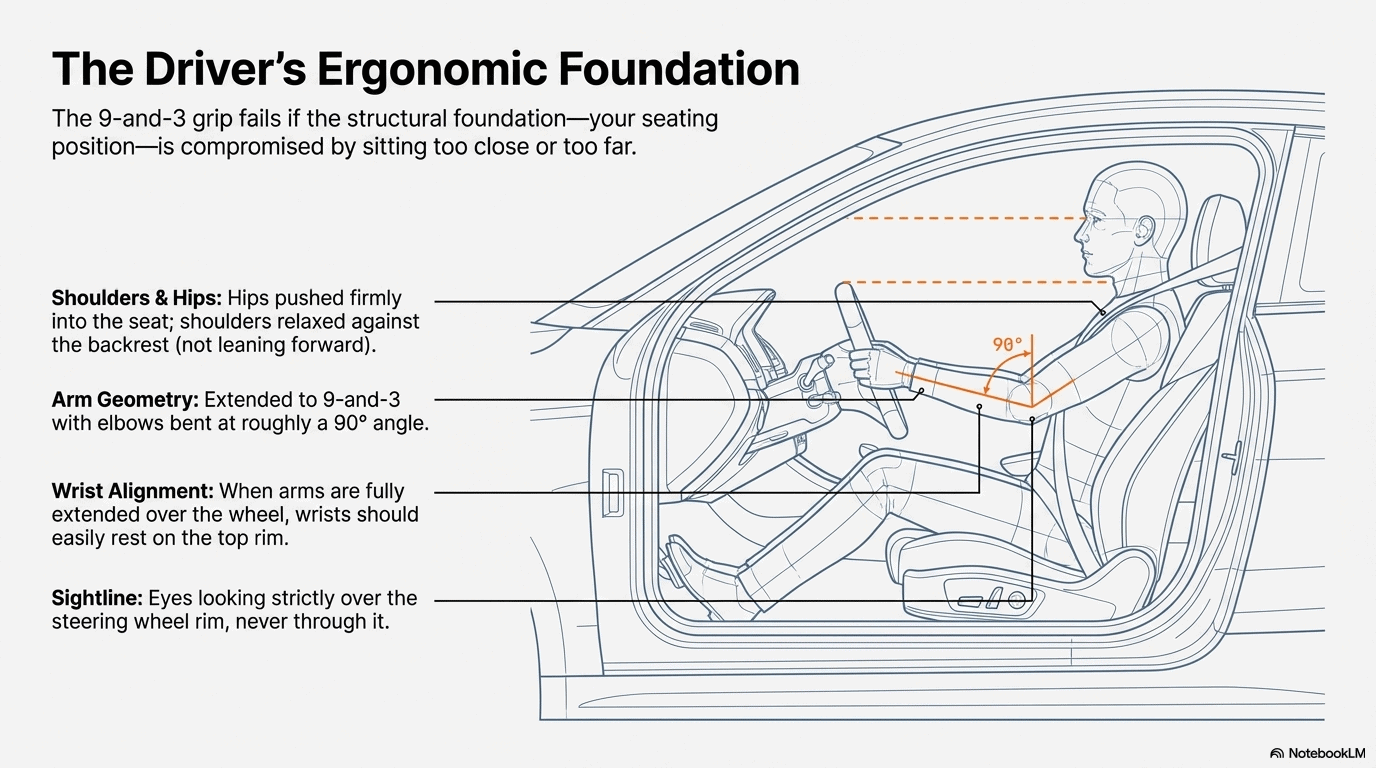
The 9-and-3 grip only delivers its full biomechanical benefit when built on a correct ergonomic foundation. Hips should be pushed firmly into the seat with shoulders relaxed against the backrest, not leaning forward. Arms should extend to the wheel with elbows bent at roughly 90 degrees, and when fully extended over the wheel, wrists should rest easily on the rim’s top edge. The sightline is equally critical: eyes must look strictly over the steering wheel rim, not through it, to ensure complete forward visibility at all times.
Common Dangerous Steering Habits and Why They Fail in an Emergency
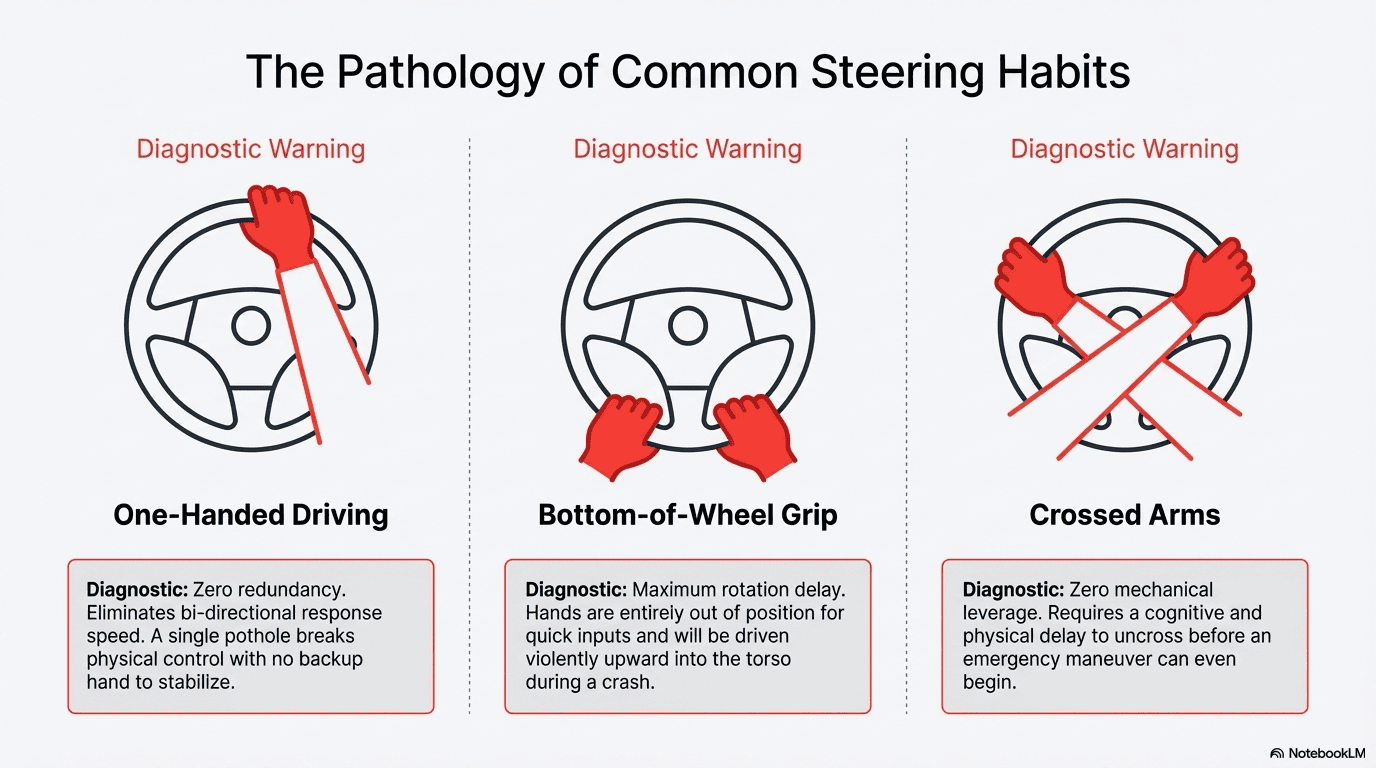
One-handed driving eliminates all bi-directional redundancy. A single pothole or sudden obstacle breaks physical control with no backup hand to stabilize. The bottom-of-wheel grip is even more problematic, as hands are positioned at maximum rotation delay and will be driven violently upward into the torso in a crash. Crossing arms looks natural during low-speed maneuvering, but it creates a cognitive and physical delay before any corrective input can be applied, since the driver must first uncross before responding. All three habits are warning signs of a driver who has not adapted to modern vehicle dynamics.
Push-Pull vs Hand-Over-Hand: Which Steering Technique to Use and When
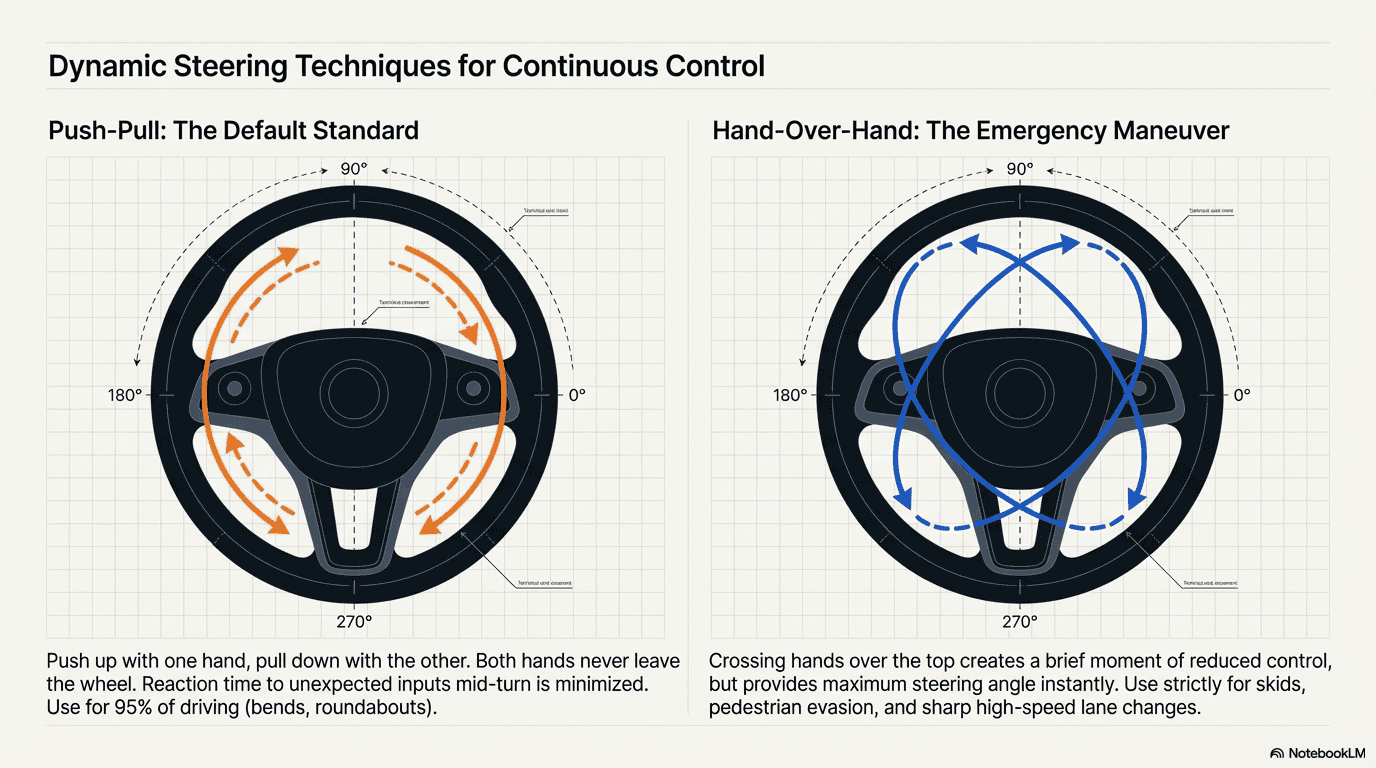
Push-pull steering is the standard for roughly 95 percent of everyday driving, covering bends, roundabouts, and lane changes. Both hands remain on the wheel at all times, one pushing up while the other pulls down, keeping reaction time to unexpected mid-turn inputs as low as possible. Hand-over-hand is reserved strictly for emergencies, including skid correction, pedestrian evasion, and sharp high-speed lane changes, where maximum steering angle must be achieved instantly. While crossing hands creates a brief moment of reduced control, the full rotation angle it provides outweighs that trade-off when the situation demands it.
How 9-and-3 Hand Placement Performs in Real-World High-Speed Emergencies
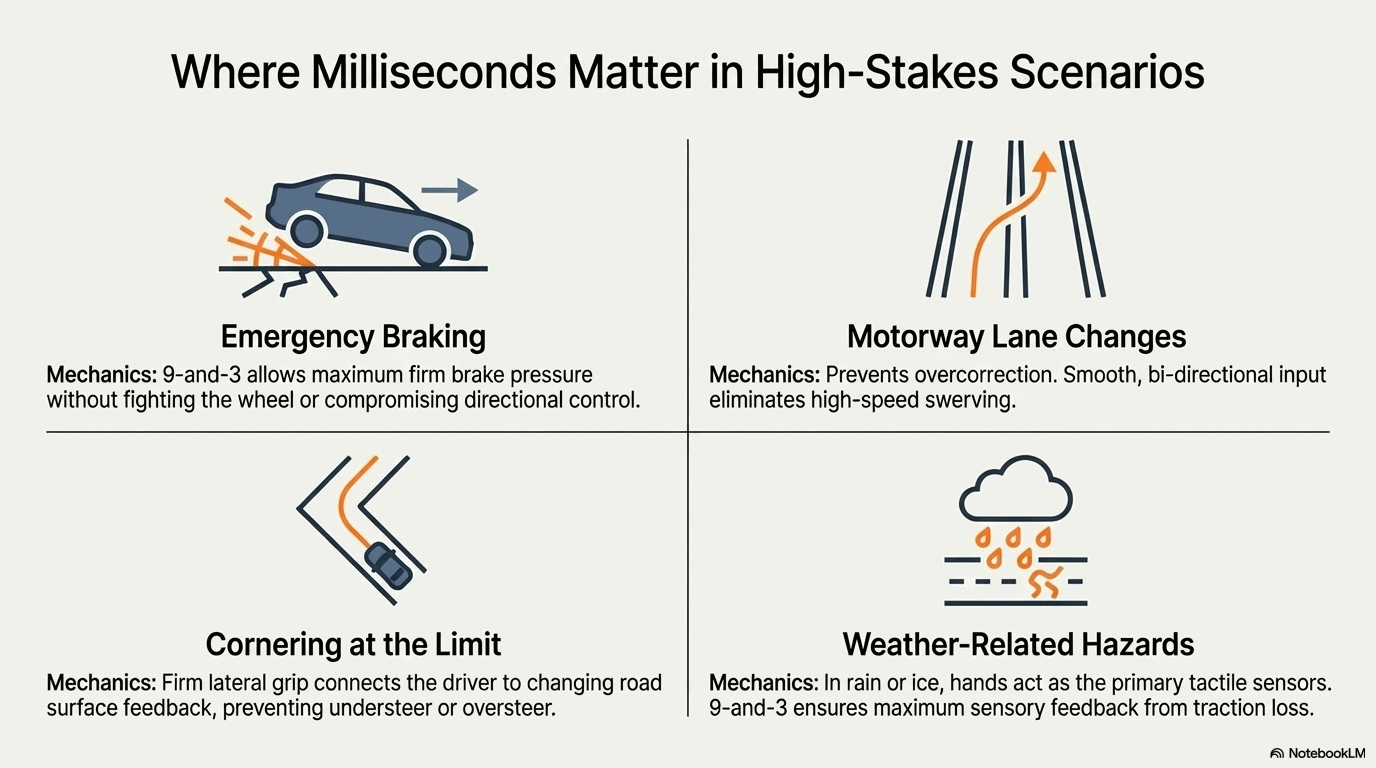
In an emergency braking scenario, 9-and-3 allows the driver to apply maximum firm brake pressure without fighting the wheel or compromising directional control. During high-speed motorway lane changes, the balanced bi-directional input eliminates the overcorrection that causes dangerous swerving. Cornering at the limit benefits from the firm lateral grip that connects the driver to changing road surface feedback, preventing both understeer and oversteer from developing uncontrolled. In rain or ice, where hands become the primary tactile sensors for available traction, 9-and-3 ensures that maximum sensory feedback flows up through the steering column at all times.
Why Modern Power Steering and Smaller Wheels Make Correct Grip More Critical Than Ever
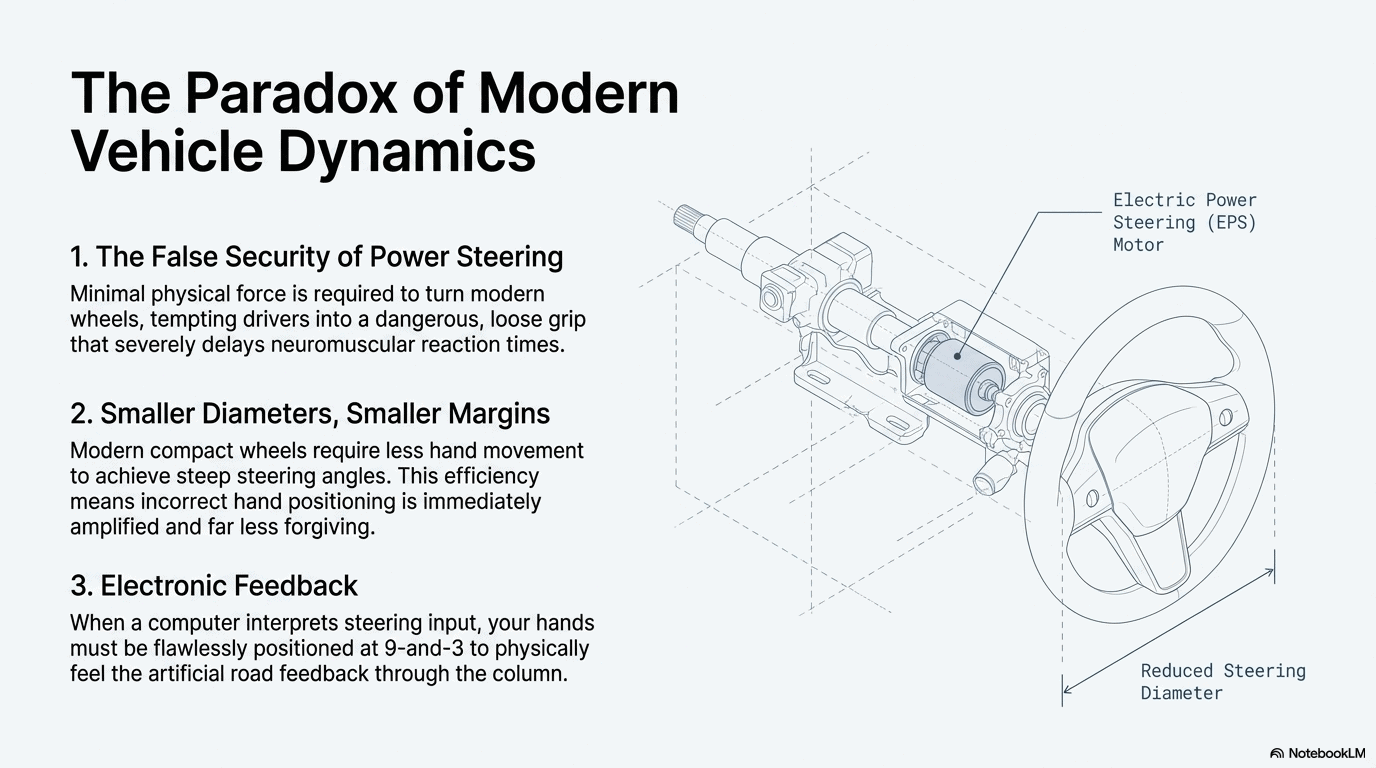
Electric power steering creates a genuine problem: because minimal physical force is now needed to turn the wheel, many drivers adopt a loose, casual grip that significantly delays their neuromuscular reaction times. Smaller, more compact modern steering wheels amplify this issue. Less hand movement is needed for steep angles, meaning any positioning error is immediately magnified rather than absorbed. Because EPS systems interpret driver input electronically and feed back artificial road feel through the column, hands must be correctly positioned at 9-and-3 to physically register that feedback and translate it into accurate vehicle control.
The Total Control Framework: How Seating, Grip, and Steering Technique Work Together
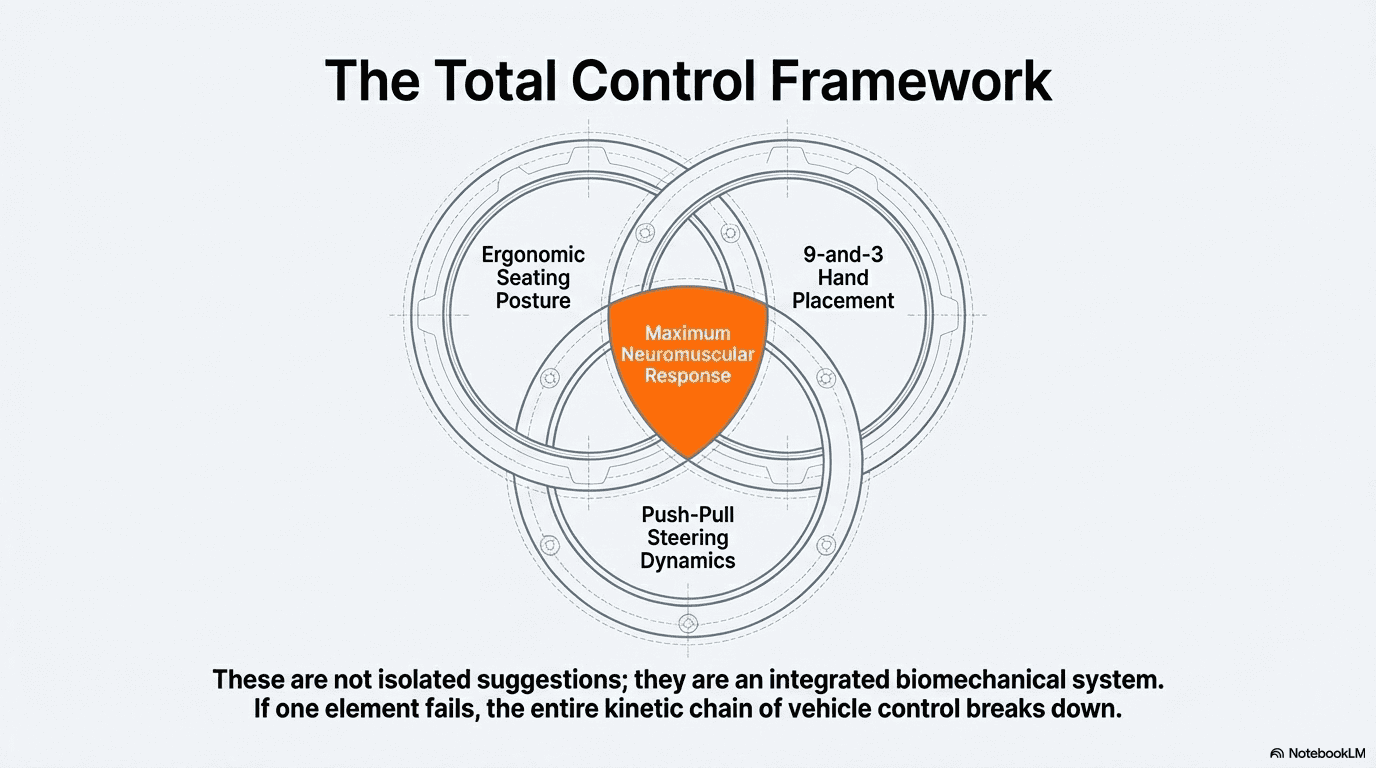
Ergonomic seating posture, 9-and-3 hand placement, and push-pull steering dynamics are not isolated recommendations. They form an integrated biomechanical system where each element amplifies the others. Correct seating ensures the arms reach the wheel at the right angle for 9-and-3 to function as intended. The 9-and-3 position then provides the neutral wrist alignment and equal rotational range that push-pull technique requires to be executed correctly under pressure. When all three converge, the result is maximum neuromuscular response: the fastest possible reaction time, the greatest mechanical leverage, and the clearest road feedback. If any single element is absent, the entire kinetic chain of vehicle control breaks down.
The 30-Day Protocol to Permanently Rewire Your Steering Muscle Memory
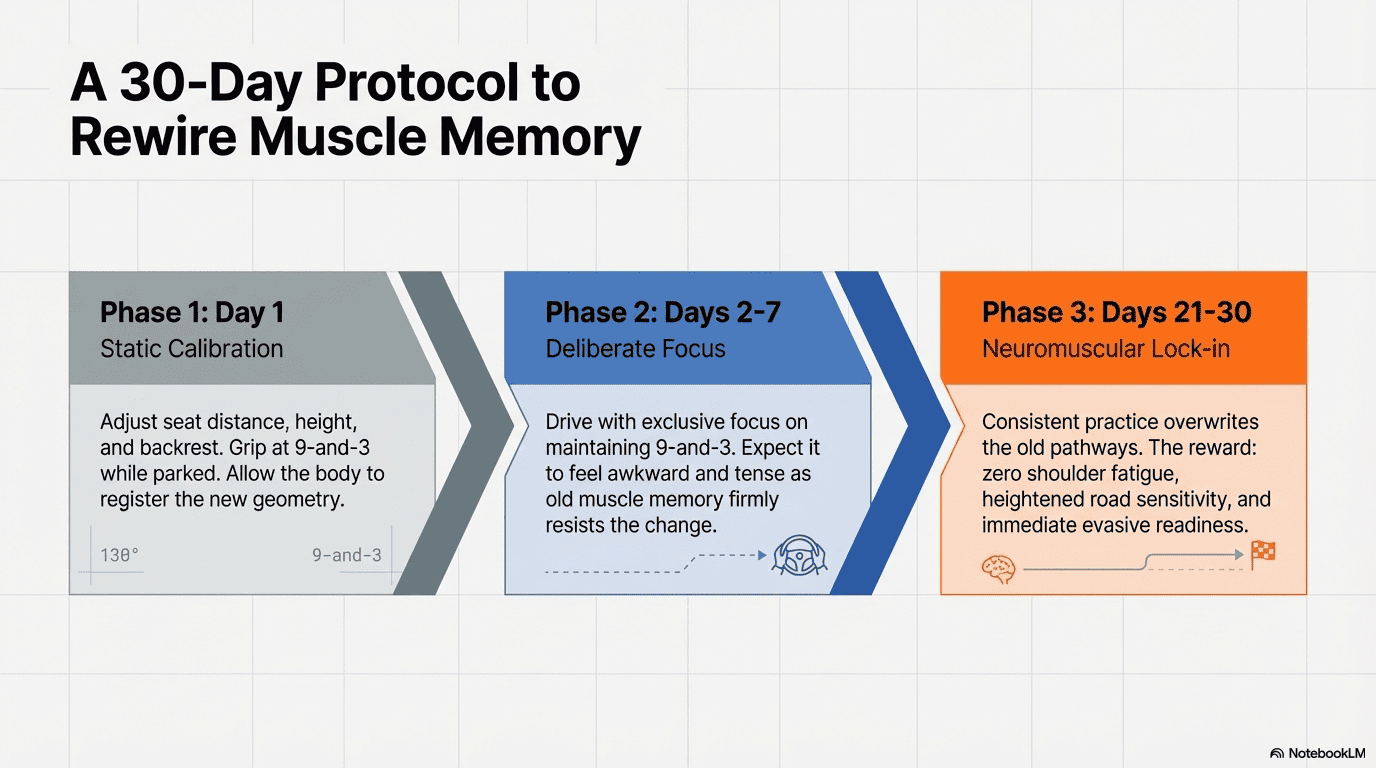
Changing a deeply ingrained driving habit requires a structured approach. On Day 1, begin with static calibration: adjust seat distance, height, and backrest angle, then grip at 9-and-3 while parked to allow the body to register the new geometry. From Days 2 through 7, drive with exclusive conscious focus on maintaining the position. Expect it to feel awkward and tense as existing muscle memory actively resists the change. By Days 21 to 30, consistent practice will have overwritten the old pathways entirely, delivering the full rewards of the new standard: zero shoulder fatigue, heightened road sensitivity, and immediate evasive readiness in any emergency.
The Case for 9-and-3: Reaction Time, Mechanical Leverage, and Zero Airbag Risk
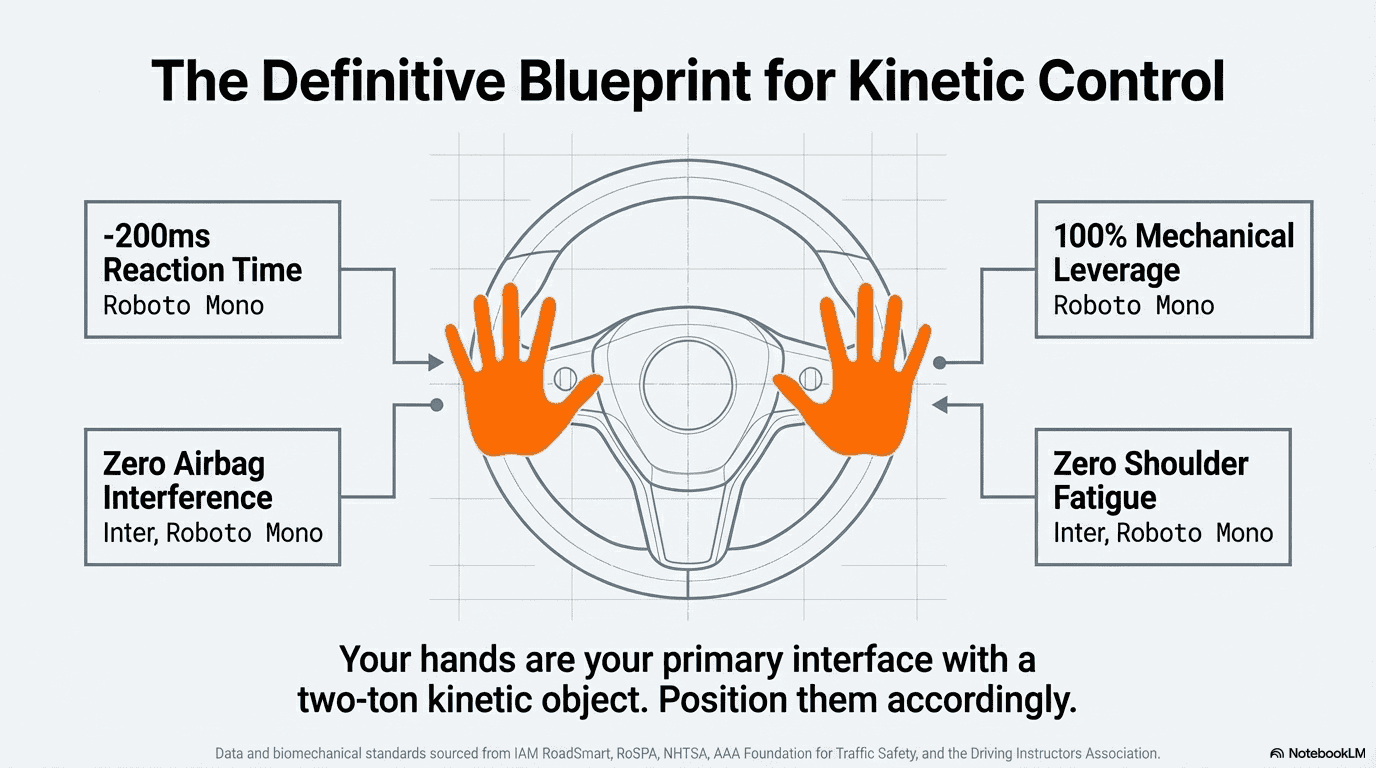
The 9-and-3 steering position delivers four measurable, evidence-backed advantages at once: a 200-millisecond improvement in reaction time compared to higher grip positions, 100 percent mechanical leverage across the full rotation range, zero airbag interference in a collision scenario, and zero shoulder fatigue on any journey length. These benefits are rooted in biomechanical research endorsed by IAM RoadSmart, RoSPA, NHTSA, the AAA Foundation for Traffic Safety, and the Driving Instructors Association. Your hands are your primary interface with a two-ton kinetic object. Position them accordingly.

Leave a Comment
More in News

Avoidable Driving Mistakes That Double Your Risk After Dark

The W16 Mistral ‘Caroline’: an ode to a beloved daughter, by Bugatti Sur Mesure

All-new 2027 INFINITI QX65 blends sporty fastback design, luxurious interior and spirited, rewarding performance

Acura Celebrates 40 Years of Precision Crafted Performance

Lamborghini Urus SE Widetrack by Urban makes joint debut in UK and USA
Trending on Motoring Chronicle

Flat Tyre Fix: No Spare? No Problem!

The McLaren W1 and new McLaren 750S Le Mans to debut at Monterey Car Week

Audi A5, S3 earn 2026 MotorWeek Drivers’ Choice Awards for Best Luxury Car, Best Sport Sedan

Chinese Mural Art: a cultural tribute by Rolls-Royce [Photo Gallery]
