
Poor Maintenance History Tanks Car Resale Value – Here’s Why


Poor maintenance history slashes a car’s resale value because buyers, private or trade-in, see gaps in service records as red flags for hidden wear, costly repairs, or outright neglect, dropping offers by 10-20% or more. A spotty log signals risk; a clean one screams reliability. In 2026’s used-car market, where transparency rules, this gap can turn a $20,000 Toyota Camry into a $16,000 liability, or worse.
It’s not just perception; data backs it. Cars with full service histories fetch 15% higher prices on average, per a 2024 Carfax analysis, while neglected ones languish. Buyers aren’t dumb; they’ll pay for proof of care, not promises. From oil changes to crash cover-ups, here’s why skimping on upkeep haunts resale, and how the numbers stack up…
The Mechanics of Trust: Why Records Matter
A car’s maintenance history isn’t just paper—it’s a trust contract. Every oil change (every 5,000-7,500 miles, per 2025 OEM norms), tire rotation, or brake job logged builds a story of diligence. Skip those, and buyers assume the worst—worn engines, warped rotors, or a ticking time bomb under the hood. A 2024 Kelley Blue Book study found 68% of U.S. buyers rank service records as a top factor, above mileage or brand—missed $50 oil swaps can cost thousands later.
Take a 2019 Honda Civic—90,000 miles, clean title. With receipts for every service, it’s $18,000 private sale (Carfax, 2025). No records? Dealers slash it to $15,000, fearing undisclosed abuse. Mechanics amplify this—unseen sludge or skipped timing belts mean rebuilds topping $5,000. Buyers won’t roll that dice; they’ll lowball or walk.
Depreciation’s Silent Killer: Neglect vs. Care
Cars bleed value—20% in year one, 40% by year five, per CARFAX —but poor maintenance accelerates the plunge. A 2024 iSeeCars report pegs average five-year depreciation at 38.8%, yet well-kept models like the Toyota Tacoma hold 85% of MSRP, while a neglected Nissan Leaf craters to 31%. Why? Care slows wear; neglect fast-tracks it.
Data’s stark: a 2020 Ford F-150 with 60,000 miles and full logs retains $35,000 of its $45,000 MSRP (CarEdge, 2024). Miss half its services—oil, filters, fluids—and it’s $29,000, per Edmunds. That’s $6,000 lost to laziness. Rust, bald tires, or blue exhaust smoke? Kiss another $2,000 goodbye—buyers smell trouble, and dealers smell a bargain.
The Crash Cover-Up: Accidents and Gaps
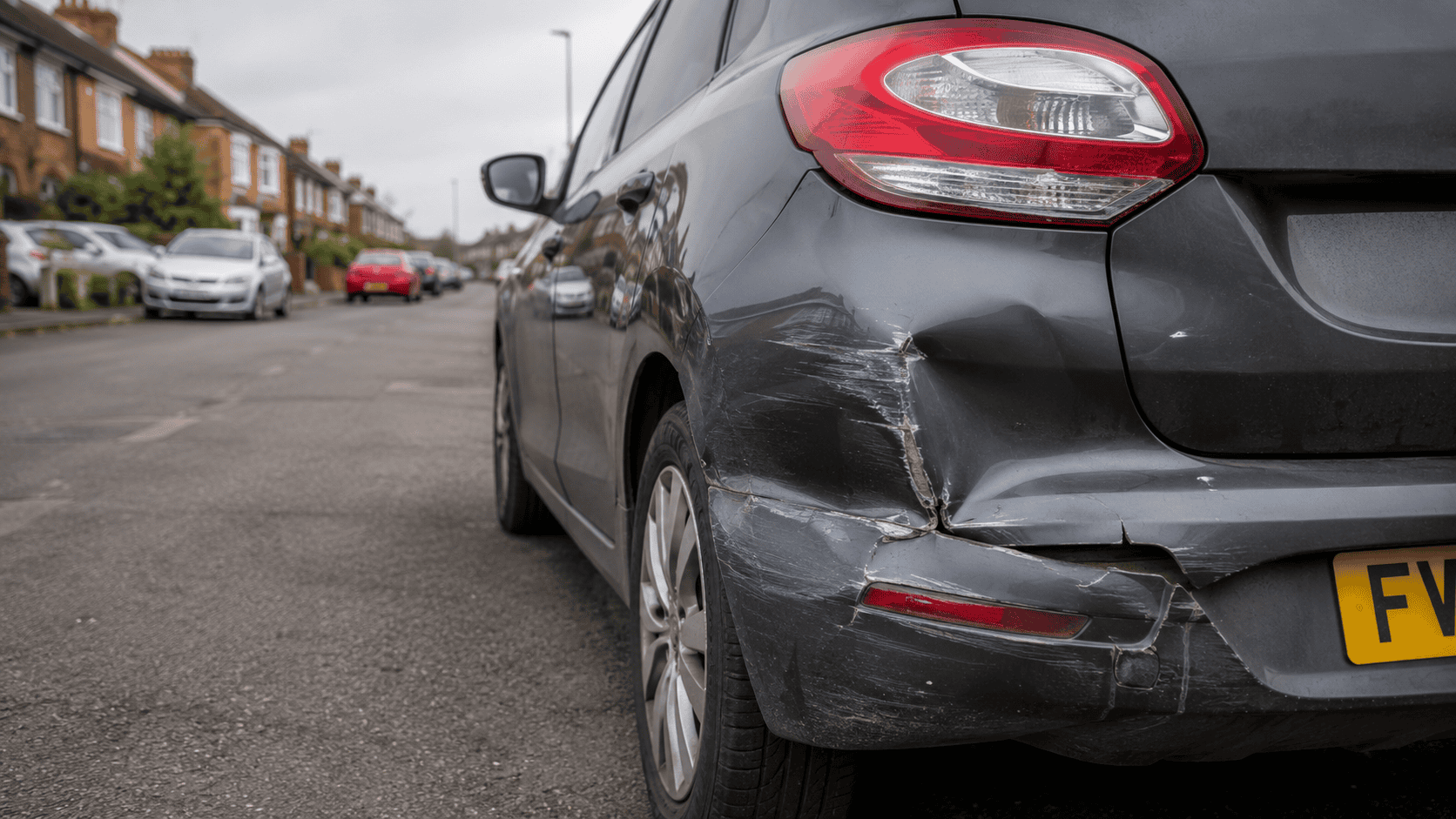
Accidents dent resale—$1,000-$5,000 per incident, per Carfax—but hiding them in a patchy history guts it more. A 2023 Chevy Bolt EV, one minor fender-bender, full disclosure, holds $19,000 at 40,000 miles (2025 trade-in). No records, same crash unreported? It’s $14,000—buyers assume frame damage or shoddy fixes. In 2024, 62% of used-car sales involved Vehicle History Reports, spotlighting wrecks; gaps let imaginations run wild.
Undisclosed repairs spook worse. A 2021 Mazda CX-5, 50,000 miles, $25,000 with logs showing a $2,000 rear-end fix. No proof? Dealers peg it at $20,000, fearing botched work— airbags, alignment, or worse. Buyers won’t pay for uncertainty; they’ll bid like it’s a salvage title.
Market Mood: 2026’s Transparency Demand
The used-car game’s shifted—post-COVID supply crunches jacked demand, but 2026’s buyers are savvier. Mobile search (63% of traffic) and tools like Carfax or AutoCheck mean history’s king—73% check reports before buying, per a 2024 Consumer Reports survey. A 2018 Jeep Wrangler with 70,000 miles and every service stamped? $28,000. Spotty records? $23,000—dealers know fans scour for proof.
Inflation’s bite helps cared-for cars too—new prices hit $48,000 in 2024, pushing used demand. Well-documented rides—say, a 2022 Subaru Forester at $26,000—sell fast; neglected ones sit, dropping 5-10% monthly (CarEdge, 2024). Buyers want bang for buck, not a gamble.
Brand Bias: Reliability’s Resale Boost
Brand rep amplifies maintenance’s impact. Toyota and Honda—kings of reliability—hold value like steel traps; a 2020 Camry with logs keeps 75% of its $30,000 MSRP at 60,000 miles ($22,500), per CarEdge. Skip services? It’s $18,000—still decent, but a $4,500 hit. Luxury marques like BMW or Mercedes bleed worse—a 2019 3 Series, $40,000 new, drops to $20,000 with gaps, 50% gone.
Why? Buyers trust Japanese badges to last—full histories just seal it. German cars, pricier to fix ($500 oil changes vs. $50), tank harder sans proof—$8,000 engine jobs loom. A 2024 MotorTrend analysis shows Mitsubishi’s Mirage at 41.3% retention with care; neglect it, and it’s a $5,000 doorstop.
The Fixer’s Paradox: Repairs Without Receipts
DIY repairs or unlogged shop fixes backfire—buyers don’t buy it. A 2021 Kia Stinger, $35,000 new, gets a $1,500 brake job at 50,000 miles. Receipted, it’s $25,000 resale; no paper, $22,000—skeptics see shade-tree hacks, not savings. In 2025, 80% of dealers demand service proof (ADAI survey)—no docs, no dice.
Even pros hurt without records. A $3,000 transmission swap on a 2017 Ford Escape, logged, holds $15,000 at 80,000 miles. Untracked? $12,000—buyers assume it’s a patch job, not a rebuild. Data’s clear: undocumented upkeep’s a 10-15% resale killer.
Here’s Why: The Buyer’s Mind and Money
Why does this sting so bad? Buyers—private or dealer—price in risk. A 2024 McKinsey report notes used-car margins hinge on data—full histories signal low repair odds, tight bids. No logs? They pad $2,000-$5,000 buffers—$18,000 becomes $13,000 on a 2020 Hyundai Tucson. In 2025, with $1.2 trillion in U.S./Europe used sales, that gap’s a fortune.
Emotion plays too—pride in a cared-for ride sways sellers, but buyers see cold cash. A 2023 Subaru Outback, 60,000 miles, $28,000 with records, feels “loved”; sans proof, $23,000 feels “dodgy.” Data seals it—15% premiums for transparency (Carfax, 2024) mean skipping that $30 oil log costs $4,000 later. Maintenance isn’t optional—it’s resale gold.
If you enjoyed this article, be sure to follow us on Microsoft Start.

Leave a Comment
More in News

Newcastle Drivers Paid £3.7 Million in Parking Enforcement as Council Income Jumps 23 Percent

Coventry Drivers Paid £5.4 Million in Parking Charges as Council Surplus Jumps 80 Percent

What Your Rights Actually Are When a Garage Overcharges or Botches a Repair
£625 Million of Detected Motor Fraud Costs Honest Drivers, ABI Figures Show

BYD Dolphin-G review: UK’s first plug-in hybrid supermini is a winning package
Trending on Motoring Chronicle

DVSA Photo Checks Begin at 2,500 More Garages to Catch Fake MOT Passes

1-of-1 2026 Corvette ZR1X raises $2.6 million for America’s heroes

Why Does My Car Feel Unstable When It’s Windy?

Motability Raised Its Excess Mileage Charge Fivefold and Cut Tyre Cover for 700,000 Drivers
