How Long Do Spark Plugs Last? (And What Happens When They Fail)

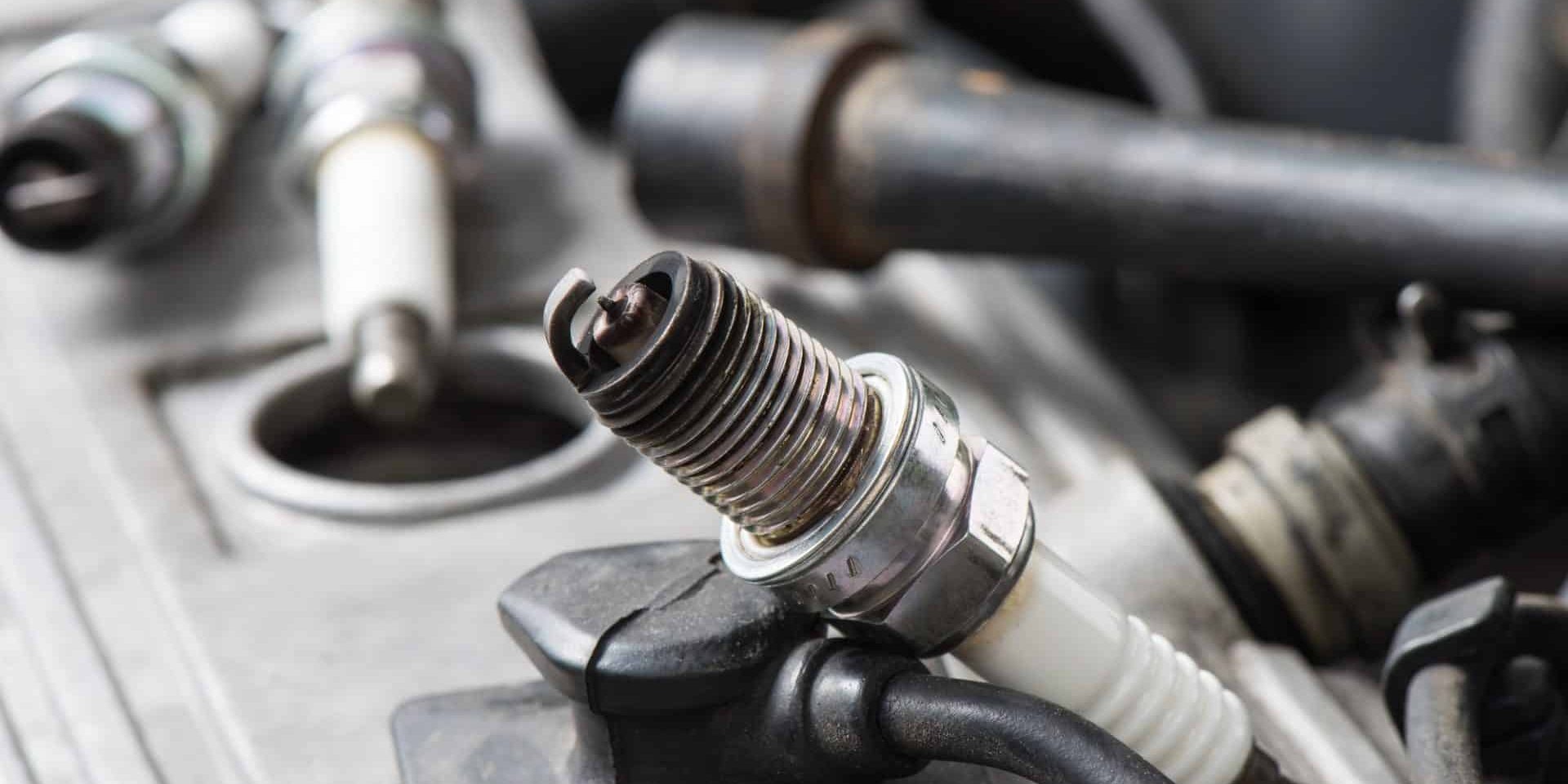
Spark plug lifespan depends on the electrode material. Copper plugs last 20,000 to 30,000 miles, platinum plugs last around 60,000 miles, and iridium plugs last 80,000 to 100,000 miles. Worn plugs cause misfires, rough idling, and fuel economy losses of up to 30 percent, making them one of the cheapest maintenance items with the biggest impact on engine performance.
What Do Spark Plugs Actually Do?
A spark plug creates the electrical spark that ignites the compressed fuel-air mixture inside each cylinder. It fires thousands of times per minute at temperatures reaching 2,500 degrees Celsius, and it must deliver a precise spark at exactly the right millisecond for every combustion event. The quality of that spark directly affects how completely the fuel burns, which determines power output, fuel efficiency, and exhaust emissions.
Each cylinder in a petrol engine has its own spark plug. A four-cylinder engine uses four, a V6 uses six, and a V8 uses eight. Some high-performance and modern engines use twin-spark designs with two plugs per cylinder for faster, more complete combustion. Diesel engines do not use spark plugs at all, relying instead on glow plugs that pre-heat the combustion chamber for cold starts.
The National Institute for Automotive Service Excellence (ASE) identifies spark plug condition as one of the top five factors in engine performance diagnostics. A plug that fires consistently and at the correct intensity produces complete combustion. A worn plug with an eroded electrode creates a weaker, less reliable spark, leaving unburned fuel in the cylinder that wastes energy and increases emissions.
How Long Do Copper Spark Plugs Last?
Copper spark plugs last 20,000 to 30,000 miles, making them the shortest-lived option on the market. They cost $2 to $5 per plug, which makes them the cheapest upfront but the most expensive over the life of the engine when you factor in more frequent replacements.
Copper plugs use a nickel alloy electrode with a copper core. The copper provides excellent thermal conductivity, which helps the plug dissipate heat quickly and resist fouling. This makes copper plugs a good choice for older engines, turbocharged applications where heat management is critical, and certain high-performance engines that specify them.
The trade-off is that the nickel alloy electrode is softer than platinum or iridium and erodes faster under the repeated electrical discharge. The electrode tip wears down, widening the spark gap beyond the manufacturer’s specification. A wider gap requires more voltage to bridge, and the ignition system eventually reaches its limit, producing a weaker or inconsistent spark. At that point, misfires begin and fuel economy drops.
Most modern vehicles no longer use copper plugs from the factory. If your owner’s manual specifies copper, plan on replacing them every 20,000 to 30,000 miles as a non-negotiable service item. Stretching beyond that interval risks misfires that can damage the catalytic converter.
How Long Do Platinum Spark Plugs Last?
Platinum spark plugs last approximately 60,000 miles and cost $10 to $20 per plug. They represent the middle ground between the short life of copper and the extended life of iridium.
The electrode tip is made from a small disc of platinum welded to a nickel alloy base. Platinum is significantly harder than nickel, so it resists erosion from the electrical discharge far longer than a copper plug’s electrode. Single platinum plugs have platinum on the centre electrode only. Double platinum plugs add a platinum disc to the ground electrode as well, providing more even wear and a more consistent spark gap across the plug’s lifespan.
Platinum plugs became the standard factory fitment through the 1990s and 2000s and remain common on many vehicles today. If your owner’s manual specifies platinum, replacing them at 60,000 miles or at the manufacturer’s recommended interval keeps the engine running cleanly and protects the catalytic converter from misfire-related damage.
How Long Do Iridium Spark Plugs Last?
Iridium spark plugs last 80,000 to 100,000 miles and cost $15 to $30 per plug. They are the most common factory fitment on vehicles built from 2010 onwards, and they represent the best long-term value for most drivers.
Iridium is the hardest common metal used in spark plug electrodes, with a melting point of 2,466 degrees Celsius. This allows manufacturers to use a much finer centre electrode, typically 0.4mm compared to 0.8mm on a platinum plug and 2.5mm on a copper plug. The finer tip concentrates the electrical discharge into a smaller point, producing a more focused, consistent spark that improves combustion efficiency.
NGK, the world’s largest spark plug manufacturer, states that iridium plugs maintain their original spark gap longer than any other material, which keeps fuel economy and emissions performance stable across the full service interval. Double iridium plugs, with iridium on both the centre and ground electrodes, extend the lifespan further to around 100,000 to 120,000 miles. Newer ruthenium-tipped plugs from NGK and DENSO are pushing lifespans toward 120,000 miles while offering even finer electrode tips.
For most drivers, iridium plugs are the right choice unless the manufacturer specifies otherwise. The higher per-plug cost is more than offset by fewer replacements across the vehicle’s lifetime, and the finer electrode provides a measurable improvement in combustion quality over copper or platinum.
How Do Worn Spark Plugs Affect Fuel Economy?
Worn spark plugs can reduce fuel economy by up to 30 percent in severe cases, according to the US Department of Energy. Even a moderate decline in spark quality produces measurable losses at the fuel pump.
The connection between spark plugs and fuel consumption is direct. When the electrode erodes and the spark gap widens, the spark becomes weaker and less consistent. Weaker spark means incomplete combustion, and incomplete combustion means unburned fuel exits through the exhaust rather than producing useful energy. The engine management system detects the drop in power and compensates by injecting more fuel and advancing the timing, both of which increase consumption.
Misfires compound the problem. When a cylinder fails to fire altogether, the fuel injected into that cylinder is wasted entirely. The remaining cylinders have to work harder to maintain speed, burning more fuel to compensate for the dead cylinder. A single misfiring cylinder on a four-cylinder engine means 25 percent of the engine’s capacity is producing nothing while consuming everything.
This is where spark plugs intersect with carbon build-up. Worn plugs contribute to incomplete combustion, which produces more carbon deposits on the intake valves and combustion chamber. Those deposits further reduce efficiency, creating a compounding cycle that accelerates as both problems worsen. Replacing worn plugs breaks this cycle and often produces an immediate, noticeable improvement in fuel economy and throttle response.
What Are the Warning Signs of Failing Spark Plugs?
Five symptoms signal that your spark plugs are approaching the end of their life. Catching them early keeps the repair simple and cheap. Ignoring them leads to catalytic converter damage that costs 10 times more.
Rough idling is the most common early sign. The engine vibrates, stumbles, or produces an uneven rhythm at rest. This happens when one or more plugs are firing inconsistently, creating unbalanced combustion across the cylinders. The vibration is often noticeable through the steering wheel or the seat of the car.
Engine misfires escalate from rough idling. A misfire is a complete failure to ignite the fuel in a cylinder, and it produces a noticeable jolt or stumble under acceleration. The check engine light illuminates with diagnostic trouble codes P0300 (random misfire) through P0306 or higher (cylinder-specific misfire). The RAC identifies engine misfires as one of the top reasons for breakdown callouts, and worn spark plugs are among the most common root causes.
Hesitation during acceleration feels like a brief pause between pressing the pedal and the car responding. The engine is not producing consistent power across all cylinders, so the response is sluggish or uneven. This is most noticeable during overtaking, merging, or pulling away from junctions.
Difficulty starting the engine, especially in cold weather, indicates that the plugs are no longer delivering a strong enough spark to ignite the fuel reliably on the first few cranks. If the engine turns over several times before catching, or if it catches and immediately stumbles before settling, the plugs are a likely cause.
Declining fuel economy over several thousand miles with no other explanation is the final warning. If you are tracking your consumption and fuel economy is getting worse, worn spark plugs are one of the first components to investigate alongside tyre pressure and air filter condition.
How Much Does a Spark Plug Replacement Cost?
A full spark plug replacement on a typical four-cylinder engine costs $120 to $250 including parts and labour. On V6 and V8 engines with restricted plug access, the total can reach $300 to $500.
The plugs themselves are the cheap part. Copper plugs run $2 to $5 each, platinum $10 to $20, and iridium $15 to $30. A four-cylinder engine needs four, a V6 needs six, and a V8 needs eight. Parts cost for a set of four iridium plugs is typically $60 to $120 depending on brand and application.
Labour is where costs vary. On engines with accessible plug wells, such as most inline four-cylinder designs, a technician can remove and replace all four plugs in 30 to 45 minutes. Labour cost sits at $50 to $150 for these accessible jobs. On V6 and V8 engines, the rear bank of plugs is often buried beneath the intake manifold, requiring removal of the manifold or other components to gain access. These jobs take one to two hours and push labour to $200 to $400.
Replacing plugs at the correct interval is one of the highest-value maintenance items on any petrol engine. A $200 plug service prevents catalytic converter damage that costs $1,000 to $2,500, restores fuel economy that saves $200 to $500 per year in fuel, and keeps the engine running at its designed performance level. For most drivers with iridium plugs, this service happens once or twice across a typical 200,000-mile ownership.
Should You Upgrade to a Different Plug Type?
Always match the plug type specified in your owner’s manual. Upgrading to a higher-tier material is sometimes beneficial, but downgrading never is.
If your vehicle came with copper plugs from the factory and the manufacturer’s service literature allows platinum or iridium as alternatives, upgrading to iridium extends the service interval and improves spark consistency. This is common on older vehicles where the manufacturer originally specified copper but iridium plugs with the correct heat range and thread dimensions are now available.
If your vehicle came with iridium from the factory, do not downgrade to copper or platinum to save money on parts. The engine management system was calibrated for the finer electrode and more precise spark of an iridium plug. Copper plugs with their larger electrode produce a different spark profile that can affect timing, combustion quality, and emissions performance. The savings of $40 to $60 on a set of cheaper plugs is erased by the shorter replacement interval and the risk of degraded performance.
DENSO and NGK both publish fitment guides that match plug type, heat range, gap, and thread dimensions to specific engines. Using the correct plug for your engine is more important than chasing the most expensive option on the shelf. A correctly specified platinum plug will always outperform a mismatched iridium plug with the wrong heat range.
Does the Spark Plug Gap Need Adjusting?
Most modern spark plugs come pre-gapped from the factory and should not be adjusted. Older copper plugs and some platinum plugs require gap verification before installation.
The spark plug gap is the distance between the centre electrode and the ground electrode. It determines how much voltage is needed to create the spark and how large the flame kernel is when combustion begins. The AA recommends checking the gap specification in your owner’s manual or on the manufacturer’s website before installing any plug.
A gap that is too narrow produces a small, weak spark that struggles to ignite the fuel-air mixture efficiently. A gap that is too wide requires more voltage than the ignition coil can reliably deliver, leading to misfires under load. Either condition reduces fuel economy and can trigger misfire codes.
Iridium and double-platinum plugs should never be gapped manually. The fine electrode tips are brittle and can crack or chip if bent with a gapping tool, which destroys the precision that makes them effective. If the plug arrives with the incorrect gap, return it for a correctly specified replacement rather than attempting to adjust it yourself.
When Should You Replace Your Spark Plugs?
Follow the interval in your owner’s manual as a baseline. For copper plugs, that is 20,000 to 30,000 miles. For platinum, 60,000 miles. For iridium, 80,000 to 100,000 miles. If any of the warning signs appear before those intervals, replace them early rather than waiting for the scheduled service.
A good technician will inspect the removed plugs during a replacement. The condition of the electrode tip, the colour of the deposits, and the wear pattern all provide diagnostic information about how the engine is running. A light tan or grey deposit on the insulator nose indicates normal combustion. Black, oily deposits suggest oil is entering the combustion chamber. White or blistered deposits indicate overheating. Your mechanic can use this information to catch other engine problems before they become expensive.
If you are buying a used vehicle with no service history, replacing the spark plugs along with the serpentine belt and filters as a precautionary service removes several unknowns at minimal cost. A full set of iridium plugs and the labour to install them costs less than a single tank of fuel on most vehicles, and it establishes a known baseline for every maintenance interval going forward.
Spark Plug FAQs
How do you know when your spark plugs need replacing?
The most common signs are rough idling, engine misfires, hesitation during acceleration, difficulty starting the engine, and a noticeable drop in fuel economy. A check engine light with misfire codes (P0300 to P0306) is the clearest diagnostic indicator. If your fuel consumption has risen by 10 percent or more with no other explanation, worn spark plugs are one of the first components to check.
What is the difference between copper, platinum, and iridium spark plugs?
Copper plugs have the largest electrode and wear fastest, lasting 20,000 to 30,000 miles. They cost $2 to $5 each. Platinum plugs use a harder electrode that resists erosion longer, lasting around 60,000 miles at $10 to $20 each. Iridium plugs use the hardest common electrode material, last 80,000 to 100,000 miles, and cost $15 to $30 each. Double iridium and ruthenium plugs can last up to 120,000 miles.
How much does it cost to replace spark plugs?
Spark plugs cost $2 to $30 each depending on the type, and most engines use four to six. Labour costs $50 to $200 for a accessible replacement on a four-cylinder engine. V6 and V8 engines with restricted access to rear plugs can push labour to $200 to $400. Total cost for a typical four-cylinder car with iridium plugs is $120 to $250 including parts and labour.
Can worn spark plugs damage your engine?
Worn spark plugs themselves do not directly damage the engine, but the misfires they cause can. Unburned fuel from misfiring cylinders washes past the piston rings and contaminates the engine oil. Repeated misfires also overheat the catalytic converter, which costs $1,000 to $2,500 to replace. In extreme cases, a misfiring cylinder can cause unburned fuel to ignite in the exhaust, damaging the converter and oxygen sensors.
Should you replace all spark plugs at once?
Yes. Replacing all plugs at the same time ensures consistent spark energy across all cylinders, which keeps the engine running smoothly and efficiently. Mixing old and new plugs can cause uneven combustion and rough running. The labour cost to access the plugs is the same whether you replace one or all of them, so replacing the full set is always more cost-effective.
Sources

Leave a Comment
More in News

The Real Cost of Owning a Honda Civic for 5 Years: $41,930 (2026 Breakdown)

BMW iX3 review: Long range family-sized EV is classy game-changer

MG4 EV Urban review: Budget electric family hatchback is surprisingly spacious

BYD Sealion 5 DM-i review: Bargain plug-in hybrid family SUV with a big range

Kia EV4 review: The family-friendly EV that dares to be different
Trending on Motoring Chronicle

7 Interior Maintenance Habits That Keep Your Car Looking New

Mercedes Is Removing the Mechanical Link From Your Steering. Should You Be Worried?

Cars, and stars, turn out for a unique celebration of the 70-year bond between Aston Martin and Newport Pagnell [Photo Gallery]
Lamborghini Temerario: A Mechanical Masterpiece