How Can You Maximize Fuel Economy When Accelerating?

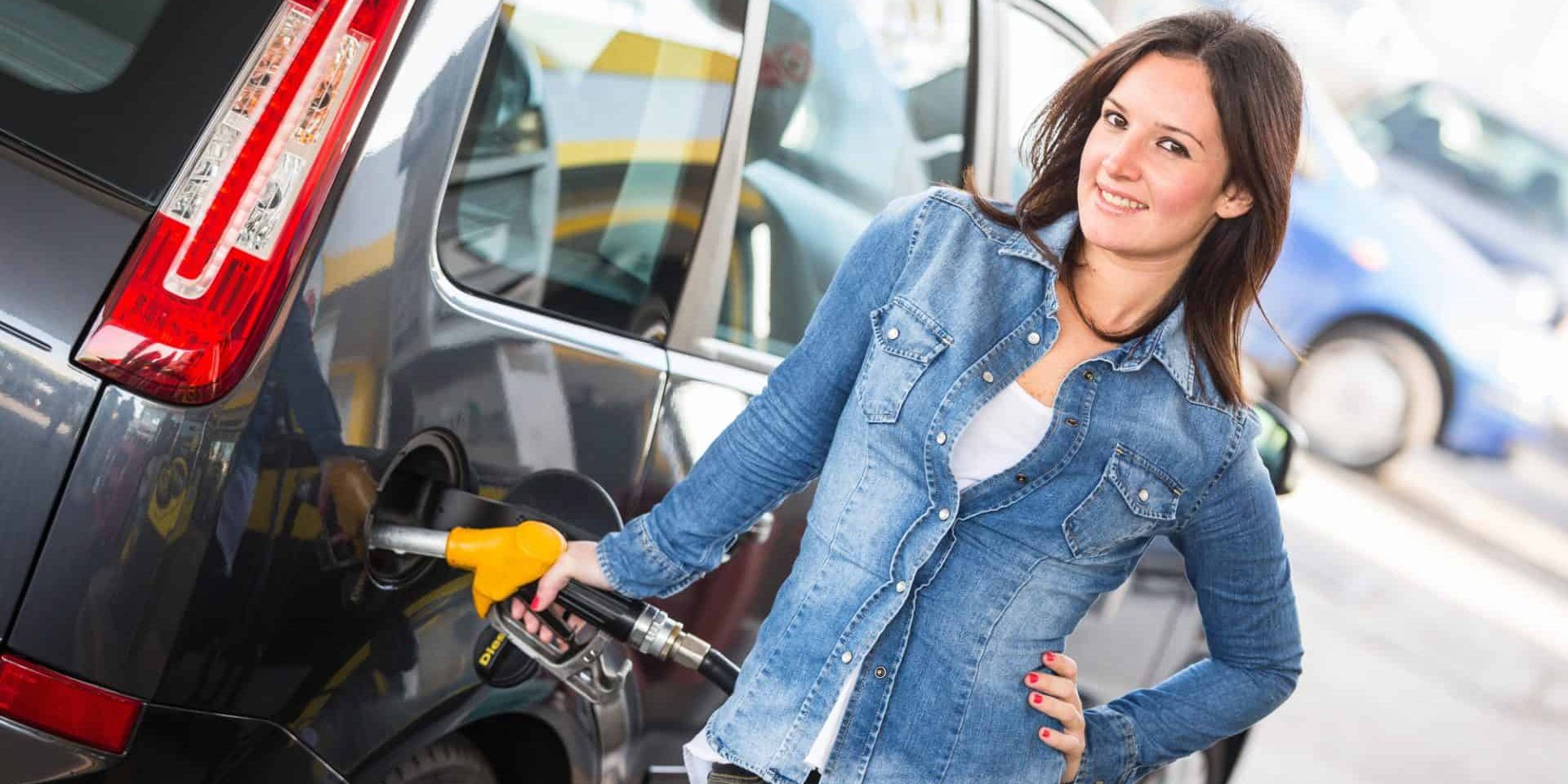
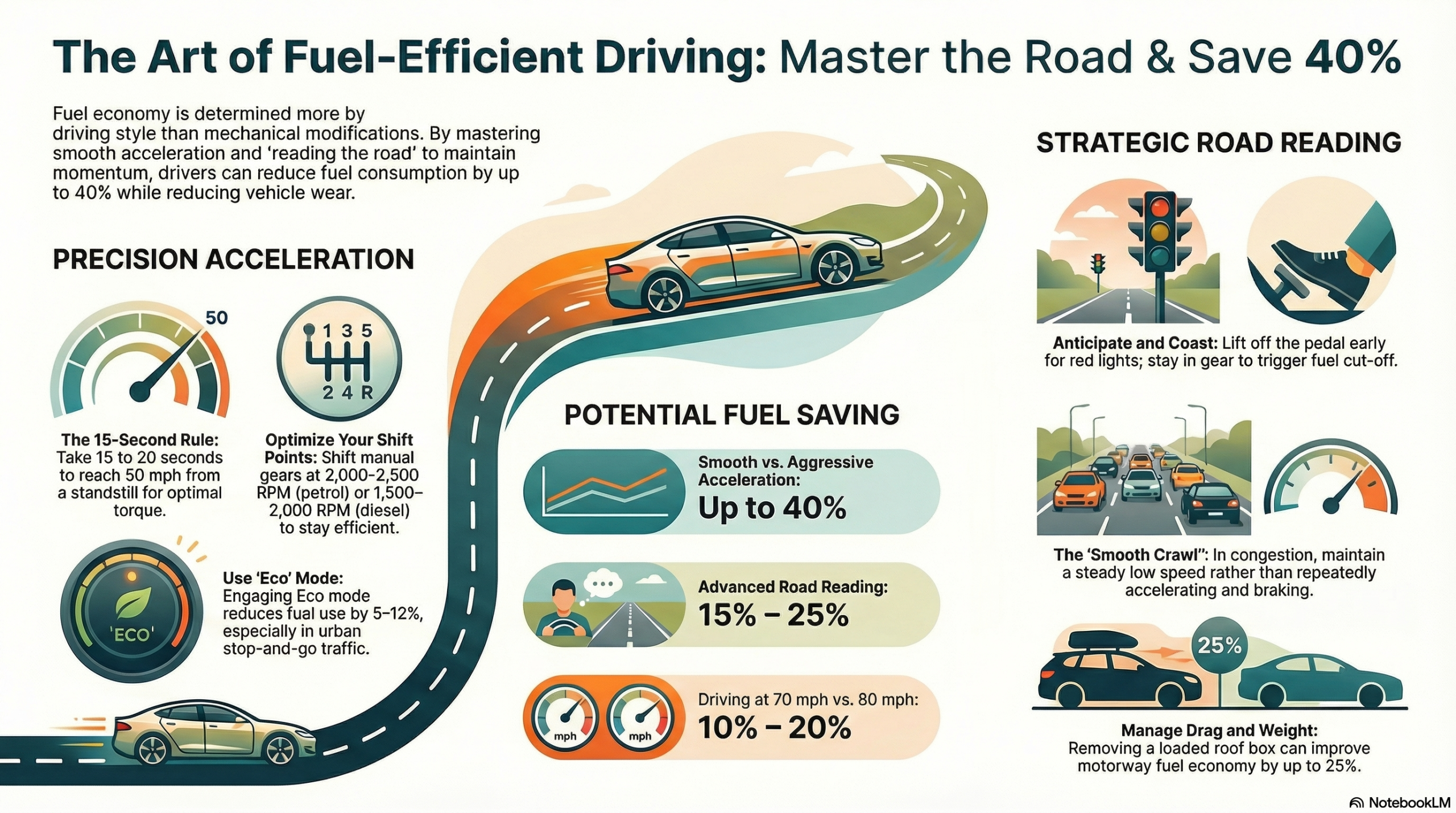
You maximize fuel economy when accelerating by applying gentle, steady throttle pressure and reaching your target speed over 15 to 20 seconds rather than stamping on the pedal. Smooth acceleration at around 2,000 to 2,500 RPM in a manual, or light pedal input in an automatic, reduces fuel consumption by up to 40 percent compared to aggressive driving.
Why Acceleration Burns More Fuel Than Any Other Driving Action
Acceleration is the single biggest fuel consumer in everyday driving. Every time you press the throttle, your engine burns extra fuel to overcome inertia and build speed. The harder you press, the more fuel flows into the combustion chambers, and the faster your wallet empties.
Research from the US Department of Energy shows that aggressive acceleration and hard braking can reduce fuel economy by 15 to 30 percent at motorway speeds and 10 to 40 percent in stop-and-go traffic. The RAC Foundation has published similar findings, noting that driving style has a greater effect on fuel consumption than almost any mechanical modification you could make to your vehicle.
The relationship between throttle input and fuel flow is not linear. Pressing the accelerator halfway does not use half the fuel of pressing it fully. Modern engines use fuel maps that increase injection rates sharply once you push past moderate throttle positions. A light foot keeps you in the efficient zone of that fuel map; a heavy foot pushes you into the zone where fuel consumption climbs steeply for minimal extra speed gain.
The 15-Second Rule for Fuel-Efficient Acceleration
Natural Resources Canada, which has conducted extensive fuel economy testing, recommends taking approximately 15 seconds to accelerate to 50 mph (80 km/h) from a standstill. This pace feels slower than most drivers are used to, but it sits in the optimal zone where your engine produces the torque needed to build speed without flooding the cylinders with excess fuel.
You do not need to accelerate so slowly that you hold up traffic or create a hazard. The goal is a smooth, progressive build-up of speed rather than a sharp burst. Think of it as pressing the pedal with your ankle rather than your whole leg. A gradual ramp from zero to cruising speed keeps engine load steady and fuel delivery controlled.
In practical terms, this means pulling away from traffic lights at a pace that lets the car behind you keep a comfortable distance without needing to brake. If vehicles are stacking up behind you, you are going too slowly. If your passengers feel pushed back into their seats, you are going too fast. The sweet spot is in between, and it becomes second nature within a few days of conscious practice.
Manual Gearbox: Shift Early, Shift Smooth
If you drive a manual, your gear changes have a direct and measurable impact on fuel consumption. The general rule is to shift up as early as the engine allows without labouring or juddering. For most petrol engines, this means shifting between 2,000 and 2,500 RPM. For diesel engines, which produce their torque lower in the rev range, you can often shift at 1,500 to 2,000 RPM.
The AA recommends a technique called “block shifting,” where you skip gears when conditions allow. For example, pulling away in first, shifting to second, then going directly to fourth once your speed is sufficient. This keeps the engine in its most efficient RPM band for longer and reduces the number of gear changes, each of which briefly interrupts power delivery and wastes a small amount of fuel.
Avoid riding in a low gear at high RPM. If you are doing 40 mph in third gear with the rev counter sitting at 3,500 RPM, you are burning noticeably more fuel than if you shifted to fourth or fifth at the same speed. Higher gears at lower RPM is the golden rule for fuel-efficient manual driving.
When approaching a hill, build a small amount of extra speed on the flat before the gradient begins, then let the car carry its momentum uphill. Dropping a gear partway up is fine, but holding a high gear for as long as possible before the shift saves fuel compared to dropping early and climbing at high RPM.
Automatic Gearbox: Let It Shift Early
In an automatic, you do not control gear changes directly, but you control when they happen through your throttle input. Light pedal pressure encourages the gearbox to shift into higher gears earlier. Heavy pedal pressure tells the transmission to hold lower gears longer and delay upshifts, which is exactly what wastes fuel.
Modern automatics are calibrated to optimize for either economy or performance based on how you drive. If you consistently use light throttle, the adaptive transmission software learns your style and begins shifting earlier and more smoothly. If you drive aggressively, it adapts in the opposite direction, holding gears and keeping RPM high.
Many automatic vehicles offer an “Eco” or “Comfort” drive mode. This is not a gimmick. Eco mode adjusts throttle response, shift points, and sometimes even air conditioning output to prioritise fuel economy. The RAC tested several vehicles and found that Eco mode reduced fuel consumption by 5 to 12 percent in typical driving conditions, with the biggest savings in urban stop-and-go traffic.
If your vehicle has a CVT (continuously variable transmission), the same principle applies. Light throttle input keeps the transmission in a higher effective ratio. You will notice the engine RPM stays low and steady during acceleration, which is the CVT doing exactly what it is designed to do for economy.
Reading the Road: The Biggest Free Fuel Saver
Efficient acceleration is only half the picture. The other half is reducing the number of times you need to accelerate in the first place. Every time you brake, you convert your car’s kinetic energy into heat and throw away the fuel you used to build that speed. Then you accelerate again, burning more fuel to rebuild what you just wasted.
Advanced drivers call this “reading the road.” Look as far ahead as possible and anticipate what traffic is doing. If you can see a red light 300 metres ahead, lift off the accelerator now and coast toward it rather than maintaining speed and braking at the last moment. If the car ahead is slowing, ease off early rather than closing the gap and braking hard.
This technique, sometimes called “pulse and glide” or simply momentum driving, is the single most effective fuel-saving habit you can develop. IAM RoadSmart, one of the UK’s leading advanced driving organisations, includes road-reading as a core component of its eco-driving programmes and reports that drivers who adopt these techniques consistently achieve 15 to 25 percent better fuel economy without any change to their vehicle.
Maintaining a larger following distance makes this much easier. If you are tailgating the vehicle ahead, you have no time to anticipate and must react with sharp braking and hard acceleration. A three-to-four-second gap gives you the space to make smoother inputs and keep your fuel consumption steady.
Stop-and-Go Traffic: Where Technique Matters Most
City driving and heavy traffic are where fuel economy suffers most, and where good acceleration habits pay the biggest dividends. The constant cycle of stopping and starting means your engine is doing the most fuel-intensive thing it can do, building speed from zero, over and over again.
In congested traffic, resist the urge to close every gap quickly. Instead, creep forward steadily at a low, constant speed. If traffic is moving at an average of 10 mph with frequent stops, try to maintain a steady 8 to 10 mph with gentle throttle rather than accelerating to 20 mph and braking to a stop repeatedly. This “smooth crawl” approach can improve urban fuel economy by 20 percent or more.
If your vehicle has an auto start-stop system, let it work. The system shuts off the engine at standstill and restarts it when you lift the brake. Modern start-stop systems use reinforced starter motors and are designed for frequent cycling. In heavy traffic with regular stops of 10 seconds or more, start-stop can save 5 to 10 percent on fuel over a typical commute.
Avoid aggressive lane-switching in traffic. Every lane change requires acceleration to match the speed of the new lane, followed by braking when that lane inevitably slows down too. Studies from the Texas A&M Transportation Institute have found that frequent lane changers in congestion arrive no faster than those who stay in their lane, while burning measurably more fuel.
How Weight and Drag Affect Your Acceleration Fuel Cost
The heavier your vehicle, the more fuel it takes to accelerate it. Every extra 50 kg (110 lbs) of weight increases fuel consumption by roughly 1 to 2 percent. If you are carrying unnecessary items in the boot, on the roof rack, or in the back seats, you are paying for that weight every time you pull away from a junction.
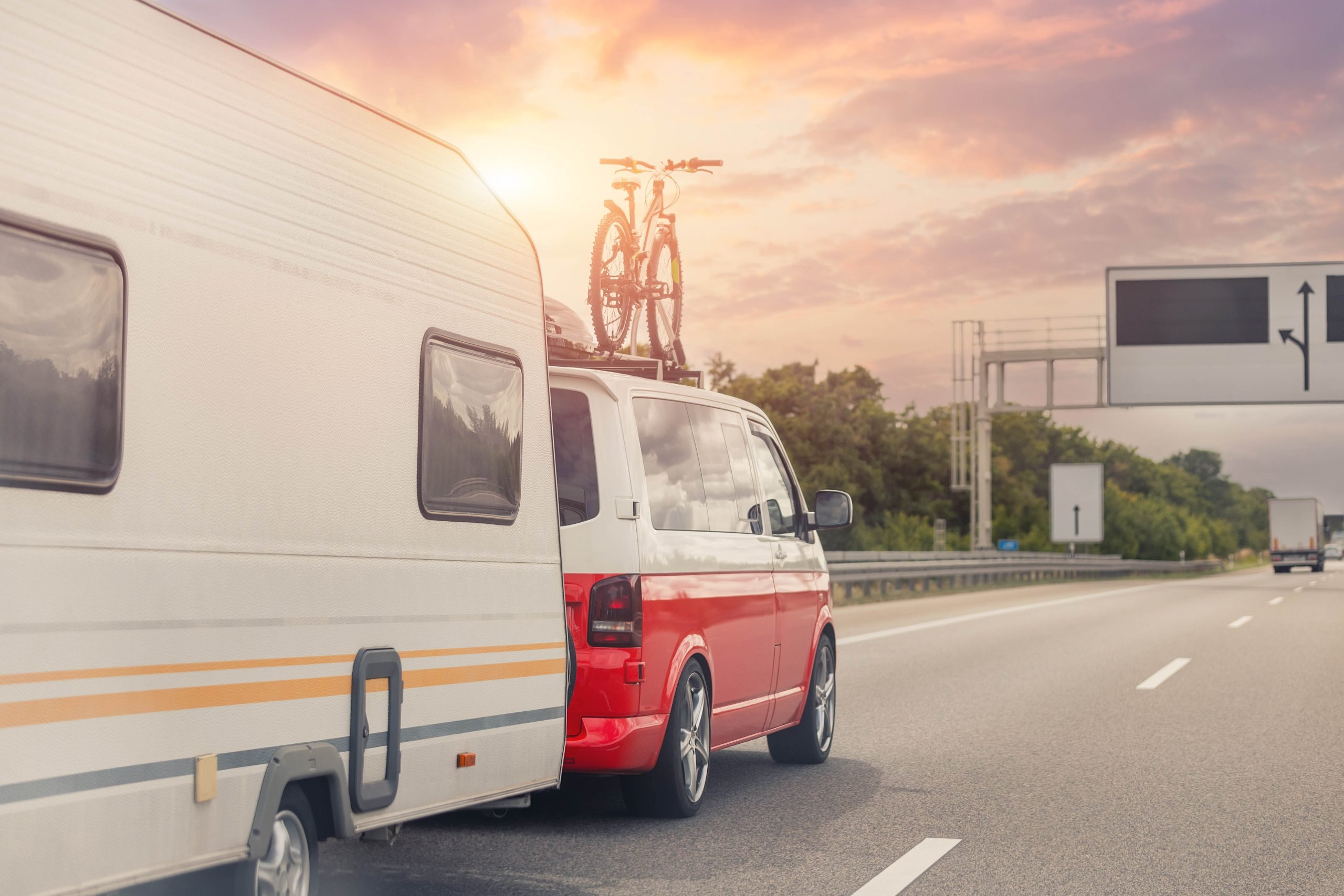
Roof racks and roof boxes are especially costly. Even an empty roof rack increases aerodynamic drag and raises fuel consumption at motorway speeds by up to 5 percent. A loaded roof box can add 10 to 25 percent to fuel consumption at 75 mph. If you are not actively using it, take it off. The few minutes of removal and refitting are worth weeks of fuel savings.
Keep your tyres properly maintained as well. Underinflated tyres increase rolling resistance, which means your engine has to work harder during acceleration and at cruising speed. Check your tyre pressures at least once a month and before long journeys. The correct pressures are listed on a sticker inside the driver’s door jamb or in the owner’s manual.
What Not to Do: Common Acceleration Mistakes
Some widely repeated fuel-saving advice is either outdated or flat wrong. Here are the mistakes that cost you fuel rather than saving it.
Accelerating too slowly is a common misconception. Creeping away from lights at walking pace actually wastes fuel, as your engine spends more total time in the inefficient low-speed range. The goal is moderate, steady acceleration, not painfully slow acceleration. If you take 45 seconds to reach 30 mph, you are probably using more fuel than someone who gets there in 15 to 20 seconds at moderate throttle.
Coasting in neutral is another persistent myth. In a modern fuel-injected vehicle, lifting off the accelerator while in gear activates fuel cut-off, meaning the engine uses zero fuel while the wheels drive it through engine braking. Shifting to neutral defeats this system and forces the engine to burn fuel at idle speed to keep running. Stay in gear when decelerating.
Revving before pulling away wastes fuel for no benefit. In a modern engine, you do not need to “warm up” the engine by revving. Simply start and drive gently for the first few minutes. The engine reaches optimal operating temperature faster under light load than sitting at idle, and you cover distance while it warms up rather than burning fuel stationary.
Over-reliance on cruise control in hilly terrain can also hurt. Cruise control maintains a set speed, which means it accelerates hard up hills and wastes the potential energy on the downhill side. On undulating roads, manual speed management, allowing the car to slow slightly on climbs and gain speed on descents, is more fuel-efficient than rigid cruise control.
Measuring Your Progress
Most modern vehicles display real-time and average fuel consumption on the dashboard. Use this data to track how your driving changes affect your fuel economy. After adopting smoother acceleration habits, you should see a measurable improvement within your first full tank of fuel.
If your vehicle does not have a trip computer, track your fuel economy manually. Fill your tank completely, record the mileage, and at the next fill-up divide the distance covered by the litres or gallons added. Do this for two or three tanks and you will have a reliable baseline. Then adopt the techniques above and measure again over the following two to three tanks.
The improvement is typically noticeable. Drivers who switch from aggressive to moderate acceleration habits commonly report improvements of 15 to 25 percent in real-world fuel economy. On a vehicle that averages 30 mpg, that is an extra 4 to 7 miles from every gallon, which adds up to hundreds of pounds or dollars saved every year.
Fuel Economy FAQs
What is the most fuel-efficient way to accelerate?
The most fuel-efficient way to accelerate is to apply gentle, steady throttle pressure and reach your target speed over 15 to 20 seconds rather than stamping on the pedal. In a manual, shift up between 2,000 and 2,500 RPM. In an automatic, ease onto the pedal so the gearbox shifts early into higher gears. Smooth, progressive acceleration can use up to 40 percent less fuel than aggressive starts.
What trick gives the best gas mileage?
The single most effective trick for better gas mileage is reading the road ahead and maintaining momentum. Accelerate gently, anticipate stops early so you can coast in gear rather than brake hard, and keep a steady speed. Combining smooth acceleration with fewer unnecessary stops can improve fuel economy by 20 to 30 percent on typical commutes.
Does engine oil help with fuel consumption?
Yes. Using the correct grade of engine oil reduces internal friction, which directly affects fuel consumption. Low-viscosity oils recommended by your vehicle manufacturer, such as 0W-20 or 5W-30, can improve fuel economy by 1 to 2 percent compared to heavier grades. Always use the grade specified in your owner’s manual for the best balance of protection and efficiency.
How much fuel can be saved by driving at 70mph instead of 80mph?
Dropping from 80 mph to 70 mph typically saves between 10 and 20 percent on fuel consumption. Aerodynamic drag increases exponentially with speed, so your engine works significantly harder to maintain 80 than 70. On a 100-mile motorway journey, this speed reduction could save roughly 1 to 2 litres of fuel or around half a gallon, depending on your vehicle.
Does driving at 60 save fuel?
Yes. For most vehicles, 55 to 65 mph is the sweet spot for fuel efficiency. At 60 mph, aerodynamic drag is significantly lower than at 70 or 80 mph, and your engine operates closer to its most efficient RPM range. Driving at 60 rather than 75 mph can improve fuel economy by 15 to 25 percent depending on the vehicle’s size and aerodynamics.
Sources

Leave a Comment
More in News

Avoidable Driving Mistakes That Double Your Risk After Dark

The W16 Mistral ‘Caroline’: an ode to a beloved daughter, by Bugatti Sur Mesure

All-new 2027 INFINITI QX65 blends sporty fastback design, luxurious interior and spirited, rewarding performance

Acura Celebrates 40 Years of Precision Crafted Performance

Lamborghini Urus SE Widetrack by Urban makes joint debut in UK and USA
Trending on Motoring Chronicle
Five tips for stress-free summer road trips
Q by Aston Martin unveils Palm Beach Edition DB12 Volante
The final W16 era milestone: the first W16 Mistral now leaves the Bugatti Atelier [Photo Gallery]

Rolls-Royce in Saint-Tropez: a summer at the Riviera’s most distinguished addresses [Photo Gallery]