What the Colour of Your Exhaust Smoke Reveals About a £2,000 Repair Bill

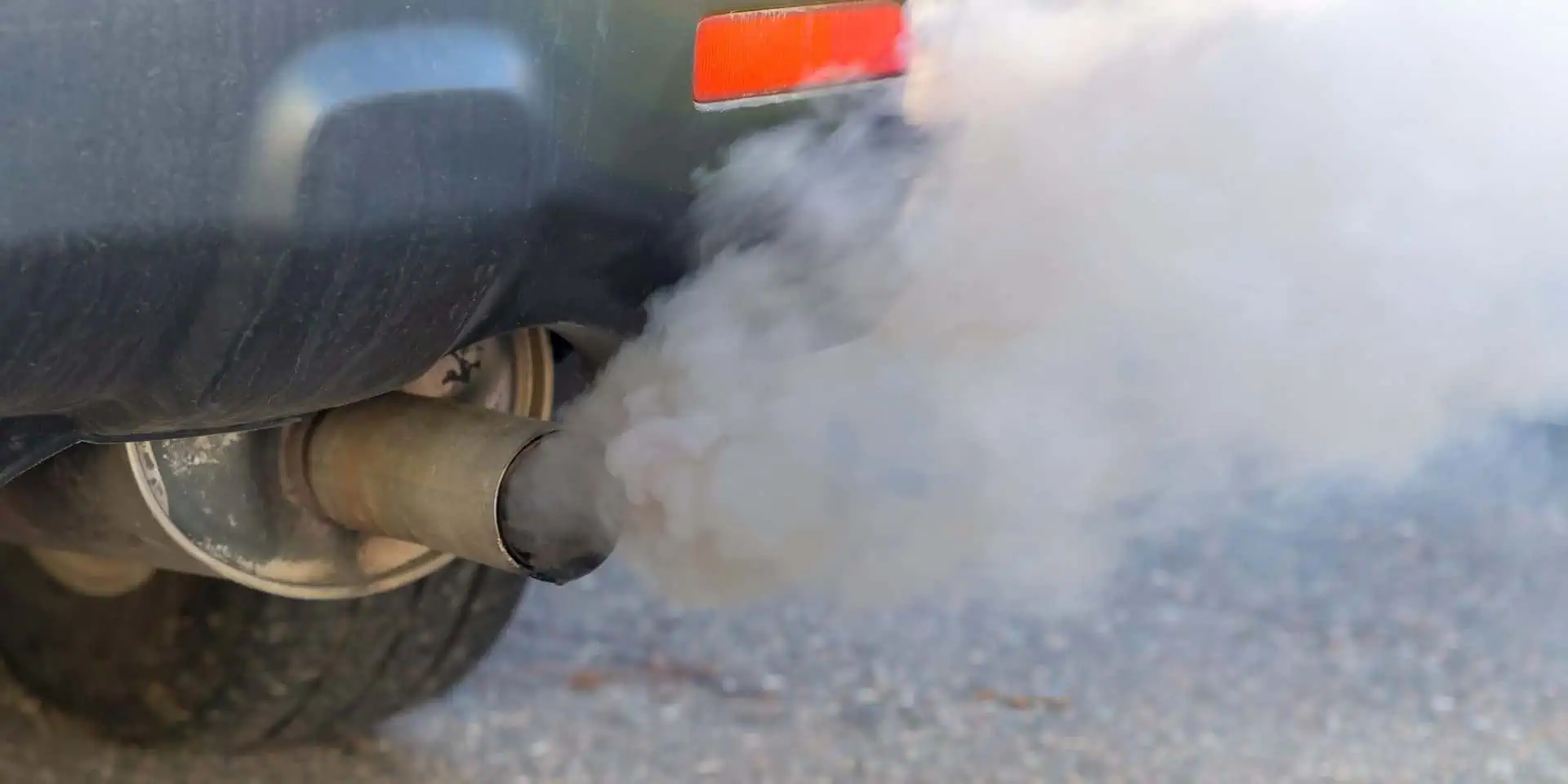
- Black, blue and white exhaust smoke each point to a different fault, and only one of the three is usually cheap to fix.
- White smoke is the most serious warning sign and can mean a blown head gasket, a repair that costs between £500 and £2,000 depending on the car.
- Diesel drivers who ignore black smoke for too long risk a clogged or failed diesel particulate filter, which can cost up to £3,500 to replace.
Check the Colour Before You Call a Garage
Smoke coming from the exhaust is never normal, but the colour tells you roughly how worried to be and roughly what it will cost to put right. Black or grey smoke is the one to take least seriously, though still worth sorting quickly. Blue smoke means the engine is burning oil it should not be burning. White smoke is the one that can mean the engine is close to the end of its life, and ignoring it is the single most expensive mistake a driver can make on this list.
Black or Grey Smoke: An Engine Running Inefficiently
Black or grey smoke usually means the engine is burning fuel inefficiently rather than burning something it should not be burning at all. Common causes include a fuel injection fault, a clogged air filter restricting the air the engine needs to burn fuel properly, incorrect engine timing, or a blocked exhaust manifold. On a diesel, the particulate filter burning off trapped soot can occasionally produce a short puff of black or grey smoke, which is normal, but smoke that persists every time the car is driven is not.
This is the cheapest of the three problems to resolve in most cases. A clogged air filter costs well under £30 to replace and a driver can often do it without a garage visit at all. A fuel injection fault or timing issue costs more to diagnose and fix, but rarely approaches the cost of the other two faults on this list, provided it is dealt with before it causes secondary damage.
Diesel drivers should not treat persistent black smoke as a minor issue. It is often a sign the particulate filter is struggling to regenerate properly. Left unresolved, a diesel particulate filter can become so clogged that it needs forced regeneration, costing roughly £85 to £100 at a garage, or in the worst cases full replacement at £1,000 to £3,500 depending on the vehicle. Repeated short journeys at low speed are one of the most common causes of DPF problems, as the filter needs sustained higher engine speed to clear itself.
Blue Smoke: Oil Where It Should Not Be
Blue smoke means oil is being burned somewhere it should not reach. In a petrol engine, oil is typically leaking past worn seals into the area where fuel and air mix before combustion. In a diesel, the cause is more often simply too much oil in the engine, sometimes from overfilling at a previous service. In the most serious cases on either fuel type, the cylinder heads, pistons or valves themselves have worn to the point that oil is passing where it should not, which points toward a much larger repair than a seal replacement.
Blue smoke should not be left for more than a few days before a garage looks at it. Continuing to drive with the engine burning its own oil accelerates wear on components that are already failing. A car losing oil between services, needing regular top-ups, or showing blue smoke on a cold start that clears after a few minutes, is telling you the same thing in two different ways. Catching the fault at the seal stage is a fraction of the cost of catching it after the pistons or valves themselves have worn.
White Smoke: The One That Can End the Engine
White smoke is the most serious of the three. In diesel engines it can point to incorrect engine timing, a fuel injection fault, or overheating. In petrol engines, the common causes are a cracked cylinder block or cylinder head, or a leaking head gasket, the thin seal that keeps the engine’s combustion chambers, oil and coolant separate from each other. Once that seal fails, coolant and combustion gases can mix, and in some cases the cost of repair is higher than the car itself is worth.
A full head gasket replacement typically costs between £500 and £2,000 in the UK, depending on the car. Budget and small cars tend to sit toward the £500 to £1,200 end, mid-range cars from around £900 to £1,400, and premium or six-cylinder cars can run from £1,400 to £2,500 or more once labour, head skimming and a pressure test are all accounted for. A temporary sealer, sold for £20 to £60 a bottle, can sometimes buy a little time on an older car, but it treats the symptom rather than the fault and should never be relied on for a car still regularly used on the motorway.
White smoke accompanied by a rising temperature gauge, a sweet smell from the engine bay, or coolant disappearing from the header tank without an obvious leak underneath the car, is a combination that should stop a journey rather than finish it. Driving even a short distance with a failed head gasket and an overheating engine risks turning a repair bill into a replacement engine, which is the point at which the phrase “more than the car is worth” stops being a figure of speech.
Use Your Nose Along With Your Eyes
Smell is as useful a diagnostic tool as colour, and the two together narrow down a fault faster than either alone. A sweet smell near white or steam-like smoke almost always points to coolant reaching the exhaust or the engine bay, consistent with a head gasket problem rather than simple condensation, which every car produces briefly on a cold start and which clears within a few seconds of driving rather than continuing. A sharp, burning smell alongside blue smoke points toward oil reaching a hot exhaust component, and a strong fuel smell alongside black smoke suggests the engine is running too rich, taking in too much fuel relative to the air available to burn it properly.
Excessive exhaust smoke is also an MOT test item in its own right, a sign of an underlying mechanical fault in its own right too. A car producing visibly excessive smoke of any colour can fail its MOT outright under the emissions section of the test, whether the smoke traces back to a cheap fix like an air filter or an expensive one like a head gasket. A car that is already due an MOT and showing any of these symptoms is better taken to a garage for a proper diagnosis first. A test centre will simply record the failure without diagnosing the cause, leaving the driver to pay for a second inspection anyway.
When To Stop Driving Immediately
None of the three smoke colours is a reason to keep driving and hope it clears up on its own. Black or grey smoke should get a check within the next week or two, ideally sooner on a diesel. Blue smoke should get a garage booking within days. White smoke, especially alongside a rising temperature gauge, means pulling over safely and arranging recovery rather than continuing to the nearest garage under the car’s own power. A handful of extra miles on an engine already overheating is often what turns a head gasket repair into a full engine replacement.
A five-minute look at the colour of the smoke, the smell in the air, and the temperature gauge on the dashboard is the difference between a repair bill measured in tens of pounds and one measured in thousands. Most drivers only learn to read these signs after an expensive mistake. Reading them before the next one happens costs nothing at all.
Sources:

Leave a Comment
More in News

Honda Civic Hybrid Gains S+ Shift Tech and New Sport Grade from £34,325

BYD Shark Pick-Up Earns Five-Star Euro NCAP Rating, Priced from £47,295

How Nearly 70 Percent of Stolen Cars Are Never Returned to Their Owners

DfT Could Make Every Learner Driver Wait Before Their Test After 273 Deaths
Councils Rejected 75 Percent of Pothole Damage Claims From UK Drivers Last Year
Trending on Motoring Chronicle

The beginning of a new era: fully electric BMW M models set unrivalled high-performance standards

Motorpoint Finds Diesel Drivers Face £515 More a Year in Fuel, Doncaster Hit Hardest

How to Drive Through Flood Water (and What to Do If It Stalls)

Bentley Motors debuts new Continental GT and Flying Spur models at Auto Shanghai 2025 [Photo Gallery]